Description:
“Water is the most critical resource issue of our lifetime and our children’s lifetime. The health of our waters is the principal measure of how we live on the land.” – Luna Leopold
According to the U.S. Environmental Protection Agency (EPA), the recommended pH range for drinking water is 6.5–8.5. The Total Dissolved Solids (TDS) level should be kept below 500 mg/L (500 ppm). For non-drinking water such as spring or bottled water, TDS should not exceed 1000 mg/L (1000 ppm).
According to the EPA, WHO, and EU, pH and TDS levels typically have no direct health effects on consumers.
However, they are critical water quality indicators, as they influence how water interacts with its surroundings. These interactions can affect the appearance, taste, and odor of drinking water and may signal problems in the water supply system that could impact public health.
𝐖𝐡𝐲 𝐒𝐡𝐨𝐮𝐥𝐝 𝐘𝐨𝐮 𝐌𝐞𝐚𝐬𝐮𝐫𝐞 𝐓𝐃𝐒 𝐚𝐧𝐝 𝐏𝐇 𝐋𝐞𝐯𝐞𝐥𝐬?
Pure, natural mineral water has no taste or smell. Changes in TDS and pH levels can affect the texture and taste, making the water less suitable for consumption.
Scientific research has revealed several reasons why monitoring TDS and pH in drinking water is essential:
*Taste – High TDS levels can make water taste salty or bitter.
*Health Concerns – While high TDS alone may not harm your health, elevated levels of harmful substances like lead or copper can cause illness.
*Cooking – TDS levels above 1000 ppm can alter the taste of food during cooking.
Q: What is the best TDS level for drinking water?
A: A TDS level between 50–500 ppm is generally considered ideal and safe. Levels below 50 ppm are considered excellent-quality drinking water.
Note: Water under 80 ppm is classified as soft; 80–160 ppm is moderately hard; and above 300 ppm is considered very hard.
Q: Is a low TDS level bad or harmful to health?
A: A TDS level above 1000 ppm is unsafe for drinking and should be avoided.
𝐎𝐭𝐡𝐞𝐫 𝐀𝐩𝐩𝐥𝐢𝐜𝐚𝐭𝐢𝐨𝐧𝐬:
TDS and pH play a vital role in making nutrients soluble for plants in hydroponic systems. They are also key environmental indicators for aquatic life.
𝐖𝐢𝐝𝐞 𝐔𝐬𝐞 𝐏𝐇 𝐌𝐞𝐭𝐞𝐫:
This TDS meter is ideal for a wide range of water quality testing needs, including water purification, aquaculture, hydroponics, pools & spas, and water treatment.
𝐏𝐥𝐚𝐧𝐭 𝐆𝐫𝐨𝐰:
Behind every healthy plant is a gardener who pays attention to detail. This PPM tester helps you easily monitor the key environmental factors for optimal plant growth.
TDS
Test Range:
0–9990 ppm (parts per million)
Accuracy:
±2% F.S.
Package Includes:
1x TDS Meter
1x Box
Details:
Visit the NOVA LINT REMOVER Store
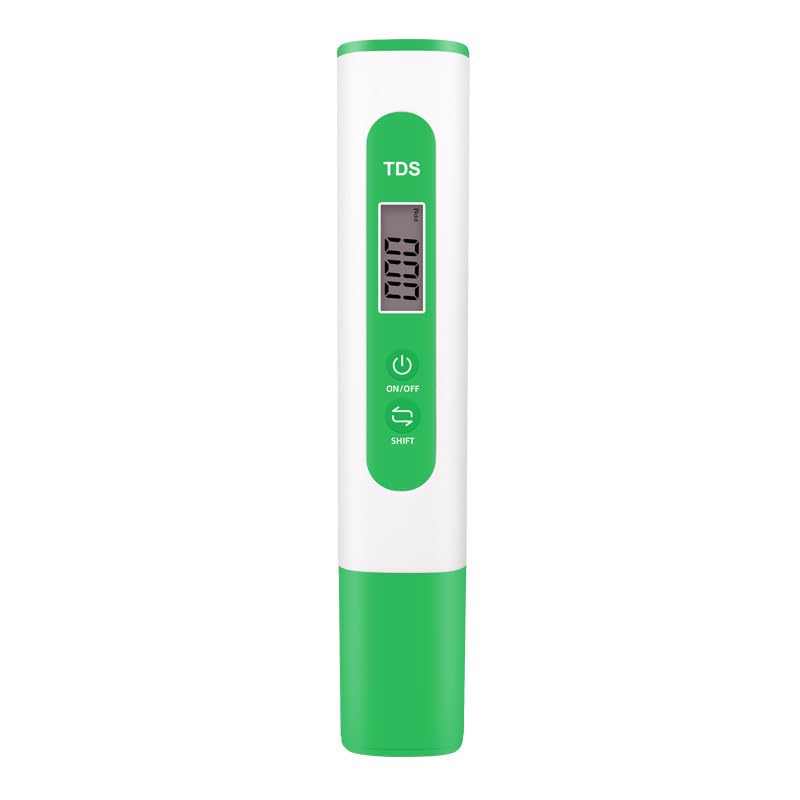
TDS Water Tester, TDS Meter Digital Water Tester - High Accurate and Reliable Digital PPM Meter, 0-9990PPM Water Quality Tester for Drinking Water RO/DI System Wine Pool Food Hydroponics, Green
 Imported From: United States
At BOLO, we work hard to ensure the products you receive are new, genuine, and sourced from reputable suppliers.
Every product in the BOLO catalogue is sourced through our Verified Global Supply Network of verified sellers, authorized distributors or directly from the manufacturer.
Each product undergoes thorough inspection and verification at our consolidation and fulfilment centers to ensure it meets our strict authenticity and quality standards before being shipped and delivered to you.
If you ever have concerns regarding the authenticity of a product purchased from us, please contact Bolo Support. We will review your inquiry promptly and, if necessary, provide documentation verifying authenticity or offer a suitable resolution.
Your trust is our top priority, and we are committed to maintaining transparency and integrity in every transaction.
While we strive to display accurate information, variations in packaging, labeling, instructions, or formulation may occasionally occur due to regional differences or supplier updates. For detailed or manufacturer-specific information, please contact the brand directly or reach out to BOLO Support for assistance.
Unless otherwise stated, all prices displayed on the product page include applicable taxes and import duties.
BOLO operates in accordance with the laws and regulations of Qatar. Any items found to be restricted or prohibited for sale within the Qatar will be cancelled prior to shipment. We take proactive measures to ensure that only products permitted for sale in Qatar are listed on our website.
All items are shipped by air, and any products classified as “Dangerous Goods (DG)” under IATA regulations will be removed from the order and cancelled.
All orders are processed manually, and we make every effort to process them promptly once confirmed. Products cancelled due to the above reasons will be permanently removed from listings across the website.
Similar suggestions by Bolo
More from this brand
Similar items from “Aquarium Test Kits”
Share with
Or share with link
https://www.bolo.qa/products/UO0S144QSG5
Visit the NOVA LINT REMOVER Store
TDS Water Tester, TDS Meter Digital Water Tester - High Accurate and Reliable Digital PPM Meter, 0-9990PPM Water Quality Tester for Drinking Water RO/DI System Wine Pool Food Hydroponics, Green
Imported From: United States
At BOLO, we work hard to ensure the products you receive are new, genuine, and sourced from reputable suppliers.
Every product in the BOLO catalogue is sourced through our Verified Global Supply Network of verified sellers, authorized distributors or directly from the manufacturer.
Each product undergoes thorough inspection and verification at our consolidation and fulfilment centers to ensure it meets our strict authenticity and quality standards before being shipped and delivered to you.
If you ever have concerns regarding the authenticity of a product purchased from us, please contact Bolo Support. We will review your inquiry promptly and, if necessary, provide documentation verifying authenticity or offer a suitable resolution.
Your trust is our top priority, and we are committed to maintaining transparency and integrity in every transaction.
While we strive to display accurate information, variations in packaging, labeling, instructions, or formulation may occasionally occur due to regional differences or supplier updates. For detailed or manufacturer-specific information, please contact the brand directly or reach out to BOLO Support for assistance.
Unless otherwise stated, all prices displayed on the product page include applicable taxes and import duties.
BOLO operates in accordance with the laws and regulations of Qatar. Any items found to be restricted or prohibited for sale within the Qatar will be cancelled prior to shipment. We take proactive measures to ensure that only products permitted for sale in Qatar are listed on our website.
All items are shipped by air, and any products classified as “Dangerous Goods (DG)” under IATA regulations will be removed from the order and cancelled.
All orders are processed manually, and we make every effort to process them promptly once confirmed. Products cancelled due to the above reasons will be permanently removed from listings across the website.
Description:
“Water is the most critical resource issue of our lifetime and our children’s lifetime. The health of our waters is the principal measure of how we live on the land.” – Luna Leopold
According to the U.S. Environmental Protection Agency (EPA), the recommended pH range for drinking water is 6.5–8.5. The Total Dissolved Solids (TDS) level should be kept below 500 mg/L (500 ppm). For non-drinking water such as spring or bottled water, TDS should not exceed 1000 mg/L (1000 ppm).
According to the EPA, WHO, and EU, pH and TDS levels typically have no direct health effects on consumers.
However, they are critical water quality indicators, as they influence how water interacts with its surroundings. These interactions can affect the appearance, taste, and odor of drinking water and may signal problems in the water supply system that could impact public health.
𝐖𝐡𝐲 𝐒𝐡𝐨𝐮𝐥𝐝 𝐘𝐨𝐮 𝐌𝐞𝐚𝐬𝐮𝐫𝐞 𝐓𝐃𝐒 𝐚𝐧𝐝 𝐏𝐇 𝐋𝐞𝐯𝐞𝐥𝐬?
Pure, natural mineral water has no taste or smell. Changes in TDS and pH levels can affect the texture and taste, making the water less suitable for consumption.
Scientific research has revealed several reasons why monitoring TDS and pH in drinking water is essential:
*Taste – High TDS levels can make water taste salty or bitter.
*Health Concerns – While high TDS alone may not harm your health, elevated levels of harmful substances like lead or copper can cause illness.
*Cooking – TDS levels above 1000 ppm can alter the taste of food during cooking.
Q: What is the best TDS level for drinking water?
A: A TDS level between 50–500 ppm is generally considered ideal and safe. Levels below 50 ppm are considered excellent-quality drinking water.
Note: Water under 80 ppm is classified as soft; 80–160 ppm is moderately hard; and above 300 ppm is considered very hard.
Q: Is a low TDS level bad or harmful to health?
A: A TDS level above 1000 ppm is unsafe for drinking and should be avoided.
𝐎𝐭𝐡𝐞𝐫 𝐀𝐩𝐩𝐥𝐢𝐜𝐚𝐭𝐢𝐨𝐧𝐬:
TDS and pH play a vital role in making nutrients soluble for plants in hydroponic systems. They are also key environmental indicators for aquatic life.
𝐖𝐢𝐝𝐞 𝐔𝐬𝐞 𝐏𝐇 𝐌𝐞𝐭𝐞𝐫:
This TDS meter is ideal for a wide range of water quality testing needs, including water purification, aquaculture, hydroponics, pools & spas, and water treatment.
𝐏𝐥𝐚𝐧𝐭 𝐆𝐫𝐨𝐰:
Behind every healthy plant is a gardener who pays attention to detail. This PPM tester helps you easily monitor the key environmental factors for optimal plant growth.
TDS
Test Range:
0–9990 ppm (parts per million)
Accuracy:
±2% F.S.
Package Includes:
1x TDS Meter
1x Box
Details:
Similar suggestions by Bolo
More from this brand
Similar items from “Aquarium Test Kits”
Share with
Or share with link
https://www.bolo.qa/products/UO0S144QSG5