Description:
Editorial Reviews
About the Author
Excerpt. © Reprinted by permission. All rights reserved.
By Temple Grandin
This is the first book I have read where a wise, highly experienced doctor has discussed his use of medications on many different types of individuals on the autism spectrum. Medications, when they are used with a careful conservative approach, can help many individuals. A low dose of an antidepressant started in my early thirties stopped my non-stop anxiety and panic attacks. During my twenties my anxiety had become progressively worse. My nervous system was on high alert and vigilant for non-existent dangers. I was like a vigilant antelope on the African plains constantly on the lookout for lions. The constant stress was destroying me and I was wracked with headaches and colitis. Within three days after taking an antidepressant my pounding heart, sweaty palms, and colitis almost completely stopped. Antidepressants, when they are prescribed correctly, can work wonders for anxiety. It is important not to give too high a dose. Too high a dose may cause a person who has high anxiety to have insomnia and agitation. They will feel like they drank 20 cups of coffee.
In 2010, I learned why I had been so anxious. A brain scan done by Jason Cooperrider at the University of Utah showed that my amygdala was three times larger than normal. The amygdala is the brain’s fear center. My nervous system had been in a constant state of fear. I have been on dasipramine 50 mg/day for 35 years. Since I am stable, I think the best thing to do is keep taking it. Autism is highly variable some individuals will have severe anxiety problems and others do not.
I have several friends who are not autistic who work in design and a low dose of Prozac (fluoxetine) has controlled their anxiety and helped to prevent a return to an addiction to drugs and alcohol. I do not have scientific evidence for this, but conversations at many autism meetings indicate that people on the autism spectrum, who are good at art or math, tend to have more anxiety than more verbal word based thinkers who often love history.
Dr. Aull's Diagnostic Continuum
Dr. Aull has an autism continuum that does not follow the DSM diagnostic criteria. It is based on his many years of clinical practices. He discusses low, moderate, and high functioning autism and low, moderate, and high functioning Aspergers. It is best to view this as a continuum that ranges from the mildest autism traits to more severe. Dr. Aull created his own autism continuum because it helped him prescribe the right medications. When you read this book, it is best to look at his different cases and see which ones are most similar to your child or student. When I read the cases he presented, he had relatively few cases on the most severe end of the autism spectrum. This would include older individuals who are non-verbal and may have other serious conditions such as epilepsy. This book provides very little discussion of anticonvulsant mood stabilizer drugs, which are often useful for anger attacks that “come out of the blue” with no stressful event preceding them. This is another indicator that this book maybe most helpful for individuals who are either verbal or partially verbal. A doctor in Canada named Joe Huggens, has worked with the most severe non-verbal clients who have been kicked out of many programs due to severe meltdowns. In this population, he found it was often best to avoid the antidepressants and use anti-convulsants, atypical antipsychotics and the beta-blocker propranolol which is a blood pressure medication. This book is essential reading for every parent who has a child who is either taking medication or thinking about the use of medication.
Tips For Using Medication
- A medication should have an OBVIOUS BENEFICIAL effect. When I took anti-depressants, it was like “wow!” I’m a believer biochemistry. The use of powerful antipsychotics such as Risperdal (risperidone) or Abilify (aripiprazole) as sleep aids or to make a child a tiny bit less hyper is a bad idea due to severe side effects. If the drug makes it possible to engage in more normal activities, then it is worth the risk.
- Try one thing at a time. Do not start a drug at the same time you start a new school or a special diet. Space them apart by a few weeks so you can see what works.
- Do not increase the dose or add another medication every time there is a meltdown or a problem. Medication is only one tool in the toolbox for behavior problems. In most cases, but there are some exceptions – one to three medications is usually sufficient for anxiety, depression, aggression, irritability or staying on task.
- Be careful changing brands of generics. This is especially important with time-release products. Doses may have to be changed when the drug is obtained form a different vendor.
- Too many powerful medications are being given to very young children who are under six. A good basic principle is to be more conservative with medication in very young children.
Details:
Visit the Future Horizons Store
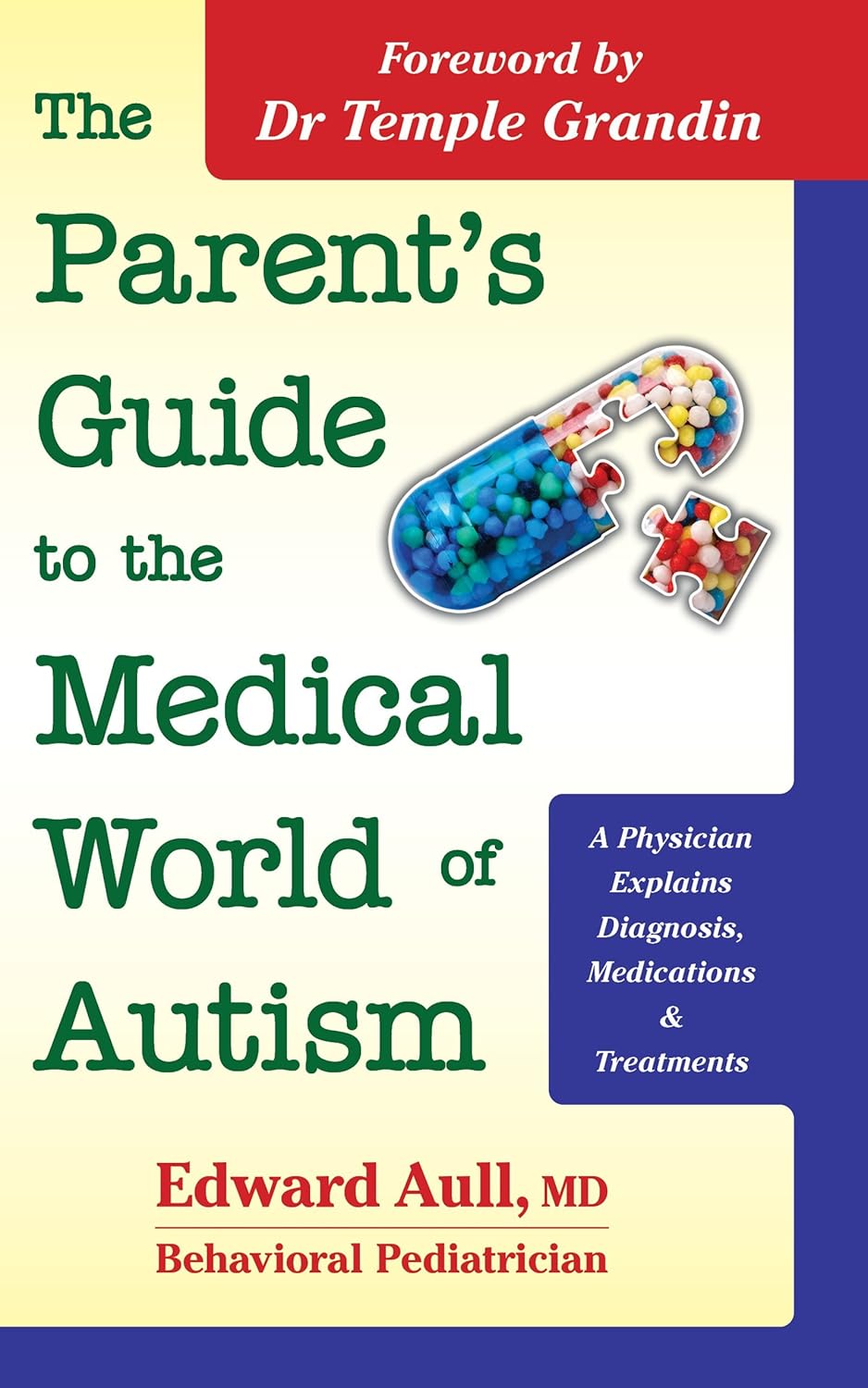
The Parent's Guide to the Medical World of Autism: A Physician Explains Diagnosis, Medications and Treatments
 Imported From: United States
At BOLO, we work hard to ensure the products you receive are new, genuine, and sourced from reputable suppliers.
Every product in the BOLO catalogue is sourced through our Verified Global Supply Network of verified sellers, authorized distributors or directly from the manufacturer.
Each product undergoes thorough inspection and verification at our consolidation and fulfilment centers to ensure it meets our strict authenticity and quality standards before being shipped and delivered to you.
If you ever have concerns regarding the authenticity of a product purchased from us, please contact Bolo Support. We will review your inquiry promptly and, if necessary, provide documentation verifying authenticity or offer a suitable resolution.
Your trust is our top priority, and we are committed to maintaining transparency and integrity in every transaction.
While we strive to display accurate information, variations in packaging, labeling, instructions, or formulation may occasionally occur due to regional differences or supplier updates. For detailed or manufacturer-specific information, please contact the brand directly or reach out to BOLO Support for assistance.
Unless otherwise stated, all prices displayed on the product page include applicable taxes and import duties.
BOLO operates in accordance with the laws and regulations of Qatar. Any items found to be restricted or prohibited for sale within the Qatar will be cancelled prior to shipment. We take proactive measures to ensure that only products permitted for sale in Qatar are listed on our website.
All items are shipped by air, and any products classified as “Dangerous Goods (DG)” under IATA regulations will be removed from the order and cancelled.
All orders are processed manually, and we make every effort to process them promptly once confirmed. Products cancelled due to the above reasons will be permanently removed from listings across the website.
Share with
Or share with link
https://www.bolo.qa/products/U1935274899
Visit the Future Horizons Store
The Parent's Guide to the Medical World of Autism: A Physician Explains Diagnosis, Medications and Treatments
Imported From: United States
At BOLO, we work hard to ensure the products you receive are new, genuine, and sourced from reputable suppliers.
Every product in the BOLO catalogue is sourced through our Verified Global Supply Network of verified sellers, authorized distributors or directly from the manufacturer.
Each product undergoes thorough inspection and verification at our consolidation and fulfilment centers to ensure it meets our strict authenticity and quality standards before being shipped and delivered to you.
If you ever have concerns regarding the authenticity of a product purchased from us, please contact Bolo Support. We will review your inquiry promptly and, if necessary, provide documentation verifying authenticity or offer a suitable resolution.
Your trust is our top priority, and we are committed to maintaining transparency and integrity in every transaction.
While we strive to display accurate information, variations in packaging, labeling, instructions, or formulation may occasionally occur due to regional differences or supplier updates. For detailed or manufacturer-specific information, please contact the brand directly or reach out to BOLO Support for assistance.
Unless otherwise stated, all prices displayed on the product page include applicable taxes and import duties.
BOLO operates in accordance with the laws and regulations of Qatar. Any items found to be restricted or prohibited for sale within the Qatar will be cancelled prior to shipment. We take proactive measures to ensure that only products permitted for sale in Qatar are listed on our website.
All items are shipped by air, and any products classified as “Dangerous Goods (DG)” under IATA regulations will be removed from the order and cancelled.
All orders are processed manually, and we make every effort to process them promptly once confirmed. Products cancelled due to the above reasons will be permanently removed from listings across the website.
Description:
Editorial Reviews
About the Author
Excerpt. © Reprinted by permission. All rights reserved.
By Temple Grandin
This is the first book I have read where a wise, highly experienced doctor has discussed his use of medications on many different types of individuals on the autism spectrum. Medications, when they are used with a careful conservative approach, can help many individuals. A low dose of an antidepressant started in my early thirties stopped my non-stop anxiety and panic attacks. During my twenties my anxiety had become progressively worse. My nervous system was on high alert and vigilant for non-existent dangers. I was like a vigilant antelope on the African plains constantly on the lookout for lions. The constant stress was destroying me and I was wracked with headaches and colitis. Within three days after taking an antidepressant my pounding heart, sweaty palms, and colitis almost completely stopped. Antidepressants, when they are prescribed correctly, can work wonders for anxiety. It is important not to give too high a dose. Too high a dose may cause a person who has high anxiety to have insomnia and agitation. They will feel like they drank 20 cups of coffee.
In 2010, I learned why I had been so anxious. A brain scan done by Jason Cooperrider at the University of Utah showed that my amygdala was three times larger than normal. The amygdala is the brain’s fear center. My nervous system had been in a constant state of fear. I have been on dasipramine 50 mg/day for 35 years. Since I am stable, I think the best thing to do is keep taking it. Autism is highly variable some individuals will have severe anxiety problems and others do not.
I have several friends who are not autistic who work in design and a low dose of Prozac (fluoxetine) has controlled their anxiety and helped to prevent a return to an addiction to drugs and alcohol. I do not have scientific evidence for this, but conversations at many autism meetings indicate that people on the autism spectrum, who are good at art or math, tend to have more anxiety than more verbal word based thinkers who often love history.
Dr. Aull's Diagnostic Continuum
Dr. Aull has an autism continuum that does not follow the DSM diagnostic criteria. It is based on his many years of clinical practices. He discusses low, moderate, and high functioning autism and low, moderate, and high functioning Aspergers. It is best to view this as a continuum that ranges from the mildest autism traits to more severe. Dr. Aull created his own autism continuum because it helped him prescribe the right medications. When you read this book, it is best to look at his different cases and see which ones are most similar to your child or student. When I read the cases he presented, he had relatively few cases on the most severe end of the autism spectrum. This would include older individuals who are non-verbal and may have other serious conditions such as epilepsy. This book provides very little discussion of anticonvulsant mood stabilizer drugs, which are often useful for anger attacks that “come out of the blue” with no stressful event preceding them. This is another indicator that this book maybe most helpful for individuals who are either verbal or partially verbal. A doctor in Canada named Joe Huggens, has worked with the most severe non-verbal clients who have been kicked out of many programs due to severe meltdowns. In this population, he found it was often best to avoid the antidepressants and use anti-convulsants, atypical antipsychotics and the beta-blocker propranolol which is a blood pressure medication. This book is essential reading for every parent who has a child who is either taking medication or thinking about the use of medication.
Tips For Using Medication
- A medication should have an OBVIOUS BENEFICIAL effect. When I took anti-depressants, it was like “wow!” I’m a believer biochemistry. The use of powerful antipsychotics such as Risperdal (risperidone) or Abilify (aripiprazole) as sleep aids or to make a child a tiny bit less hyper is a bad idea due to severe side effects. If the drug makes it possible to engage in more normal activities, then it is worth the risk.
- Try one thing at a time. Do not start a drug at the same time you start a new school or a special diet. Space them apart by a few weeks so you can see what works.
- Do not increase the dose or add another medication every time there is a meltdown or a problem. Medication is only one tool in the toolbox for behavior problems. In most cases, but there are some exceptions – one to three medications is usually sufficient for anxiety, depression, aggression, irritability or staying on task.
- Be careful changing brands of generics. This is especially important with time-release products. Doses may have to be changed when the drug is obtained form a different vendor.
- Too many powerful medications are being given to very young children who are under six. A good basic principle is to be more conservative with medication in very young children.
Details:
Share with
Or share with link
https://www.bolo.qa/products/U1935274899