Description:
What inspires and spurs on a great idea? Can we train ourselves to think in a way that will enable world-changing understandings and insights to emerge?
Richard Hamming said we can. He first inspired a generation of engineers, scientists, and researchers in 1986 with “You and Your Research,” an electrifying sermon on why some scientists do great work, why most don’t, why he did, and why you can—and should—too. The Art of Doing Science and Engineering is the full expression of what “You and Your Research” outlined. It's a book about thinking; more specifically, a style of thinking by which great ideas are conceived.
The book is filled with stories of great people performing mighty deeds—but they are not meant simply to be admired. Instead, they are to be aspired to, learned from, and surpassed. Hamming consistently returns to Shannon’s information theory, Einstein’s theory of relativity, Grace Hopper’s work on high-level programming, Kaiser’s work on digital filters, and his own work on error-correcting codes. He also recounts a number of his spectacular failures as clear examples of what to avoid.
Originally published in 1996 and adapted from a course that Hamming taught at the US Naval Postgraduate School, this edition includes an all-new foreword by designer, engineer, and founder of Dynamicland Bret Victor, plus more than 70 redrawn graphs and charts.
The Art of Doing Science and Engineering is a reminder that a capacity for learning and creativity are accessible to everyone. Hamming was as much a teacher as a scientist, and having spent a lifetime forming and confirming a theory of great people and great ideas, he prepares the next generation for even greater distinction.
Review
—Eugene N. Miya, NASA researcher
"Hamming is here to tell you about excellence. His lessons unfold through personal stories of discovery and failure—life as an extraordinary scientist. But Hamming demands that you do extraordinary work, too, and for that he offers the best advice I know."
—Andy Matuschak, software engineer, designer, and researcher
"Hamming was always as much a teacher as a scientist, and having spent a lifetime forming and confirming a theory of great people, he felt he could prepare the next generation for even greater greatness. That's the premise and promise of this book."
—Bret Victor, founder of Dynamicland, designer, and engineer
About the Author
Details:
Visit the Stripe Press Store
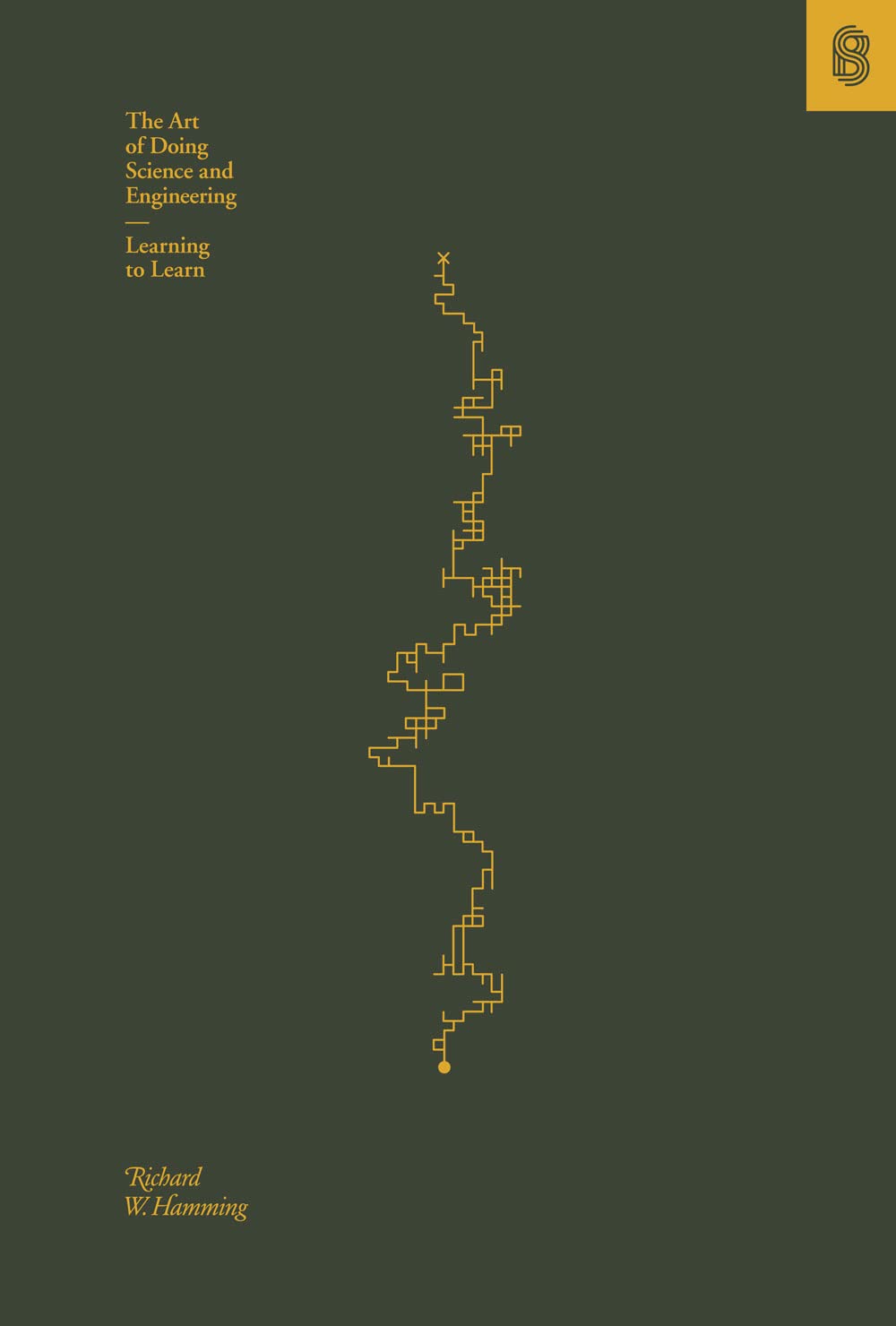
The Art of Doing Science and Engineering: Learning to Learn
QAR28538
Quantity:
Order today to get by 7-14 business days
This item qualifies for free delivery
 Imported From: United States
At BOLO, we work hard to ensure the products you receive are new, genuine, and sourced from reputable suppliers.
Every product in the BOLO catalogue is sourced through our Verified Global Supply Network of verified sellers, authorized distributors or directly from the manufacturer.
Each product undergoes thorough inspection and verification at our consolidation and fulfilment centers to ensure it meets our strict authenticity and quality standards before being shipped and delivered to you.
If you ever have concerns regarding the authenticity of a product purchased from us, please contact Bolo Support. We will review your inquiry promptly and, if necessary, provide documentation verifying authenticity or offer a suitable resolution.
Your trust is our top priority, and we are committed to maintaining transparency and integrity in every transaction.
While we strive to display accurate information, variations in packaging, labeling, instructions, or formulation may occasionally occur due to regional differences or supplier updates. For detailed or manufacturer-specific information, please contact the brand directly or reach out to BOLO Support for assistance.
Unless otherwise stated, all prices displayed on the product page include applicable taxes and import duties.
BOLO operates in accordance with the laws and regulations of Qatar. Any items found to be restricted or prohibited for sale within the Qatar will be cancelled prior to shipment. We take proactive measures to ensure that only products permitted for sale in Qatar are listed on our website.
All items are shipped by air, and any products classified as “Dangerous Goods (DG)” under IATA regulations will be removed from the order and cancelled.
All orders are processed manually, and we make every effort to process them promptly once confirmed. Products cancelled due to the above reasons will be permanently removed from listings across the website.

A new edition, including over 70 redrawn graphs and charts

Hamming demands that you do extraordinary work
“Hamming is here to tell you about excellence. His lessons unfold through personal stories of discovery and failure—life as an extraordinary scientist. But Hamming demands that you do extraordinary work, too, and for that he offers the best advice I know."
––Andy Matuschak, software engineer, designer, and researcher

One of the major US intellects
"Your last chance to read the words of thinking of one of the major intellects that the USA has produced."
––Eugene N. Miya, NASA researcher

Preparing the next generation for even greater greatness
“Hamming was always as much a teacher as a scientist, and having spent a lifetime forming and confirming a theory of great people, he felt he could prepare the next generation for even greater greatness. That’s the premise and promise of this book.”
––Bret Victor, founder of Dynamicland, designer, and engineer
Similar suggestions by Bolo
More from this brand
Similar items from “Research”
Share with
Or share with link
https://www.bolo.qa/products/U1732265178
Visit the Stripe Press Store
The Art of Doing Science and Engineering: Learning to Learn
QAR28538
Quantity:
Order today to get by 7-14 business days
This item qualifies for free delivery
Imported From: United States
At BOLO, we work hard to ensure the products you receive are new, genuine, and sourced from reputable suppliers.
Every product in the BOLO catalogue is sourced through our Verified Global Supply Network of verified sellers, authorized distributors or directly from the manufacturer.
Each product undergoes thorough inspection and verification at our consolidation and fulfilment centers to ensure it meets our strict authenticity and quality standards before being shipped and delivered to you.
If you ever have concerns regarding the authenticity of a product purchased from us, please contact Bolo Support. We will review your inquiry promptly and, if necessary, provide documentation verifying authenticity or offer a suitable resolution.
Your trust is our top priority, and we are committed to maintaining transparency and integrity in every transaction.
While we strive to display accurate information, variations in packaging, labeling, instructions, or formulation may occasionally occur due to regional differences or supplier updates. For detailed or manufacturer-specific information, please contact the brand directly or reach out to BOLO Support for assistance.
Unless otherwise stated, all prices displayed on the product page include applicable taxes and import duties.
BOLO operates in accordance with the laws and regulations of Qatar. Any items found to be restricted or prohibited for sale within the Qatar will be cancelled prior to shipment. We take proactive measures to ensure that only products permitted for sale in Qatar are listed on our website.
All items are shipped by air, and any products classified as “Dangerous Goods (DG)” under IATA regulations will be removed from the order and cancelled.
All orders are processed manually, and we make every effort to process them promptly once confirmed. Products cancelled due to the above reasons will be permanently removed from listings across the website.
Description:
What inspires and spurs on a great idea? Can we train ourselves to think in a way that will enable world-changing understandings and insights to emerge?
Richard Hamming said we can. He first inspired a generation of engineers, scientists, and researchers in 1986 with “You and Your Research,” an electrifying sermon on why some scientists do great work, why most don’t, why he did, and why you can—and should—too. The Art of Doing Science and Engineering is the full expression of what “You and Your Research” outlined. It's a book about thinking; more specifically, a style of thinking by which great ideas are conceived.
The book is filled with stories of great people performing mighty deeds—but they are not meant simply to be admired. Instead, they are to be aspired to, learned from, and surpassed. Hamming consistently returns to Shannon’s information theory, Einstein’s theory of relativity, Grace Hopper’s work on high-level programming, Kaiser’s work on digital filters, and his own work on error-correcting codes. He also recounts a number of his spectacular failures as clear examples of what to avoid.
Originally published in 1996 and adapted from a course that Hamming taught at the US Naval Postgraduate School, this edition includes an all-new foreword by designer, engineer, and founder of Dynamicland Bret Victor, plus more than 70 redrawn graphs and charts.
The Art of Doing Science and Engineering is a reminder that a capacity for learning and creativity are accessible to everyone. Hamming was as much a teacher as a scientist, and having spent a lifetime forming and confirming a theory of great people and great ideas, he prepares the next generation for even greater distinction.
Review
—Eugene N. Miya, NASA researcher
"Hamming is here to tell you about excellence. His lessons unfold through personal stories of discovery and failure—life as an extraordinary scientist. But Hamming demands that you do extraordinary work, too, and for that he offers the best advice I know."
—Andy Matuschak, software engineer, designer, and researcher
"Hamming was always as much a teacher as a scientist, and having spent a lifetime forming and confirming a theory of great people, he felt he could prepare the next generation for even greater greatness. That's the premise and promise of this book."
—Bret Victor, founder of Dynamicland, designer, and engineer
About the Author
Details:
A new edition, including over 70 redrawn graphs and charts
Hamming demands that you do extraordinary work
“Hamming is here to tell you about excellence. His lessons unfold through personal stories of discovery and failure—life as an extraordinary scientist. But Hamming demands that you do extraordinary work, too, and for that he offers the best advice I know."
––Andy Matuschak, software engineer, designer, and researcher
One of the major US intellects
"Your last chance to read the words of thinking of one of the major intellects that the USA has produced."
––Eugene N. Miya, NASA researcher
Preparing the next generation for even greater greatness
“Hamming was always as much a teacher as a scientist, and having spent a lifetime forming and confirming a theory of great people, he felt he could prepare the next generation for even greater greatness. That’s the premise and promise of this book.”
––Bret Victor, founder of Dynamicland, designer, and engineer
Similar suggestions by Bolo
More from this brand
Similar items from “Research”
Share with
Or share with link
https://www.bolo.qa/products/U1732265178