Description:
Drive innovation, expand capacity, coordinate maintenance, and reduce costs.
Location intelligence is changing the way transportation agencies and departments protect and maintain their infrastructure and achieve operational excellence. Mapping plays a big part, but geospatial analytics, real-time dashboards, and mobile applications are driving new, more efficient workflows and paving the way for innovative, cost-effective solutions.
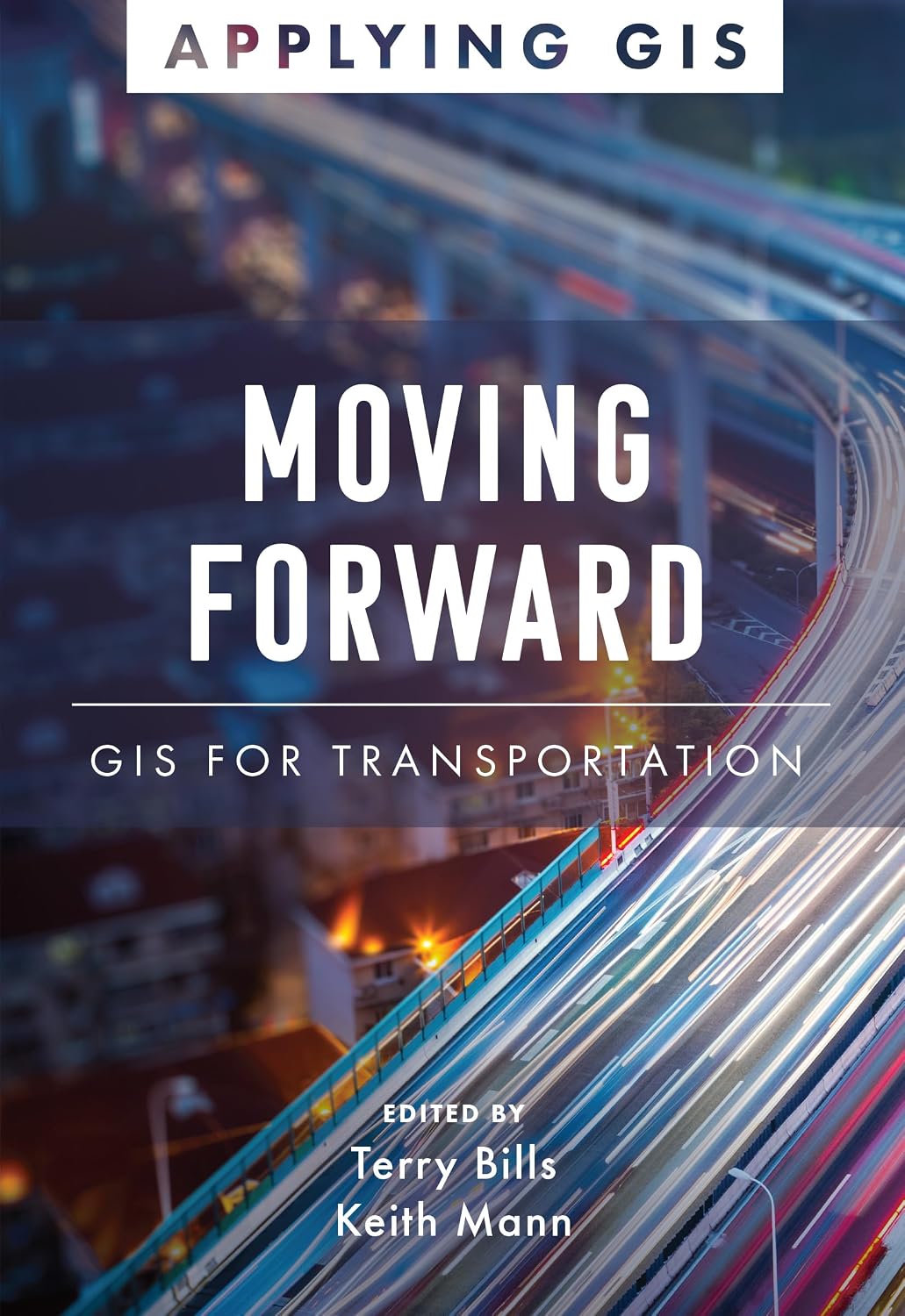
With advancements in smart technologies, location intelligence for transportation management is not just for GIS specialists. In Moving Forward: GIS for Transportation, see how ports, airports, transit authorities, and departments of transportation around the world have implemented geographic information systems (GIS) to visualize and analyze data for operational efficiency, safety and security, asset management, and planning and sustainability.
In this collection of case studies and guidance, learn about how GIS was used to:
· Expand airport capacity within limited space, while saving millions.
· Centralize multi-faceted port security for monitoring daily operations.
· Coordinate daily transit maintenance work on $1 trillion in hard assets.
· Plan modern data governance for a state-wide department of transportation.
Through web apps, online maps, dashboards, and other GIS solutions, transportation professionals develop a deeper understanding of infrastructure maintenance and operational performance within a real-world context, increasing efficiency, while improving communication and collaboration.
Discover how GIS and location intelligence are helping transportation organizations strengthen their ability to maintain roads and highways, railway systems, and other vital infrastructures with Moving Forward: Applying GIS for Transportation.
-- Keith MannFrom the Back Cover
GIS for Transportation
Drive innovation, expand capacity, coordinate maintenance, and reduce costs.
Location intelligence is changing the way transportation agencies and departments protect and maintain their infrastructure and achieve operational excellence. In Moving Forward: GIS for Transportation, see how ports, airports, transit authorities, and departments of transportation around the world have implemented geographic information systems (GIS) to visualize and analyze data for operational efficiency, safety and security, asset management, and planning and sustainability.
Through web apps, online maps, dashboards, and other GIS solutions, transportation professionals develop a deeper understanding of infrastructure maintenance and operational performance within a real-world context, increasing efficiency, while improving communication and collaboration.
Edited by Terry Bills, Esri’s director of transportation industry solutions, and Keith Mann, Esri Press.
-- Keith MannAbout the Author
Terry Bills is Esri’s Director of Transportation Industry Solutions. He oversees the planning and execution of Esri’s go-to-market strategies for all facets of the transportation industry, including roads and highways, ports, airports, railways, and mass transit.
Keith Mann is a principal content strategist for Esri Press. He is a writer, developmental editor, and contributor to books, such as the GIS for Science series and the Applying GIS series of books, including Delivering Water and Power: GIS for Utilities, Building a Smarter Community: GIS for State and Local Government, Moving Forward: GIS for Transportation, Valuing Place and Purpose: GIS for Land Administration, Designing Our Future: GIS for Architecture, Engineering, and Construction, and GIS for Science: Volumes 1, 2, and 3.
Details:
Visit the Esri Press Store
Moving Forward: GIS for Transportation (Applying GIS, 4)
QAR18205
Quantity:
Order today to get by 7-14 business days
Delivery fee of QAR 20. Free for orders above QAR 200.
 Imported From: United States
At BOLO, we work hard to ensure the products you receive are new, genuine, and sourced from reputable suppliers.
Every product in the BOLO catalogue is sourced through our Verified Global Supply Network of verified sellers, authorized distributors or directly from the manufacturer.
Each product undergoes thorough inspection and verification at our consolidation and fulfilment centers to ensure it meets our strict authenticity and quality standards before being shipped and delivered to you.
If you ever have concerns regarding the authenticity of a product purchased from us, please contact Bolo Support. We will review your inquiry promptly and, if necessary, provide documentation verifying authenticity or offer a suitable resolution.
Your trust is our top priority, and we are committed to maintaining transparency and integrity in every transaction.
While we strive to display accurate information, variations in packaging, labeling, instructions, or formulation may occasionally occur due to regional differences or supplier updates. For detailed or manufacturer-specific information, please contact the brand directly or reach out to BOLO Support for assistance.
Unless otherwise stated, all prices displayed on the product page include applicable taxes and import duties.
BOLO operates in accordance with the laws and regulations of Qatar. Any items found to be restricted or prohibited for sale within the Qatar will be cancelled prior to shipment. We take proactive measures to ensure that only products permitted for sale in Qatar are listed on our website.
All items are shipped by air, and any products classified as “Dangerous Goods (DG)” under IATA regulations will be removed from the order and cancelled.
All orders are processed manually, and we make every effort to process them promptly once confirmed. Products cancelled due to the above reasons will be permanently removed from listings across the website.
More from this brand
Similar items from “Transportation”
Share with
Or share with link
https://www.bolo.qa/products/U1589486927
Visit the Esri Press Store
Moving Forward: GIS for Transportation (Applying GIS, 4)
QAR18205
Quantity:
Order today to get by 7-14 business days
Delivery fee of QAR 20. Free for orders above QAR 200.
Imported From: United States
At BOLO, we work hard to ensure the products you receive are new, genuine, and sourced from reputable suppliers.
Every product in the BOLO catalogue is sourced through our Verified Global Supply Network of verified sellers, authorized distributors or directly from the manufacturer.
Each product undergoes thorough inspection and verification at our consolidation and fulfilment centers to ensure it meets our strict authenticity and quality standards before being shipped and delivered to you.
If you ever have concerns regarding the authenticity of a product purchased from us, please contact Bolo Support. We will review your inquiry promptly and, if necessary, provide documentation verifying authenticity or offer a suitable resolution.
Your trust is our top priority, and we are committed to maintaining transparency and integrity in every transaction.
While we strive to display accurate information, variations in packaging, labeling, instructions, or formulation may occasionally occur due to regional differences or supplier updates. For detailed or manufacturer-specific information, please contact the brand directly or reach out to BOLO Support for assistance.
Unless otherwise stated, all prices displayed on the product page include applicable taxes and import duties.
BOLO operates in accordance with the laws and regulations of Qatar. Any items found to be restricted or prohibited for sale within the Qatar will be cancelled prior to shipment. We take proactive measures to ensure that only products permitted for sale in Qatar are listed on our website.
All items are shipped by air, and any products classified as “Dangerous Goods (DG)” under IATA regulations will be removed from the order and cancelled.
All orders are processed manually, and we make every effort to process them promptly once confirmed. Products cancelled due to the above reasons will be permanently removed from listings across the website.
Description:
Drive innovation, expand capacity, coordinate maintenance, and reduce costs.
Location intelligence is changing the way transportation agencies and departments protect and maintain their infrastructure and achieve operational excellence. Mapping plays a big part, but geospatial analytics, real-time dashboards, and mobile applications are driving new, more efficient workflows and paving the way for innovative, cost-effective solutions.
With advancements in smart technologies, location intelligence for transportation management is not just for GIS specialists. In Moving Forward: GIS for Transportation, see how ports, airports, transit authorities, and departments of transportation around the world have implemented geographic information systems (GIS) to visualize and analyze data for operational efficiency, safety and security, asset management, and planning and sustainability.
In this collection of case studies and guidance, learn about how GIS was used to:
· Expand airport capacity within limited space, while saving millions.
· Centralize multi-faceted port security for monitoring daily operations.
· Coordinate daily transit maintenance work on $1 trillion in hard assets.
· Plan modern data governance for a state-wide department of transportation.
Through web apps, online maps, dashboards, and other GIS solutions, transportation professionals develop a deeper understanding of infrastructure maintenance and operational performance within a real-world context, increasing efficiency, while improving communication and collaboration.
Discover how GIS and location intelligence are helping transportation organizations strengthen their ability to maintain roads and highways, railway systems, and other vital infrastructures with Moving Forward: Applying GIS for Transportation.
-- Keith MannFrom the Back Cover
GIS for Transportation
Drive innovation, expand capacity, coordinate maintenance, and reduce costs.
Location intelligence is changing the way transportation agencies and departments protect and maintain their infrastructure and achieve operational excellence. In Moving Forward: GIS for Transportation, see how ports, airports, transit authorities, and departments of transportation around the world have implemented geographic information systems (GIS) to visualize and analyze data for operational efficiency, safety and security, asset management, and planning and sustainability.
Through web apps, online maps, dashboards, and other GIS solutions, transportation professionals develop a deeper understanding of infrastructure maintenance and operational performance within a real-world context, increasing efficiency, while improving communication and collaboration.
Edited by Terry Bills, Esri’s director of transportation industry solutions, and Keith Mann, Esri Press.
-- Keith MannAbout the Author
Terry Bills is Esri’s Director of Transportation Industry Solutions. He oversees the planning and execution of Esri’s go-to-market strategies for all facets of the transportation industry, including roads and highways, ports, airports, railways, and mass transit.
Keith Mann is a principal content strategist for Esri Press. He is a writer, developmental editor, and contributor to books, such as the GIS for Science series and the Applying GIS series of books, including Delivering Water and Power: GIS for Utilities, Building a Smarter Community: GIS for State and Local Government, Moving Forward: GIS for Transportation, Valuing Place and Purpose: GIS for Land Administration, Designing Our Future: GIS for Architecture, Engineering, and Construction, and GIS for Science: Volumes 1, 2, and 3.
Details:
More from this brand
Similar items from “Transportation”
Share with
Or share with link
https://www.bolo.qa/products/U1589486927