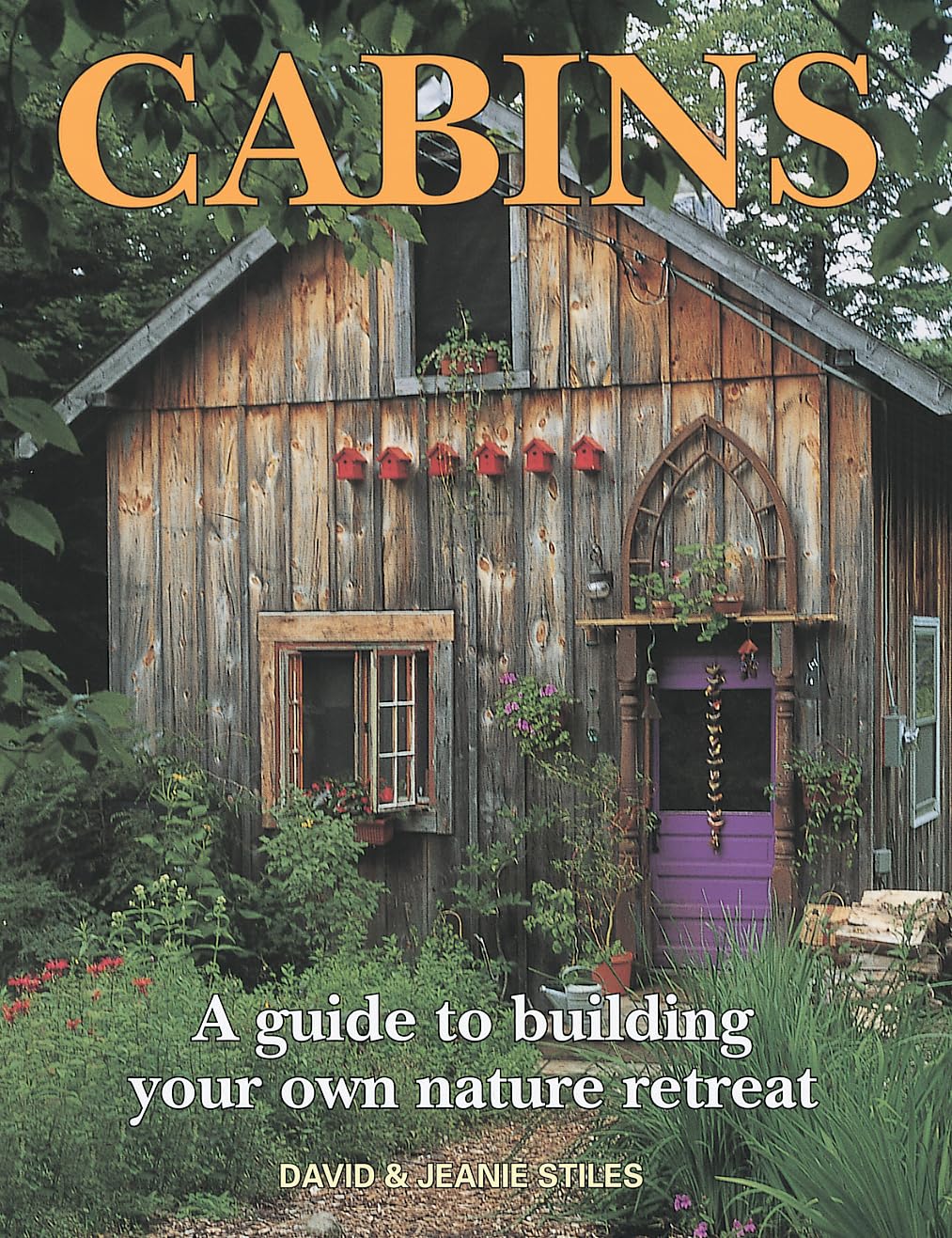
Description:
"Clear, practical book ... full-color photos help do-it-yourselfers realize their dreams." -- Log Homes Illustrated
The best-selling Cabins is back in print, at the same great value of its original price. This authoritative how-to title gives readers all the information they need to build their own cabin, including:
- A useful list of essential questions to consider during the planning process
- Types of cabin construction, such as pole built, stick built, post and beam, stone, cordwood, wood siding, and the advantages of each
- Site preparation, foundations, windows and doors, ladders and stairs, insulation, roofing, electricity, water systems and heating
- Essential information on log cabins
- Cabin designs and their advantages
- Furnishings and accessories
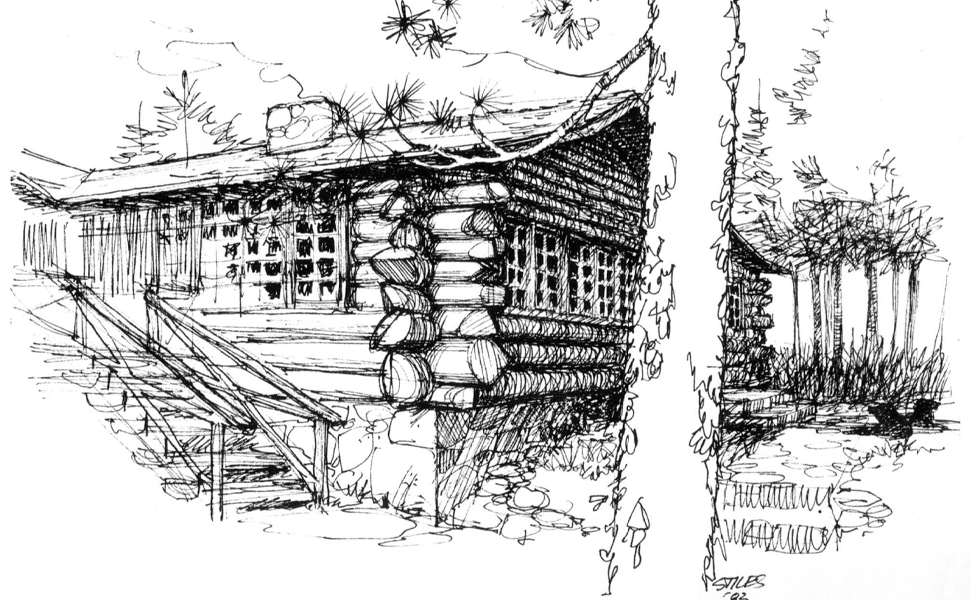
Construction methods are clearly illustrated in meticulous line drawings and precise plans with measurements. Cut-away cross-sections and exploded diagrams give the builder the true perspective and detail needed to obtain the best result, allowing readers to get the most enjoyment out of their newly built wilderness retreat.
From Library Journal
Copyright 2001 Reed Business Information, Inc.
Review
If you've ever thought of building a little retreat somewhere ... you will probably enjoy this book ... Cabins is geared to the modern homebuilder -- homes have to meet modern building codes, after all -- and examines a variety of building techniques. ― New Brunswick Telegraph-Journal Published On: 2001-05-26
You'll find not only the practical issues ... but also the inspiration to help select the cabin that is perfect. -- Kandis Carper ― Spokane Spokesman-Review Published On: 2001-05-25
An invaluable resource ... step-by-step instructions starting with basic planning. -- Stacie Gentile ― Calgary Sun Published On: 2001-06-16
The kind of book that stirs the imagination. ― Lexington Herald-Leader Published On: 2001-06-03
A primer for anyone with dreams of 'getting away from it all.' -- Ted Hainworth ― Saskatoon Star Phoenix Published On: 2001-07-21
Clear, practical book ... full-color photos help do-it-yourselfers realize their dreams. ― Log Homes Illustrated Published On: 2001-11-01
With this study of the what, when, where, and how of cabin building, anyone's yearning for the last great place can be satiated. -- Patrick A. Smith ― ForeWord Published On: 2001-10-01
[The book will] lead the clumsiest carpenter through the necessary steps to build a cozy getaway. -- Annie Stoltie ― Adirondack Life Published On: 2002-10-15
You can do it!... For tips read Cabins: A Guide to Building Your Own Nature Retreat. -- Rebecca Sawyer-Fay ― Cottage Living Published On: 2005-04-01
About the Author
David Stiles is a designer/builder who, together with his wife, Jeanie Stiles, has written articles for publications such as Better Homes and Gardens and the New York Times and authored 15 books, including Sheds and The Treehouse Book (which won the ALA Notable Children's Book Award). The Stiles divide their time between New York City and East Hampton, New York.
Excerpt. © Reprinted by permission. All rights reserved.
Foreword
by Don Metz, architect
In North American culture, the cabin holds a unique place in our collective consciousness. Enshrined in the best traditions of grassrooted nostalgia, the cabin symbolizes those bedrock frontier virtues of self-reliance, sturdiness, simplicity, humility and ---by inference -- honesty. By its very lack of pretension, the cabin connotes a purity of life whose loss we yearn to recall. As a genre, it stands at the moral center of a particularly American ethos defined by a cast of characters as diverse as Abe Lincoln, Davy Crockett and Henry David Thoreau.
During the colonial era, the cabin was home on much of the frontier, and is still remembered in folklore, song and verse as a safe and cozy haven. Today, the notion of the cabin as Home Sweet Home persists in literature and film. Whether in the mountains, on the prairie or by the lake, it remains a symbol of all that we value.
Today, the cabin has become the place we get away to when the place we're in has worn us out, a retreat from anxiety, a place dedicated to renewal. From the moment we lift the latch, push open the door and inhale that smoky-creosote-camphor cabin scent, we are altered for the better. More than a home away from home, the cabin reminds us of how -- we like to think -- life used to be lived in simpler times. It provides us with an opportunity to be closer to nature, and closer still to one another. The cabin is where we go to replace the hum of technology with the buzzing of insects, where cyberspace is out of place, where a mouse still has two ears and four legs. The cabin is a simple, sacred place where food and drink always taste better, where music sounds brighter, where evenings with loved ones linger longer into pleasure, where sleep is deep and dawn is fresh with wonders we've elsewhere forgotten.
Cabins seeks to address not only the practical issues involved in the design and building of a cabin, but also to encourage the impulse. Life is long, but need it be so hectic?
Imagine: After a long drive into nightfall, you step out of your car onto familiar footing -- not asphalt, not concrete -- but the stuff of millennial forests and plains and shorelines, the earth itself. You stretch your tired body, and you know immediately that every traveled mile was worth it as long as the trip ended here. Within moments of your arrival, it seems as if a blanket of peacefulness has gently covered you. An owl calls from a distant treetop, the same hoot-hoot, hoot-hoooot you remember from the last time -- welcome back. You breathe the night in deeply and look up at the stars. How could you forget they could be so dazzlingly bright? And the pines, the fragrance -- the scent of sage or the salty air.
You drag your duffel bag up onto the porch and reach for the key hidden in the abandoned wren's nest above the door. The lock has its eccentricities, but even in the dark, you know how to coax it open; after all you installed it yourself. When the groceries have been put away and the lamps are lit low, you light a fire. And as you sit back in that comfy, old chair and look into the lazily flickering flames, you can't begin to imagine what life would be like without the elemental pleasures of a cabin.
Excerpt. © Reprinted by permission. All rights reserved.
Foreword
by Don Metz, architect
In North American culture, the cabin holds a unique place in our collective consciousness. Enshrined in the best traditions of grassrooted nostalgia, the cabin symbolizes those bedrock frontier virtues of self-reliance, sturdiness, simplicity, humility and ---by inference -- honesty. By its very lack of pretension, the cabin connotes a purity of life whose loss we yearn to recall. As a genre, it stands at the moral center of a particularly American ethos defined by a cast of characters as diverse as Abe Lincoln, Davy Crockett and Henry David Thoreau.
During the colonial era, the cabin was home on much of the frontier, and is still remembered in folklore, song and verse as a safe and cozy haven. Today, the notion of the cabin as Home Sweet Home persists in literature and film. Whether in the mountains, on the prairie or by the lake, it remains a symbol of all that we value.
Today, the cabin has become the place we get away to when the place we're in has worn us out, a retreat from anxiety, a place dedicated to renewal. From the moment we lift the latch, push open the door and inhale that smoky-creosote-camphor cabin scent, we are altered for the better. More than a home away from home, the cabin reminds us of how -- we like to think -- life used to be lived in simpler times. It provides us with an opportunity to be closer to nature, and closer still to one another. The cabin is where we go to replace the hum of technology with the buzzing of insects, where cyberspace is out of place, where a mouse still has two ears and four legs. The cabin is a simple, sacred place where food and drink always taste better, where music sounds brighter, where evenings with loved ones linger longer into pleasure, where sleep is deep and dawn is fresh with wonders we've elsewhere forgotten.
Cabins seeks to address not only the practical issues involved in the design and building of a cabin, but also to encourage the impulse. Life is long, but need it be so hectic?
Imagine: After a long drive into nightfall, you step out of your car onto familiar footing -- not asphalt, not concrete -- but the stuff of millennial forests and plains and shorelines, the earth itself. You stretch your tired body, and you know immediately that every traveled mile was worth it as long as the trip ended here. Within moments of your arrival, it seems as if a blanket of peacefulness has gently covered you. An owl calls from a distant treetop, the same hoot-hoot, hoot-hoooot you remember from the last time -- welcome back. You breathe the night in deeply and look up at the stars. How could you forget they could be so dazzlingly bright? And the pines, the fragrance -- the scent of sage or the salty air.
You drag your duffel bag up onto the porch and reach for the key hidden in the abandoned wren's nest above the door. The lock has its eccentricities, but even in the dark, you know how to coax it open; after all you installed it yourself. When the groceries have been put away and the lamps are lit low, you light a fire. And as you sit back in that comfy, old chair and look into the lazily flickering flames, you can't begin to imagine what life would be like without the elemental pleasures of a cabin.
Details:
Visit the Firefly Books Store
Cabins: A Guide to Building Your Own Nature Retreat
QAR13507
Quantity:
Order today to get by 7-14 business days
Delivery fee of QAR 20. Free for orders above QAR 200.
 Imported From: United States
At BOLO, we work hard to ensure the products you receive are new, genuine, and sourced from reputable suppliers.
Every product in the BOLO catalogue is sourced through our Verified Global Supply Network of verified sellers, authorized distributors or directly from the manufacturer.
Each product undergoes thorough inspection and verification at our consolidation and fulfilment centers to ensure it meets our strict authenticity and quality standards before being shipped and delivered to you.
If you ever have concerns regarding the authenticity of a product purchased from us, please contact Bolo Support. We will review your inquiry promptly and, if necessary, provide documentation verifying authenticity or offer a suitable resolution.
Your trust is our top priority, and we are committed to maintaining transparency and integrity in every transaction.
While we strive to display accurate information, variations in packaging, labeling, instructions, or formulation may occasionally occur due to regional differences or supplier updates. For detailed or manufacturer-specific information, please contact the brand directly or reach out to BOLO Support for assistance.
Unless otherwise stated, all prices displayed on the product page include applicable taxes and import duties.
BOLO operates in accordance with the laws and regulations of Qatar. Any items found to be restricted or prohibited for sale within the Qatar will be cancelled prior to shipment. We take proactive measures to ensure that only products permitted for sale in Qatar are listed on our website.
All items are shipped by air, and any products classified as “Dangerous Goods (DG)” under IATA regulations will be removed from the order and cancelled.
All orders are processed manually, and we make every effort to process them promptly once confirmed. Products cancelled due to the above reasons will be permanently removed from listings across the website.
Cabins: A Guide to Building Your Own Nature Retreat
Foreword
In North American culture, the cabin holds a unique place in our collective consciousness. Enshrined in the best traditions of grass-rooted nostalgia, the cabin symbolizes those bedrock frontier virtues of self-reliance, sturdiness, simplicity, humility and — by inference — honesty. By its very lack of pretension, the cabin connotes a purity of life whose loss we yearn to recall. As a genre, it stands at the moral center of a particularly American ethos defined by a cast of characters as diverse as Abe Lincoln, Davy Crockett and Henry David Thoreau.
During the colonial era, the cabin was home on much of the frontier, and is still remembered in folklore, song and verse as a safe and cozy haven. Today, the notion of the cabin as Home Sweet Home persists in literature and film. Whether in the mountains, on the prairie or by the lake, it remains a symbol of all that we value.
Today, the cabin has become the place we get away to when the place we’re in has worn us out, a retreat from anxiety, a place dedicated to renewal. From the moment we lift the latch,
push open the door and inhale that smoky-creosote- camphor cabin scent, we are altered for the better. More than a home away from home, the cabin reminds us of how—we like to think—life used to be lived in simpler times. It provides us with an opportunity to be closer to nature, and closer still to one another. The cabin is where we go to replace the hum of technology with the buzzing of insects, where cyberspace is out of place, where a mouse still has two ears and four legs. The cabin is a simple, sacred place where food and drink always taste better, where music sounds brighter, where evenings with loved ones linger longer into pleasure, where sleep is deep and dawn is fresh with wonders we’ve elsewhere forgotten.
Cabins seeks to address not only the practical issues involved in the design and building of a cabin, but also to encourage the impulse. Life is long, but need it be so hectic?
Imagine: After a long drive into nightfall, you step out of your car onto familiar footing— not asphalt, not concrete—but the stuff of millennial forests and plains and shorelines, the earth itself. You stretch your tired body, and you know immediately that every traveled mile was worth it as long as the trip ended here. Within moments of your arrival, it seems as if a blanket of peacefulness has gently covered you. An owl calls from a distant treetop, the same hoot-hoot, hoot-hoooot you remember from the last time— welcome back. You breathe the night in deeply and look up at the stars. How could you forget they could be so dazzlingly bright? And the pines, the fragrance—the scent of sage or the salty air.
You drag your duffel bag up onto the porch and reach for the key hidden in the abandoned wren’s nest above the door. The lock has its eccentricities, but even in the dark, you know how to coax it open; after all, you installed it yourself. When the groceries have been put away and the lamps are lit low, you light a fire. And as you sit back in that comfy, old chair and look into the lazily flickering flames, you can’t begin to imagine what life would be like without the elemental pleasures of a cabin.
—Don Metz, architect

MacEagle’s winter cabin near Middlebury, Vermont.

Mark & Wendy Dwires’ year-round cabin, near Middlebury, Vermont.

Cabin built by artists Ann Trusty and John Hulsey, in Lawrence, Kansas.

Patti White built her cabin near the site of the original “Wiener Cabin,” built in the 1800s by her great-grandparents. It was a one-room cabin near a spring, behind the family’s main house. As each of their children got married, the new couple could live for a year in the cabin off in the woods, “weaning” themselves from living with their parents.

Growing up in the midwest, Jeanie remembers visiting her closest friend, Amy Buckingham, whose family had a cluster of cabins overlooking Reams lake in Dent, Minnesota. As siblings grew and children were born, cabins were expanded to accommodate larger families. Screened-in porches were added and became cool sleeping areas for the kids—the best place to listen to frogs and whisper into the night. Although each family had their own cabin, they shared one campfire in the evening. It was the magnet that attracted all the different family members, the neutral ground, a place to gather and warm up during those wonderful, chilly Minnesota nights, and to hear about each other’s days, roast marshmallows and eat s’mores. There was never an argument or sibling rivalry while sitting around the campfire. It created a closeness that did not exist while visiting another cabin.

If the call of the outdoors rings loudly for you, why not take the first blow at civilization’s shackles while senses are keen and muscles vigorous? Why not make the first move now, even if it is only to acquire a retreat in nearby woods. – Henry David Thoreau
Similar suggestions by Bolo
More from this brand
Similar items from “Design & Construction”
Share with
Or share with link
https://www.bolo.qa/products/U1552093735
Visit the Firefly Books Store
Cabins: A Guide to Building Your Own Nature Retreat
QAR13507
Quantity:
Order today to get by 7-14 business days
Delivery fee of QAR 20. Free for orders above QAR 200.
Imported From: United States
At BOLO, we work hard to ensure the products you receive are new, genuine, and sourced from reputable suppliers.
Every product in the BOLO catalogue is sourced through our Verified Global Supply Network of verified sellers, authorized distributors or directly from the manufacturer.
Each product undergoes thorough inspection and verification at our consolidation and fulfilment centers to ensure it meets our strict authenticity and quality standards before being shipped and delivered to you.
If you ever have concerns regarding the authenticity of a product purchased from us, please contact Bolo Support. We will review your inquiry promptly and, if necessary, provide documentation verifying authenticity or offer a suitable resolution.
Your trust is our top priority, and we are committed to maintaining transparency and integrity in every transaction.
While we strive to display accurate information, variations in packaging, labeling, instructions, or formulation may occasionally occur due to regional differences or supplier updates. For detailed or manufacturer-specific information, please contact the brand directly or reach out to BOLO Support for assistance.
Unless otherwise stated, all prices displayed on the product page include applicable taxes and import duties.
BOLO operates in accordance with the laws and regulations of Qatar. Any items found to be restricted or prohibited for sale within the Qatar will be cancelled prior to shipment. We take proactive measures to ensure that only products permitted for sale in Qatar are listed on our website.
All items are shipped by air, and any products classified as “Dangerous Goods (DG)” under IATA regulations will be removed from the order and cancelled.
All orders are processed manually, and we make every effort to process them promptly once confirmed. Products cancelled due to the above reasons will be permanently removed from listings across the website.
Description:
"Clear, practical book ... full-color photos help do-it-yourselfers realize their dreams." -- Log Homes Illustrated
The best-selling Cabins is back in print, at the same great value of its original price. This authoritative how-to title gives readers all the information they need to build their own cabin, including:
- A useful list of essential questions to consider during the planning process
- Types of cabin construction, such as pole built, stick built, post and beam, stone, cordwood, wood siding, and the advantages of each
- Site preparation, foundations, windows and doors, ladders and stairs, insulation, roofing, electricity, water systems and heating
- Essential information on log cabins
- Cabin designs and their advantages
- Furnishings and accessories
Construction methods are clearly illustrated in meticulous line drawings and precise plans with measurements. Cut-away cross-sections and exploded diagrams give the builder the true perspective and detail needed to obtain the best result, allowing readers to get the most enjoyment out of their newly built wilderness retreat.
From Library Journal
Copyright 2001 Reed Business Information, Inc.
Review
If you've ever thought of building a little retreat somewhere ... you will probably enjoy this book ... Cabins is geared to the modern homebuilder -- homes have to meet modern building codes, after all -- and examines a variety of building techniques. ― New Brunswick Telegraph-Journal Published On: 2001-05-26
You'll find not only the practical issues ... but also the inspiration to help select the cabin that is perfect. -- Kandis Carper ― Spokane Spokesman-Review Published On: 2001-05-25
An invaluable resource ... step-by-step instructions starting with basic planning. -- Stacie Gentile ― Calgary Sun Published On: 2001-06-16
The kind of book that stirs the imagination. ― Lexington Herald-Leader Published On: 2001-06-03
A primer for anyone with dreams of 'getting away from it all.' -- Ted Hainworth ― Saskatoon Star Phoenix Published On: 2001-07-21
Clear, practical book ... full-color photos help do-it-yourselfers realize their dreams. ― Log Homes Illustrated Published On: 2001-11-01
With this study of the what, when, where, and how of cabin building, anyone's yearning for the last great place can be satiated. -- Patrick A. Smith ― ForeWord Published On: 2001-10-01
[The book will] lead the clumsiest carpenter through the necessary steps to build a cozy getaway. -- Annie Stoltie ― Adirondack Life Published On: 2002-10-15
You can do it!... For tips read Cabins: A Guide to Building Your Own Nature Retreat. -- Rebecca Sawyer-Fay ― Cottage Living Published On: 2005-04-01
About the Author
David Stiles is a designer/builder who, together with his wife, Jeanie Stiles, has written articles for publications such as Better Homes and Gardens and the New York Times and authored 15 books, including Sheds and The Treehouse Book (which won the ALA Notable Children's Book Award). The Stiles divide their time between New York City and East Hampton, New York.
Excerpt. © Reprinted by permission. All rights reserved.
Foreword
by Don Metz, architect
In North American culture, the cabin holds a unique place in our collective consciousness. Enshrined in the best traditions of grassrooted nostalgia, the cabin symbolizes those bedrock frontier virtues of self-reliance, sturdiness, simplicity, humility and ---by inference -- honesty. By its very lack of pretension, the cabin connotes a purity of life whose loss we yearn to recall. As a genre, it stands at the moral center of a particularly American ethos defined by a cast of characters as diverse as Abe Lincoln, Davy Crockett and Henry David Thoreau.
During the colonial era, the cabin was home on much of the frontier, and is still remembered in folklore, song and verse as a safe and cozy haven. Today, the notion of the cabin as Home Sweet Home persists in literature and film. Whether in the mountains, on the prairie or by the lake, it remains a symbol of all that we value.
Today, the cabin has become the place we get away to when the place we're in has worn us out, a retreat from anxiety, a place dedicated to renewal. From the moment we lift the latch, push open the door and inhale that smoky-creosote-camphor cabin scent, we are altered for the better. More than a home away from home, the cabin reminds us of how -- we like to think -- life used to be lived in simpler times. It provides us with an opportunity to be closer to nature, and closer still to one another. The cabin is where we go to replace the hum of technology with the buzzing of insects, where cyberspace is out of place, where a mouse still has two ears and four legs. The cabin is a simple, sacred place where food and drink always taste better, where music sounds brighter, where evenings with loved ones linger longer into pleasure, where sleep is deep and dawn is fresh with wonders we've elsewhere forgotten.
Cabins seeks to address not only the practical issues involved in the design and building of a cabin, but also to encourage the impulse. Life is long, but need it be so hectic?
Imagine: After a long drive into nightfall, you step out of your car onto familiar footing -- not asphalt, not concrete -- but the stuff of millennial forests and plains and shorelines, the earth itself. You stretch your tired body, and you know immediately that every traveled mile was worth it as long as the trip ended here. Within moments of your arrival, it seems as if a blanket of peacefulness has gently covered you. An owl calls from a distant treetop, the same hoot-hoot, hoot-hoooot you remember from the last time -- welcome back. You breathe the night in deeply and look up at the stars. How could you forget they could be so dazzlingly bright? And the pines, the fragrance -- the scent of sage or the salty air.
You drag your duffel bag up onto the porch and reach for the key hidden in the abandoned wren's nest above the door. The lock has its eccentricities, but even in the dark, you know how to coax it open; after all you installed it yourself. When the groceries have been put away and the lamps are lit low, you light a fire. And as you sit back in that comfy, old chair and look into the lazily flickering flames, you can't begin to imagine what life would be like without the elemental pleasures of a cabin.
Excerpt. © Reprinted by permission. All rights reserved.
Foreword
by Don Metz, architect
In North American culture, the cabin holds a unique place in our collective consciousness. Enshrined in the best traditions of grassrooted nostalgia, the cabin symbolizes those bedrock frontier virtues of self-reliance, sturdiness, simplicity, humility and ---by inference -- honesty. By its very lack of pretension, the cabin connotes a purity of life whose loss we yearn to recall. As a genre, it stands at the moral center of a particularly American ethos defined by a cast of characters as diverse as Abe Lincoln, Davy Crockett and Henry David Thoreau.
During the colonial era, the cabin was home on much of the frontier, and is still remembered in folklore, song and verse as a safe and cozy haven. Today, the notion of the cabin as Home Sweet Home persists in literature and film. Whether in the mountains, on the prairie or by the lake, it remains a symbol of all that we value.
Today, the cabin has become the place we get away to when the place we're in has worn us out, a retreat from anxiety, a place dedicated to renewal. From the moment we lift the latch, push open the door and inhale that smoky-creosote-camphor cabin scent, we are altered for the better. More than a home away from home, the cabin reminds us of how -- we like to think -- life used to be lived in simpler times. It provides us with an opportunity to be closer to nature, and closer still to one another. The cabin is where we go to replace the hum of technology with the buzzing of insects, where cyberspace is out of place, where a mouse still has two ears and four legs. The cabin is a simple, sacred place where food and drink always taste better, where music sounds brighter, where evenings with loved ones linger longer into pleasure, where sleep is deep and dawn is fresh with wonders we've elsewhere forgotten.
Cabins seeks to address not only the practical issues involved in the design and building of a cabin, but also to encourage the impulse. Life is long, but need it be so hectic?
Imagine: After a long drive into nightfall, you step out of your car onto familiar footing -- not asphalt, not concrete -- but the stuff of millennial forests and plains and shorelines, the earth itself. You stretch your tired body, and you know immediately that every traveled mile was worth it as long as the trip ended here. Within moments of your arrival, it seems as if a blanket of peacefulness has gently covered you. An owl calls from a distant treetop, the same hoot-hoot, hoot-hoooot you remember from the last time -- welcome back. You breathe the night in deeply and look up at the stars. How could you forget they could be so dazzlingly bright? And the pines, the fragrance -- the scent of sage or the salty air.
You drag your duffel bag up onto the porch and reach for the key hidden in the abandoned wren's nest above the door. The lock has its eccentricities, but even in the dark, you know how to coax it open; after all you installed it yourself. When the groceries have been put away and the lamps are lit low, you light a fire. And as you sit back in that comfy, old chair and look into the lazily flickering flames, you can't begin to imagine what life would be like without the elemental pleasures of a cabin.
Details:
Cabins: A Guide to Building Your Own Nature Retreat
Foreword
In North American culture, the cabin holds a unique place in our collective consciousness. Enshrined in the best traditions of grass-rooted nostalgia, the cabin symbolizes those bedrock frontier virtues of self-reliance, sturdiness, simplicity, humility and — by inference — honesty. By its very lack of pretension, the cabin connotes a purity of life whose loss we yearn to recall. As a genre, it stands at the moral center of a particularly American ethos defined by a cast of characters as diverse as Abe Lincoln, Davy Crockett and Henry David Thoreau.
During the colonial era, the cabin was home on much of the frontier, and is still remembered in folklore, song and verse as a safe and cozy haven. Today, the notion of the cabin as Home Sweet Home persists in literature and film. Whether in the mountains, on the prairie or by the lake, it remains a symbol of all that we value.
Today, the cabin has become the place we get away to when the place we’re in has worn us out, a retreat from anxiety, a place dedicated to renewal. From the moment we lift the latch,
push open the door and inhale that smoky-creosote- camphor cabin scent, we are altered for the better. More than a home away from home, the cabin reminds us of how—we like to think—life used to be lived in simpler times. It provides us with an opportunity to be closer to nature, and closer still to one another. The cabin is where we go to replace the hum of technology with the buzzing of insects, where cyberspace is out of place, where a mouse still has two ears and four legs. The cabin is a simple, sacred place where food and drink always taste better, where music sounds brighter, where evenings with loved ones linger longer into pleasure, where sleep is deep and dawn is fresh with wonders we’ve elsewhere forgotten.
Cabins seeks to address not only the practical issues involved in the design and building of a cabin, but also to encourage the impulse. Life is long, but need it be so hectic?
Imagine: After a long drive into nightfall, you step out of your car onto familiar footing— not asphalt, not concrete—but the stuff of millennial forests and plains and shorelines, the earth itself. You stretch your tired body, and you know immediately that every traveled mile was worth it as long as the trip ended here. Within moments of your arrival, it seems as if a blanket of peacefulness has gently covered you. An owl calls from a distant treetop, the same hoot-hoot, hoot-hoooot you remember from the last time— welcome back. You breathe the night in deeply and look up at the stars. How could you forget they could be so dazzlingly bright? And the pines, the fragrance—the scent of sage or the salty air.
You drag your duffel bag up onto the porch and reach for the key hidden in the abandoned wren’s nest above the door. The lock has its eccentricities, but even in the dark, you know how to coax it open; after all, you installed it yourself. When the groceries have been put away and the lamps are lit low, you light a fire. And as you sit back in that comfy, old chair and look into the lazily flickering flames, you can’t begin to imagine what life would be like without the elemental pleasures of a cabin.
—Don Metz, architect
MacEagle’s winter cabin near Middlebury, Vermont.
Mark & Wendy Dwires’ year-round cabin, near Middlebury, Vermont.
Cabin built by artists Ann Trusty and John Hulsey, in Lawrence, Kansas.
Patti White built her cabin near the site of the original “Wiener Cabin,” built in the 1800s by her great-grandparents. It was a one-room cabin near a spring, behind the family’s main house. As each of their children got married, the new couple could live for a year in the cabin off in the woods, “weaning” themselves from living with their parents.
Growing up in the midwest, Jeanie remembers visiting her closest friend, Amy Buckingham, whose family had a cluster of cabins overlooking Reams lake in Dent, Minnesota. As siblings grew and children were born, cabins were expanded to accommodate larger families. Screened-in porches were added and became cool sleeping areas for the kids—the best place to listen to frogs and whisper into the night. Although each family had their own cabin, they shared one campfire in the evening. It was the magnet that attracted all the different family members, the neutral ground, a place to gather and warm up during those wonderful, chilly Minnesota nights, and to hear about each other’s days, roast marshmallows and eat s’mores. There was never an argument or sibling rivalry while sitting around the campfire. It created a closeness that did not exist while visiting another cabin.
If the call of the outdoors rings loudly for you, why not take the first blow at civilization’s shackles while senses are keen and muscles vigorous? Why not make the first move now, even if it is only to acquire a retreat in nearby woods. – Henry David Thoreau
Similar suggestions by Bolo
More from this brand
Similar items from “Design & Construction”
Share with
Or share with link
https://www.bolo.qa/products/U1552093735