Description:
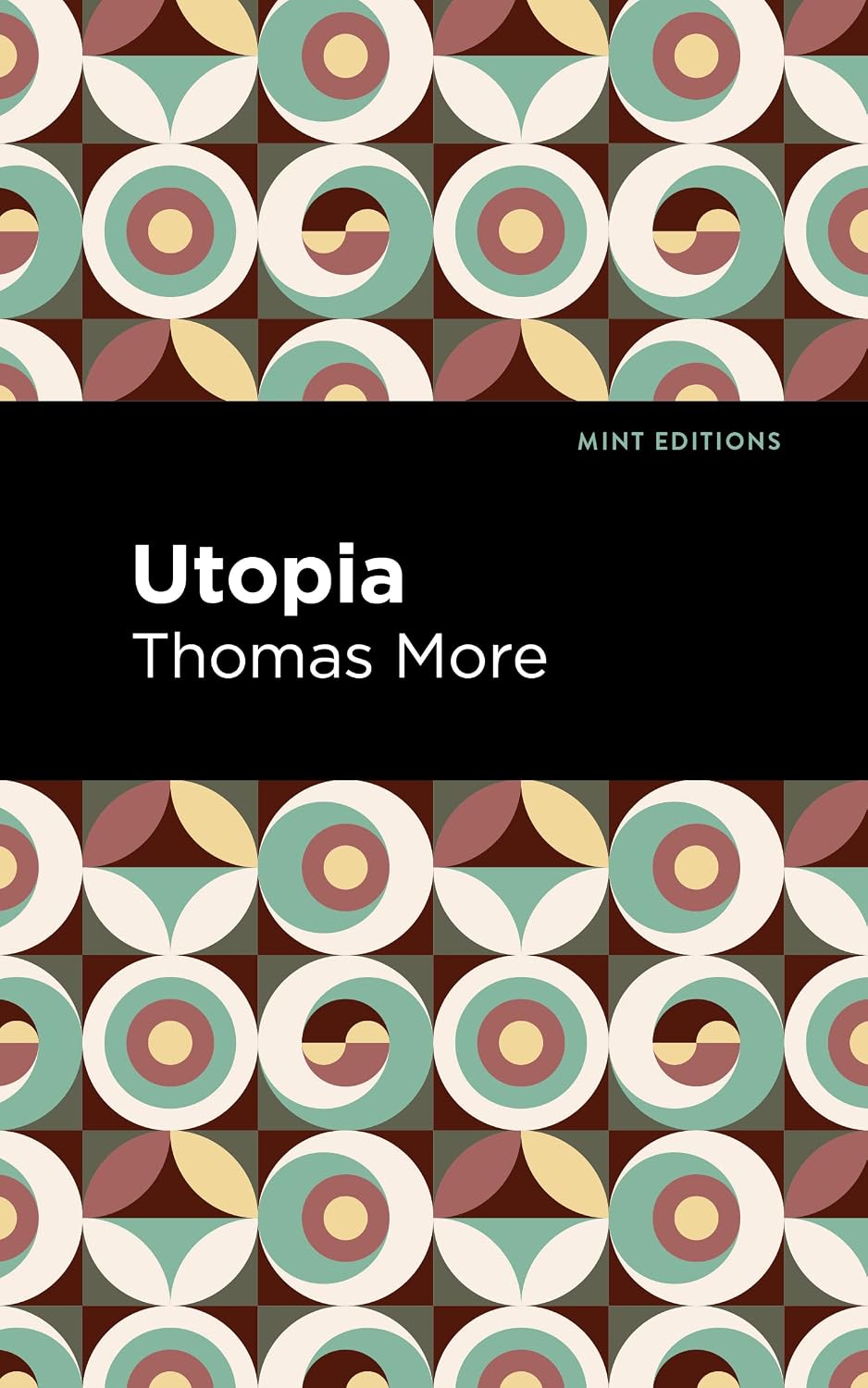
Utopia (1516) is a work of political satire by Thomas More. Published in Latin while More was serving as Privy Counsellor under King Henry VIII, the text is stylized as a true account of a new civilization discovered in the New World by traveler Raphael Hythlodaeus. While there have been varying interpretations of Utopia over the centuries, it is most consistently regarded as a work of political philosophy in the tradition of Plato’s Republic that satirizes European society by contrast with the laws and traditions of the Utopian people. “The island of Utopia is in the middle two hundred miles broad, and holds almost at the same breadth over a great part of it, but it grows narrower towards both ends. Its figure is not unlike a crescent.” For centuries, Utopia has been seen as an essential work of Renaissance humanism for its vision of a just and highly organized political system characterized by the abolition of private property, communal values, full employment, and free accessible healthcare. While scholars have long debated whether More envisioned his Utopia as a positive representation of society or as merely an unattainable vision of life on earth, his work remains an essential contribution to political discourse that continues to inform readers today. This edition of Thomas More’s Utopia is a classic work of English literature reimagined for modern readers.
Since our inception in 2020, Mint Editions has kept sustainability and innovation at the forefront of our mission. Each and every Mint Edition title gets a fresh, professionally typeset manuscript and a dazzling new cover, all while maintaining the integrity of the original book.
With thousands of titles in our collection, we aim to spotlight diverse public domain works to help them find modern audiences. Mint Editions celebrates a breadth of literary works, curated from both canonical and overlooked classics from writers around the globe.
From the Back Cover
While in Antwerp, Thomas More meets a strange traveler named Raphael Hythlodaeus, with whom he shares a discussion on the problems facing Europe in their day. Soon, Raphael begins to describe the land of Utopia, a distant island in the New World upon which a perfect society has developed in isolation. Utopia is a work of political satire by Thomas More.
About the Author
Thomas More (1478-1535) was an English lawyer, judge, philosopher, statesman, and humanist. Born in London, he was the second of six children born to Sir John More and his wife Agnes. From 1490 to 1492, he served as household page for Archbishop of Canterbury John Morton, who introduced him to Renaissance humanism and nominated him for a spot at the University of Oxford. After two years of learning Latin and Greek, he left to study law and was called to the Bar in 1502. Two years later, he was elected to Parliament, launching his political career in earnest. In 1516, while serving as Privy Counsellor, More published Utopia, a work of political philosophy and social satire that describes the customs of a fictional island nation. After a series of prominent posts in the court of King Henry VIII, More succeeded Thomas Wolsey as Lord Chancellor in 1529, making him one of the most powerful men in England. His three-year reign was mired in controversy, as he worked to impede the influence of the Protestant Reformation through the persecution of heretics and the suppression of Lutheran books, especially the Tyndale Bible. In 1530, he refused to sign a letter to Pope Clement VII that sought to annul Henry’s marriage to Catherine of Aragon, damaging his relationship with the King and distancing himself from clergymen loyal to the crown. After resigning in 1532, he further enraged the King by refusing to attend the coronation of Anne Boleyn, leading to a series of charges orchestrated by Thomas Cromwell. His refusal to take the Oath of Supremacy, which recognized the King as the figurehead of a new Church of England, would culminate in his being found guilty of high treason in 1535. Five days after his trial by jury, More was beheaded at Tower Hill. Recognized as a martyr by the Catholic Church, he was canonized as a saint in 1935 by Pope Pius XI.
Details:
Visit the Mint Editions Store
Utopia (Mint Editions (Political and Social Narratives))
QAR12770
Quantity:
Order today to get by 7-14 business days
Delivery fee of QAR 20. Free for orders above QAR 200.
 Imported From: United States
At BOLO, we work hard to ensure the products you receive are new, genuine, and sourced from reputable suppliers.
Every product in the BOLO catalogue is sourced through our Verified Global Supply Network of verified sellers, authorized distributors or directly from the manufacturer.
Each product undergoes thorough inspection and verification at our consolidation and fulfilment centers to ensure it meets our strict authenticity and quality standards before being shipped and delivered to you.
If you ever have concerns regarding the authenticity of a product purchased from us, please contact Bolo Support. We will review your inquiry promptly and, if necessary, provide documentation verifying authenticity or offer a suitable resolution.
Your trust is our top priority, and we are committed to maintaining transparency and integrity in every transaction.
While we strive to display accurate information, variations in packaging, labeling, instructions, or formulation may occasionally occur due to regional differences or supplier updates. For detailed or manufacturer-specific information, please contact the brand directly or reach out to BOLO Support for assistance.
Unless otherwise stated, all prices displayed on the product page include applicable taxes and import duties.
BOLO operates in accordance with the laws and regulations of Qatar. Any items found to be restricted or prohibited for sale within the Qatar will be cancelled prior to shipment. We take proactive measures to ensure that only products permitted for sale in Qatar are listed on our website.
All items are shipped by air, and any products classified as “Dangerous Goods (DG)” under IATA regulations will be removed from the order and cancelled.
All orders are processed manually, and we make every effort to process them promptly once confirmed. Products cancelled due to the above reasons will be permanently removed from listings across the website.
More from this brand
Similar items from “Renaissance”
Share with
Or share with link
https://www.bolo.qa/products/U1513135465
Visit the Mint Editions Store
Utopia (Mint Editions (Political and Social Narratives))
QAR12770
Quantity:
Order today to get by 7-14 business days
Delivery fee of QAR 20. Free for orders above QAR 200.
Imported From: United States
At BOLO, we work hard to ensure the products you receive are new, genuine, and sourced from reputable suppliers.
Every product in the BOLO catalogue is sourced through our Verified Global Supply Network of verified sellers, authorized distributors or directly from the manufacturer.
Each product undergoes thorough inspection and verification at our consolidation and fulfilment centers to ensure it meets our strict authenticity and quality standards before being shipped and delivered to you.
If you ever have concerns regarding the authenticity of a product purchased from us, please contact Bolo Support. We will review your inquiry promptly and, if necessary, provide documentation verifying authenticity or offer a suitable resolution.
Your trust is our top priority, and we are committed to maintaining transparency and integrity in every transaction.
While we strive to display accurate information, variations in packaging, labeling, instructions, or formulation may occasionally occur due to regional differences or supplier updates. For detailed or manufacturer-specific information, please contact the brand directly or reach out to BOLO Support for assistance.
Unless otherwise stated, all prices displayed on the product page include applicable taxes and import duties.
BOLO operates in accordance with the laws and regulations of Qatar. Any items found to be restricted or prohibited for sale within the Qatar will be cancelled prior to shipment. We take proactive measures to ensure that only products permitted for sale in Qatar are listed on our website.
All items are shipped by air, and any products classified as “Dangerous Goods (DG)” under IATA regulations will be removed from the order and cancelled.
All orders are processed manually, and we make every effort to process them promptly once confirmed. Products cancelled due to the above reasons will be permanently removed from listings across the website.
Description:
Utopia (1516) is a work of political satire by Thomas More. Published in Latin while More was serving as Privy Counsellor under King Henry VIII, the text is stylized as a true account of a new civilization discovered in the New World by traveler Raphael Hythlodaeus. While there have been varying interpretations of Utopia over the centuries, it is most consistently regarded as a work of political philosophy in the tradition of Plato’s Republic that satirizes European society by contrast with the laws and traditions of the Utopian people. “The island of Utopia is in the middle two hundred miles broad, and holds almost at the same breadth over a great part of it, but it grows narrower towards both ends. Its figure is not unlike a crescent.” For centuries, Utopia has been seen as an essential work of Renaissance humanism for its vision of a just and highly organized political system characterized by the abolition of private property, communal values, full employment, and free accessible healthcare. While scholars have long debated whether More envisioned his Utopia as a positive representation of society or as merely an unattainable vision of life on earth, his work remains an essential contribution to political discourse that continues to inform readers today. This edition of Thomas More’s Utopia is a classic work of English literature reimagined for modern readers.
Since our inception in 2020, Mint Editions has kept sustainability and innovation at the forefront of our mission. Each and every Mint Edition title gets a fresh, professionally typeset manuscript and a dazzling new cover, all while maintaining the integrity of the original book.
With thousands of titles in our collection, we aim to spotlight diverse public domain works to help them find modern audiences. Mint Editions celebrates a breadth of literary works, curated from both canonical and overlooked classics from writers around the globe.
From the Back Cover
While in Antwerp, Thomas More meets a strange traveler named Raphael Hythlodaeus, with whom he shares a discussion on the problems facing Europe in their day. Soon, Raphael begins to describe the land of Utopia, a distant island in the New World upon which a perfect society has developed in isolation. Utopia is a work of political satire by Thomas More.
About the Author
Thomas More (1478-1535) was an English lawyer, judge, philosopher, statesman, and humanist. Born in London, he was the second of six children born to Sir John More and his wife Agnes. From 1490 to 1492, he served as household page for Archbishop of Canterbury John Morton, who introduced him to Renaissance humanism and nominated him for a spot at the University of Oxford. After two years of learning Latin and Greek, he left to study law and was called to the Bar in 1502. Two years later, he was elected to Parliament, launching his political career in earnest. In 1516, while serving as Privy Counsellor, More published Utopia, a work of political philosophy and social satire that describes the customs of a fictional island nation. After a series of prominent posts in the court of King Henry VIII, More succeeded Thomas Wolsey as Lord Chancellor in 1529, making him one of the most powerful men in England. His three-year reign was mired in controversy, as he worked to impede the influence of the Protestant Reformation through the persecution of heretics and the suppression of Lutheran books, especially the Tyndale Bible. In 1530, he refused to sign a letter to Pope Clement VII that sought to annul Henry’s marriage to Catherine of Aragon, damaging his relationship with the King and distancing himself from clergymen loyal to the crown. After resigning in 1532, he further enraged the King by refusing to attend the coronation of Anne Boleyn, leading to a series of charges orchestrated by Thomas Cromwell. His refusal to take the Oath of Supremacy, which recognized the King as the figurehead of a new Church of England, would culminate in his being found guilty of high treason in 1535. Five days after his trial by jury, More was beheaded at Tower Hill. Recognized as a martyr by the Catholic Church, he was canonized as a saint in 1935 by Pope Pius XI.
Details:
More from this brand
Similar items from “Renaissance”
Share with
Or share with link
https://www.bolo.qa/products/U1513135465