Description:
Take the intimidation out of common home repair jobs
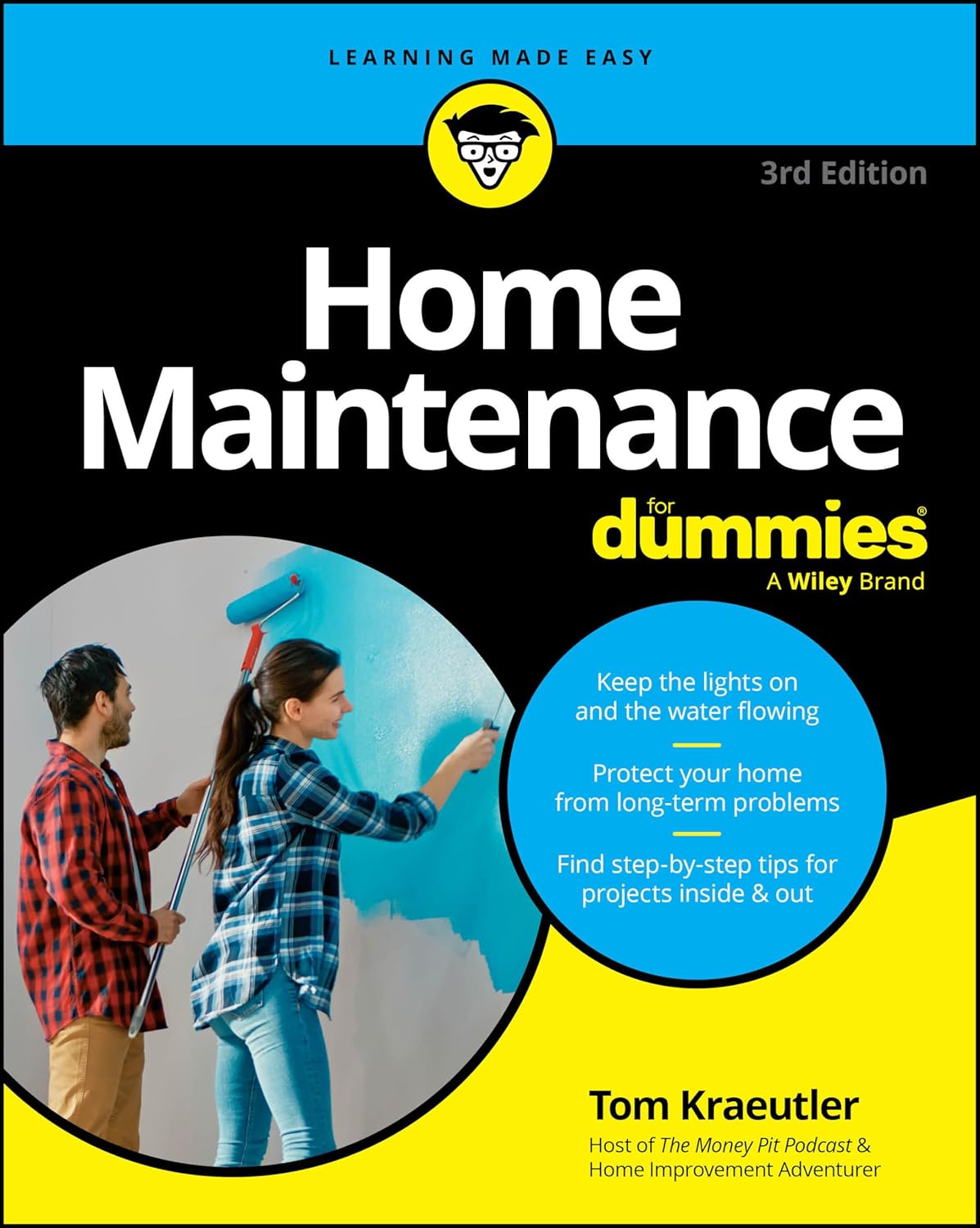
Home Maintenance For Dummies gives you the know-how you need to inspect, tune up, and make repairs to every room of your house. Learn how to stop drafty windows and doors, fix roof leaks, unclog pipes, silence squeaky floors, test your water pressure, fix a dripping faucet, and beyond. Plus, learn tricks of the trade to stop wasting energy, lower energy bills, and improve the comfort of your home. Some home maintenance jobs are easy to ignore, but you'll save thousands in repair costs if you keep things running properly. And when things do break, you can save even more money with DIY repairs. You'll be amazed how easy it is to do many common upkeep tasks yourself. With step-by-step guides, detailed diagrams, and instructions for every room of the home, you'll finally be able to fix those little problems that have been nagging at you. This updated edition covers the latest heating and cooling systems, tankless water heaters, LED lighting, solar power, and all the other newfangled stuff in your house.
- Learn how to conduct routine inspections, keep major appliances running efficiently, and avoid costly mistakes
- Make a list for the must-have tools in your toolbox
- Recognize the difference between an easy DIY repair and something an expert should handle
- Protect your home from long-term problems and secure the value of your asset
First-time homeowners looking for a guide to keep their dream home in tip-top shape, as well as homeowners who aren't familiar with common home repairs, will love this beginner-friendly Dummies guide.
From the Back Cover
Go from helpless to handy in no time at all
Whether you’re ready to start a minor home improvement task or preparing to take on a major project, Home Maintenance For Dummies is the back-to-basics resource you need to get you from start to finish. You’ll learn everything you could possibly want to know to complete almost any kind of home maintenance, from routine inspections to major appliance repairs. You’ll also find step-by-step guides for common projects and tasks, detailed diagrams, and instructions for every room in your house.
Inside…
- Fix that leaky faucet, roaring fan, or flickering light
- Tackle your heating and cooling systems
- Create a basic home repair toolkit
- Avoid costly home repair mistakes
- Solve common problems, like a clogged sink
- Learn when to call in an expert
About the Author
Tom Kraeutler is a home improvement broadcast journalist and the host of The Money Pit, America’s largest syndicated home improvement radio show. He also hosts The Money Pit Podcast and is an accomplished author, columnist, and blogger. Tom has appeared on FOX, CNN, MSNBC, The History Channel, HGTV, and the DIY Network, helping millions gain the knowledge and confidence to make their homes the best they can be.
Details:
Visit the For Dummies Store
Home Maintenance For Dummies (For Dummies: Learning Made Easy)
QAR13191
Quantity:
Order today to get by 7-14 business days
Delivery fee of QAR 20. Free for orders above QAR 200.
 Imported From: United States
At BOLO, we work hard to ensure the products you receive are new, genuine, and sourced from reputable suppliers.
Every product in the BOLO catalogue is sourced through our Verified Global Supply Network of verified sellers, authorized distributors or directly from the manufacturer.
Each product undergoes thorough inspection and verification at our consolidation and fulfilment centers to ensure it meets our strict authenticity and quality standards before being shipped and delivered to you.
If you ever have concerns regarding the authenticity of a product purchased from us, please contact Bolo Support. We will review your inquiry promptly and, if necessary, provide documentation verifying authenticity or offer a suitable resolution.
Your trust is our top priority, and we are committed to maintaining transparency and integrity in every transaction.
While we strive to display accurate information, variations in packaging, labeling, instructions, or formulation may occasionally occur due to regional differences or supplier updates. For detailed or manufacturer-specific information, please contact the brand directly or reach out to BOLO Support for assistance.
Unless otherwise stated, all prices displayed on the product page include applicable taxes and import duties.
BOLO operates in accordance with the laws and regulations of Qatar. Any items found to be restricted or prohibited for sale within the Qatar will be cancelled prior to shipment. We take proactive measures to ensure that only products permitted for sale in Qatar are listed on our website.
All items are shipped by air, and any products classified as “Dangerous Goods (DG)” under IATA regulations will be removed from the order and cancelled.
All orders are processed manually, and we make every effort to process them promptly once confirmed. Products cancelled due to the above reasons will be permanently removed from listings across the website.


What should I do if my roof is leaking?
If your roof is leaking, act quickly to minimize water damage and locate the source of the leak. Start by placing a bucket or container under the leak to catch dripping water and protect your floors. If the leak is coming through the drywall ceiling, use a screwdriver or similar tool to make a few small holes in the ceiling. This will release trapped water and prevent the ceiling from swelling and sagging, which could lead to more costly repairs.
Next, find the source. Leaks often occur around plumbing vents, chimneys, or where roofs and walls intersect. Carefully inspect these areas to find the source of the leak. If you can’t find it, use a garden hose with the help of another person. Have one person on the roof and the other in the attic. Start by running a small amount of water over the roof below the suspected leak area, then move up a few feet at a time until the leak is detected.
Depending on your DIY skills, you may be able to repair the leak yourself, but in most cases, it's best to reach out to a pro for help.
How can I stop my toilet from running?
Toilets have only two “moving” parts: the fill valve, which fills the toilet after each flush; and the flush valve, which releases water from the toilet tank to flush away something you hope to never see again! While both valves are durable, they do wear out and need to be replaced every two to three years.
When the fill valve begins to wear out, it tends to squeal a lot, as water runs through it, which is mostly an annoyance. But when the flush valve fails, the toilet will run and run and can waste hundreds of gallons of water!
Fortunately, replacing both the fill and flush valves is an inexpensive, fairly simple plumbing project that most DIYers can probably handle without needing a plumber.
Testing the flush valve is pretty easy. Just open the lid of the toilet tank and add a few drops of food coloring. Then wait a half hour and check the toilet bowl. If any of that food coloring leaked into the toilet, you’ve got yourself a leaky flush valve that’s ready to be replaced!
How can I improve the energy efficiency of my home?
Improving your home's energy efficiency involves a combination of insulation, sealing, and using energy-efficient appliances. Start by sealing leaks around windows, doors, and other openings to prevent drafts. Adding insulation to your attic, walls, and floors can significantly reduce heat loss in winter and keep your home cooler in summer.
Of all these measures, adding more insulation to your attic specifically, is the most effective way to enhance your home’s energy efficiency, cut heating and cooling costs, and lower your energy bills. To check your current insulation level, go to your attic with a ruler and measure the depth. Most homes need 10 to 15 inches of fiberglass batt or blown-in insulation. For the recommended insulation level specific to your area, visit the EnergyStar.gov website and search for insulation levels. You'll find a detailed map indicating the required insulation for different regions.
In addition to adding insulation, using energy-efficient appliances and light bulbs, such as LEDs, can further reduce energy consumption. Regular maintenance of HVAC systems, including annual tune-ups, ensures they run efficiently. Installing programmable thermostats can also help optimize heating and cooling schedules.

Similar suggestions by Bolo
More from this brand
Similar items from “Do-It-Yourself”
Share with
Or share with link
https://www.bolo.qa/products/U1394241070
Visit the For Dummies Store
Home Maintenance For Dummies (For Dummies: Learning Made Easy)
QAR13191
Quantity:
Order today to get by 7-14 business days
Delivery fee of QAR 20. Free for orders above QAR 200.
Imported From: United States
At BOLO, we work hard to ensure the products you receive are new, genuine, and sourced from reputable suppliers.
Every product in the BOLO catalogue is sourced through our Verified Global Supply Network of verified sellers, authorized distributors or directly from the manufacturer.
Each product undergoes thorough inspection and verification at our consolidation and fulfilment centers to ensure it meets our strict authenticity and quality standards before being shipped and delivered to you.
If you ever have concerns regarding the authenticity of a product purchased from us, please contact Bolo Support. We will review your inquiry promptly and, if necessary, provide documentation verifying authenticity or offer a suitable resolution.
Your trust is our top priority, and we are committed to maintaining transparency and integrity in every transaction.
While we strive to display accurate information, variations in packaging, labeling, instructions, or formulation may occasionally occur due to regional differences or supplier updates. For detailed or manufacturer-specific information, please contact the brand directly or reach out to BOLO Support for assistance.
Unless otherwise stated, all prices displayed on the product page include applicable taxes and import duties.
BOLO operates in accordance with the laws and regulations of Qatar. Any items found to be restricted or prohibited for sale within the Qatar will be cancelled prior to shipment. We take proactive measures to ensure that only products permitted for sale in Qatar are listed on our website.
All items are shipped by air, and any products classified as “Dangerous Goods (DG)” under IATA regulations will be removed from the order and cancelled.
All orders are processed manually, and we make every effort to process them promptly once confirmed. Products cancelled due to the above reasons will be permanently removed from listings across the website.
Description:
Take the intimidation out of common home repair jobs
Home Maintenance For Dummies gives you the know-how you need to inspect, tune up, and make repairs to every room of your house. Learn how to stop drafty windows and doors, fix roof leaks, unclog pipes, silence squeaky floors, test your water pressure, fix a dripping faucet, and beyond. Plus, learn tricks of the trade to stop wasting energy, lower energy bills, and improve the comfort of your home. Some home maintenance jobs are easy to ignore, but you'll save thousands in repair costs if you keep things running properly. And when things do break, you can save even more money with DIY repairs. You'll be amazed how easy it is to do many common upkeep tasks yourself. With step-by-step guides, detailed diagrams, and instructions for every room of the home, you'll finally be able to fix those little problems that have been nagging at you. This updated edition covers the latest heating and cooling systems, tankless water heaters, LED lighting, solar power, and all the other newfangled stuff in your house.
- Learn how to conduct routine inspections, keep major appliances running efficiently, and avoid costly mistakes
- Make a list for the must-have tools in your toolbox
- Recognize the difference between an easy DIY repair and something an expert should handle
- Protect your home from long-term problems and secure the value of your asset
First-time homeowners looking for a guide to keep their dream home in tip-top shape, as well as homeowners who aren't familiar with common home repairs, will love this beginner-friendly Dummies guide.
From the Back Cover
Go from helpless to handy in no time at all
Whether you’re ready to start a minor home improvement task or preparing to take on a major project, Home Maintenance For Dummies is the back-to-basics resource you need to get you from start to finish. You’ll learn everything you could possibly want to know to complete almost any kind of home maintenance, from routine inspections to major appliance repairs. You’ll also find step-by-step guides for common projects and tasks, detailed diagrams, and instructions for every room in your house.
Inside…
- Fix that leaky faucet, roaring fan, or flickering light
- Tackle your heating and cooling systems
- Create a basic home repair toolkit
- Avoid costly home repair mistakes
- Solve common problems, like a clogged sink
- Learn when to call in an expert
About the Author
Tom Kraeutler is a home improvement broadcast journalist and the host of The Money Pit, America’s largest syndicated home improvement radio show. He also hosts The Money Pit Podcast and is an accomplished author, columnist, and blogger. Tom has appeared on FOX, CNN, MSNBC, The History Channel, HGTV, and the DIY Network, helping millions gain the knowledge and confidence to make their homes the best they can be.
Details:
What should I do if my roof is leaking?
If your roof is leaking, act quickly to minimize water damage and locate the source of the leak. Start by placing a bucket or container under the leak to catch dripping water and protect your floors. If the leak is coming through the drywall ceiling, use a screwdriver or similar tool to make a few small holes in the ceiling. This will release trapped water and prevent the ceiling from swelling and sagging, which could lead to more costly repairs.
Next, find the source. Leaks often occur around plumbing vents, chimneys, or where roofs and walls intersect. Carefully inspect these areas to find the source of the leak. If you can’t find it, use a garden hose with the help of another person. Have one person on the roof and the other in the attic. Start by running a small amount of water over the roof below the suspected leak area, then move up a few feet at a time until the leak is detected.
Depending on your DIY skills, you may be able to repair the leak yourself, but in most cases, it's best to reach out to a pro for help.
How can I stop my toilet from running?
Toilets have only two “moving” parts: the fill valve, which fills the toilet after each flush; and the flush valve, which releases water from the toilet tank to flush away something you hope to never see again! While both valves are durable, they do wear out and need to be replaced every two to three years.
When the fill valve begins to wear out, it tends to squeal a lot, as water runs through it, which is mostly an annoyance. But when the flush valve fails, the toilet will run and run and can waste hundreds of gallons of water!
Fortunately, replacing both the fill and flush valves is an inexpensive, fairly simple plumbing project that most DIYers can probably handle without needing a plumber.
Testing the flush valve is pretty easy. Just open the lid of the toilet tank and add a few drops of food coloring. Then wait a half hour and check the toilet bowl. If any of that food coloring leaked into the toilet, you’ve got yourself a leaky flush valve that’s ready to be replaced!
How can I improve the energy efficiency of my home?
Improving your home's energy efficiency involves a combination of insulation, sealing, and using energy-efficient appliances. Start by sealing leaks around windows, doors, and other openings to prevent drafts. Adding insulation to your attic, walls, and floors can significantly reduce heat loss in winter and keep your home cooler in summer.
Of all these measures, adding more insulation to your attic specifically, is the most effective way to enhance your home’s energy efficiency, cut heating and cooling costs, and lower your energy bills. To check your current insulation level, go to your attic with a ruler and measure the depth. Most homes need 10 to 15 inches of fiberglass batt or blown-in insulation. For the recommended insulation level specific to your area, visit the EnergyStar.gov website and search for insulation levels. You'll find a detailed map indicating the required insulation for different regions.
In addition to adding insulation, using energy-efficient appliances and light bulbs, such as LEDs, can further reduce energy consumption. Regular maintenance of HVAC systems, including annual tune-ups, ensures they run efficiently. Installing programmable thermostats can also help optimize heating and cooling schedules.
Similar suggestions by Bolo
More from this brand
Similar items from “Do-It-Yourself”
Share with
Or share with link
https://www.bolo.qa/products/U1394241070