Deliver toQatar
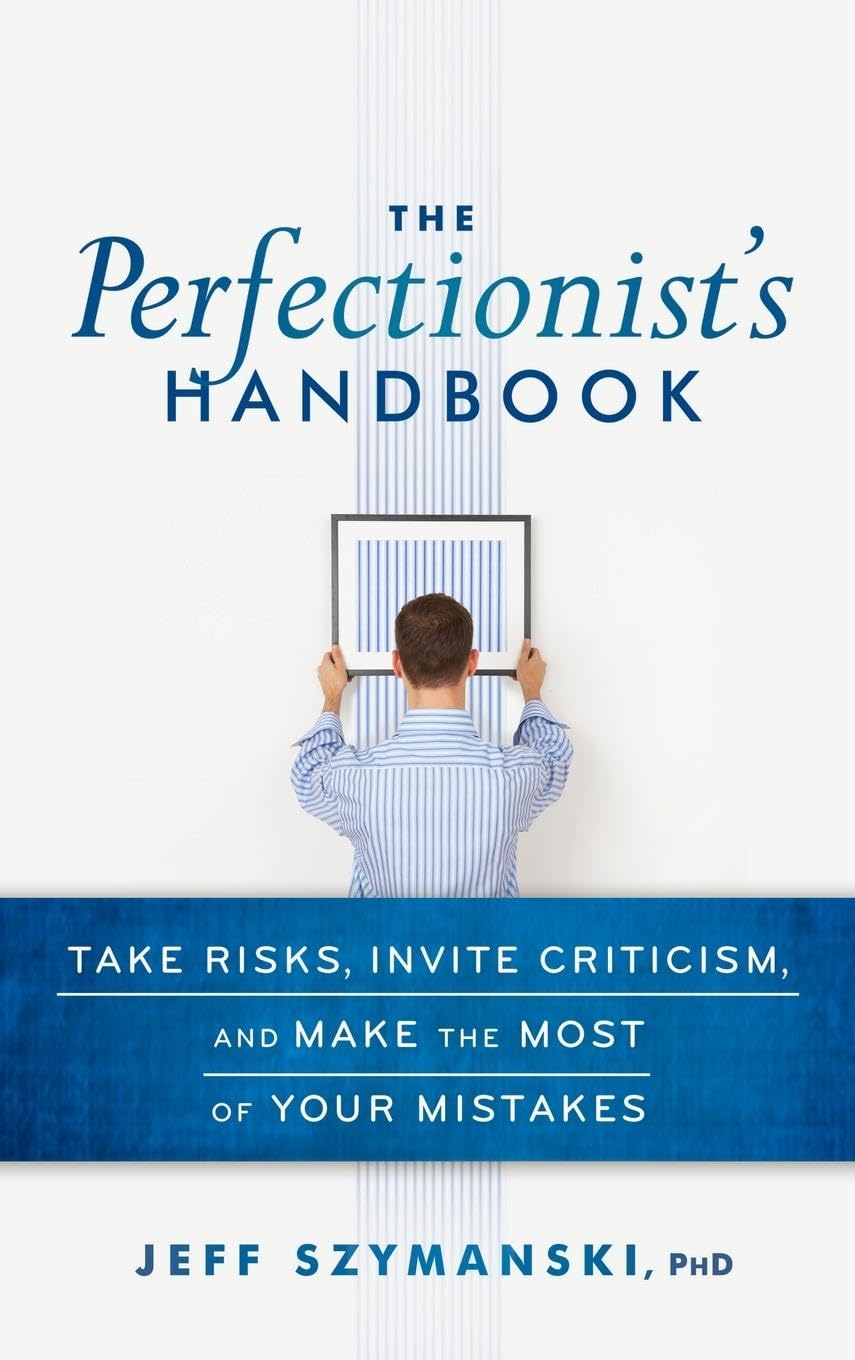
The Perfectionist's Handbook: Take Risks, Invite Criticism, and Make the Most of Your Mistakes

Description:

A guide for getting your perfectionism to work for you

Is perfectionism a good thing or does it get in our way? In The Perfectionist's Handbook, clinical psychologist Jeff Szymanski helps readers navigate their way out of the "perfectionism paradox": if your intentions are good (wanting to excel) and the outcomes you want are reasonable (to feel competent and satisfied), why would perfectionism backfire and result in unhappiness and stress? Learn when perfectionism will pay off, and when and why it sabotages you. Specific strategies are outlined throughout the book to help readers transform their perfectionism from a liability to an asset.

There is no reason to eliminate perfectionism altogether―instead, build on what's working and change what's not. The Perfectionist's Handbook helps readers to:

  • Distinguish between intention and strategy as a way of improving outcomes
  • Identify diminishing returns and how to redistribute time and resources
  • Make the most of mistakes rather than being preoccupied with trying to avoid them
  • Learn to focus on your "Top 10" list as a way of getting the most out of your life
  • Access others more effectively as a way of improving performance
  • Obtain more balance in their lives


Editorial Reviews

From the Inside Flap

"You're such a perfectionist."

Are you supposed to feel insulted or flattered when you hear this comment? Is someone saying that you are detail oriented, organized, and driven to excel? Or that you are controlling, rigid, and self-defeating? Is your perfectionism a good thing, or does it get in your way?

In The Perfectionist's Handbook, Jeff Szymanski helps readers navigate their way out of the "perfectionism paradox" If your intentions are good (wanting to excel) and the outcomes you want are reasonable (to feel competent and satisfied), why would your perfectionism backfire and result in unhappiness, stress, and unwanted results? Many people consider their perfectionism to be one of their most valuable attributes and critical to success in achieving one's life goals. Advice aimed at trying to stop you from being a perfectionist doesn't ring true.

Jeff Szymanski, a clinical psychologist specializing in anxiety and obsessive-compulsive disorder (OCD), helps readers understand when their perfectionism will pay off, and when and why it sabotages you. Specific strategies are outlined throughout the book to help readers identify the difference between their "healthy" and "unhealthy" perfectionism. There is no reason to eliminate perfectionism altogether--rather, build on what is working and change what is not. In addition, The Perfectionist's Handbook helps readers to:

  • Distinguish between intention and strategy as a way of improving outcomes
  • Identify diminishing returns and ways to redistribute time and resources
  • Make the most of mistakes rather than being preoccupied with trying to avoid them
  • Learn to focus on your "Top 10" list as a way of getting the most out of your life
  • Interact with others more effectively as a way of improving performance
  • Establish more balance in your life

Transform your perfectionism from a liability to an asset. Let your instincts lead you to achieve your goals--but also learn to enjoy your journey and its rewards.

From the Back Cover

“You’re such a perfectionist.”

Are you supposed to feel insulted or flattered when you hear this comment? Is someone saying that you are detail oriented, organized, and driven to excel? Or that you are controlling, rigid, and self-defeating? Is your perfectionism a good thing, or does it get in your way?

In The Perfectionist’s Handbook, Jeff Szymanski helps readers navigate their way out of the “perfectionism paradox”: If your intentions are good (wanting to excel) and the outcomes you want are reasonable (to feel competent and satisfied), why would your perfectionism backfire and result in unhappiness, stress, and unwanted results? Many people consider their perfectionism to be one of their most valuable attributes and critical to success in achieving one’s life goals. Advice aimed at trying to stop you from being a perfectionist doesn’t ring true.

Jeff Szymanski, a clinical psychologist specializing in anxiety and obsessive-compulsive disorder (OCD), helps readers understand when their perfectionism will pay off, and when and why it sabotages you. Specific strategies are outlined throughout the book to help readers identify the difference between their “healthy” and “unhealthy” perfectionism. There is no reason to eliminate perfectionism altogether―rather, build on what is working and change what is not. In addition, The Perfectionist’s Handbook helps readers to:

  • Distinguish between intention and strategy as a way of improving outcomes
  • Identify diminishing returns and ways to redistribute time and resources
  • Make the most of mistakes rather than being preoccupied with trying to avoid them
  • Learn to focus on your “Top 10” list as a way of getting the most out of your life
  • Interact with others more effectively as a way of improving performance
  • Establish more balance in your life

Transform your perfectionism from a liability to an asset. Let your instincts lead you to achieve your goals―but also learn to enjoy your journey and its rewards.

Details:

The Perfectionist's Handbook: Take Risks, Invite Criticism, and Make the Most of Your Mistakes

Product ID: U0470923369
|

Returns & Warranty policies

Imported From: United States

At BOLO, we work hard to ensure the products you receive are new, genuine, and sourced from reputable suppliers.

Every product in the BOLO catalogue is sourced through our Verified Global Supply Network of verified sellers, authorized distributors or directly from the manufacturer.

Each product undergoes thorough inspection and verification at our consolidation and fulfilment centers to ensure it meets our strict authenticity and quality standards before being shipped and delivered to you.

If you ever have concerns regarding the authenticity of a product purchased from us, please contact Bolo Support. We will review your inquiry promptly and, if necessary, provide documentation verifying authenticity or offer a suitable resolution.

Your trust is our top priority, and we are committed to maintaining transparency and integrity in every transaction.

While we strive to display accurate information, variations in packaging, labeling, instructions, or formulation may occasionally occur due to regional differences or supplier updates. For detailed or manufacturer-specific information, please contact the brand directly or reach out to BOLO Support for assistance.

Unless otherwise stated, all prices displayed on the product page include applicable taxes and import duties.

BOLO operates in accordance with the laws and regulations of Qatar. Any items found to be restricted or prohibited for sale within the Qatar will be cancelled prior to shipment. We take proactive measures to ensure that only products permitted for sale in Qatar are listed on our website.

All items are shipped by air, and any products classified as “Dangerous Goods (DG)” under IATA regulations will be removed from the order and cancelled.

All orders are processed manually, and we make every effort to process them promptly once confirmed. Products cancelled due to the above reasons will be permanently removed from listings across the website.

The Perfectionist's Handbook: Take Risks, Invite Criticism, and Make the Most of Your Mistakes

Product ID: U0470923369
The Perfectionist's Handbook: Take Risks, Invite Criticism, and Make the Most of Your Mistakes-0
|

Returns & Warranty policies

Imported From: United States

At BOLO, we work hard to ensure the products you receive are new, genuine, and sourced from reputable suppliers.

Every product in the BOLO catalogue is sourced through our Verified Global Supply Network of verified sellers, authorized distributors or directly from the manufacturer.

Each product undergoes thorough inspection and verification at our consolidation and fulfilment centers to ensure it meets our strict authenticity and quality standards before being shipped and delivered to you.

If you ever have concerns regarding the authenticity of a product purchased from us, please contact Bolo Support. We will review your inquiry promptly and, if necessary, provide documentation verifying authenticity or offer a suitable resolution.

Your trust is our top priority, and we are committed to maintaining transparency and integrity in every transaction.

While we strive to display accurate information, variations in packaging, labeling, instructions, or formulation may occasionally occur due to regional differences or supplier updates. For detailed or manufacturer-specific information, please contact the brand directly or reach out to BOLO Support for assistance.

Unless otherwise stated, all prices displayed on the product page include applicable taxes and import duties.

BOLO operates in accordance with the laws and regulations of Qatar. Any items found to be restricted or prohibited for sale within the Qatar will be cancelled prior to shipment. We take proactive measures to ensure that only products permitted for sale in Qatar are listed on our website.

All items are shipped by air, and any products classified as “Dangerous Goods (DG)” under IATA regulations will be removed from the order and cancelled.

All orders are processed manually, and we make every effort to process them promptly once confirmed. Products cancelled due to the above reasons will be permanently removed from listings across the website.

Description:

A guide for getting your perfectionism to work for you

Is perfectionism a good thing or does it get in our way? In The Perfectionist's Handbook, clinical psychologist Jeff Szymanski helps readers navigate their way out of the "perfectionism paradox": if your intentions are good (wanting to excel) and the outcomes you want are reasonable (to feel competent and satisfied), why would perfectionism backfire and result in unhappiness and stress? Learn when perfectionism will pay off, and when and why it sabotages you. Specific strategies are outlined throughout the book to help readers transform their perfectionism from a liability to an asset.

There is no reason to eliminate perfectionism altogether―instead, build on what's working and change what's not. The Perfectionist's Handbook helps readers to:

  • Distinguish between intention and strategy as a way of improving outcomes
  • Identify diminishing returns and how to redistribute time and resources
  • Make the most of mistakes rather than being preoccupied with trying to avoid them
  • Learn to focus on your "Top 10" list as a way of getting the most out of your life
  • Access others more effectively as a way of improving performance
  • Obtain more balance in their lives


Editorial Reviews

From the Inside Flap

"You're such a perfectionist."

Are you supposed to feel insulted or flattered when you hear this comment? Is someone saying that you are detail oriented, organized, and driven to excel? Or that you are controlling, rigid, and self-defeating? Is your perfectionism a good thing, or does it get in your way?

In The Perfectionist's Handbook, Jeff Szymanski helps readers navigate their way out of the "perfectionism paradox" If your intentions are good (wanting to excel) and the outcomes you want are reasonable (to feel competent and satisfied), why would your perfectionism backfire and result in unhappiness, stress, and unwanted results? Many people consider their perfectionism to be one of their most valuable attributes and critical to success in achieving one's life goals. Advice aimed at trying to stop you from being a perfectionist doesn't ring true.

Jeff Szymanski, a clinical psychologist specializing in anxiety and obsessive-compulsive disorder (OCD), helps readers understand when their perfectionism will pay off, and when and why it sabotages you. Specific strategies are outlined throughout the book to help readers identify the difference between their "healthy" and "unhealthy" perfectionism. There is no reason to eliminate perfectionism altogether--rather, build on what is working and change what is not. In addition, The Perfectionist's Handbook helps readers to:

  • Distinguish between intention and strategy as a way of improving outcomes
  • Identify diminishing returns and ways to redistribute time and resources
  • Make the most of mistakes rather than being preoccupied with trying to avoid them
  • Learn to focus on your "Top 10" list as a way of getting the most out of your life
  • Interact with others more effectively as a way of improving performance
  • Establish more balance in your life

Transform your perfectionism from a liability to an asset. Let your instincts lead you to achieve your goals--but also learn to enjoy your journey and its rewards.

From the Back Cover

“You’re such a perfectionist.”

Are you supposed to feel insulted or flattered when you hear this comment? Is someone saying that you are detail oriented, organized, and driven to excel? Or that you are controlling, rigid, and self-defeating? Is your perfectionism a good thing, or does it get in your way?

In The Perfectionist’s Handbook, Jeff Szymanski helps readers navigate their way out of the “perfectionism paradox”: If your intentions are good (wanting to excel) and the outcomes you want are reasonable (to feel competent and satisfied), why would your perfectionism backfire and result in unhappiness, stress, and unwanted results? Many people consider their perfectionism to be one of their most valuable attributes and critical to success in achieving one’s life goals. Advice aimed at trying to stop you from being a perfectionist doesn’t ring true.

Jeff Szymanski, a clinical psychologist specializing in anxiety and obsessive-compulsive disorder (OCD), helps readers understand when their perfectionism will pay off, and when and why it sabotages you. Specific strategies are outlined throughout the book to help readers identify the difference between their “healthy” and “unhealthy” perfectionism. There is no reason to eliminate perfectionism altogether―rather, build on what is working and change what is not. In addition, The Perfectionist’s Handbook helps readers to:

  • Distinguish between intention and strategy as a way of improving outcomes
  • Identify diminishing returns and ways to redistribute time and resources
  • Make the most of mistakes rather than being preoccupied with trying to avoid them
  • Learn to focus on your “Top 10” list as a way of getting the most out of your life
  • Interact with others more effectively as a way of improving performance
  • Establish more balance in your life

Transform your perfectionism from a liability to an asset. Let your instincts lead you to achieve your goals―but also learn to enjoy your journey and its rewards.

Details: