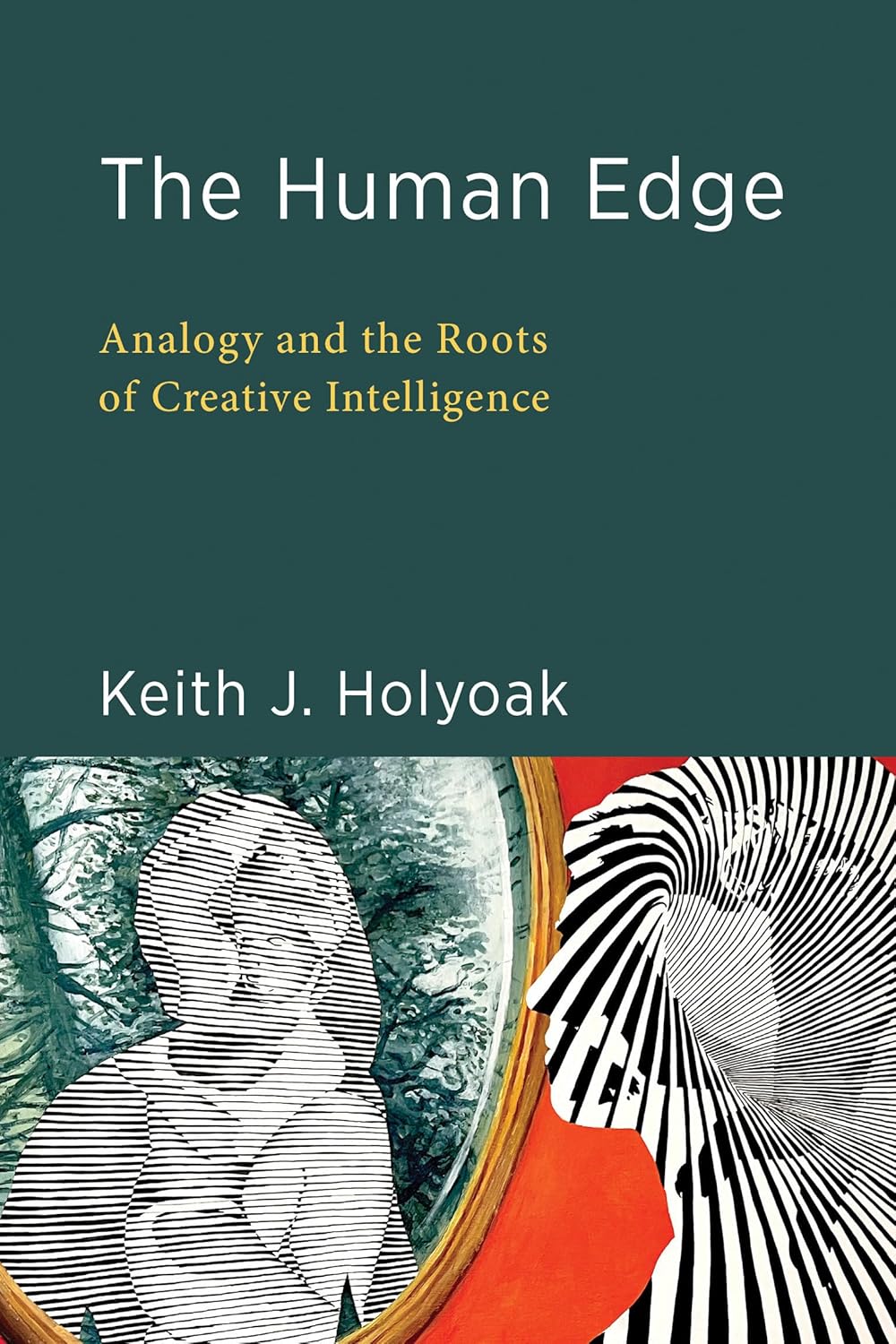
Description:
In The Human Edge, cognitive scientist, poet, and translator Keith Holyoak takes a fresh look at what makes human intelligence special. His focus is analogy—the ability to see relational similarities between things that on the surface seem unalike. The book brings together a half century of research in cognitive, comparative, and developmental psychology, coupled with work in philosophy, law, education, linguistics, neuroscience, and artificial intelligence. Rather than simply examining analogy as an isolated human ability, Holyoak places it in the broader context of a trinity of special human capacities—analogy, language, and understanding the minds of other people. Each of these capacities relies on distinct neural circuitry in the human brain.
Holyoak analyzes the similarities—and critical differences—between cognition in humans and in other intelligent animals, ranging from crows to chimpanzees. He also traces how relational thinking develops in children, emphasizing the distinctive advances that begin at about age three. Along the way, Holyoak paints a broad picture of how people use analogy in everyday life—to make jokes, to argue, to teach, to make moral judgments. He considers when an analogy counts as rational evidence—for or against a scientific hypothesis, or the judgment in a legal case. He also evaluates the most recent advances in artificial intelligence that have started to achieve complex tasks previously limited to humans while highlighting the distinctive aspects of human creativity.
In a time of rapid technological change, with ominous portents for society, this book provides a timely reexamination of what really counts as the human edge.
Review
—Daniel L. Schacter, William R. Kenan, Jr. Professor of Psychology, Harvard University; author of The Seven Sins of Memory
“If you’re interested in art or science or the future of thinking, you should get smart about analogy. Taking this book in will make you instantly and expansively smart about analogy. It is truly the miracle pill. And the miracle isn’t just in the efficacy of the treatment but in the delivery. Holyoak pulls off definitive as delightful. Really more dessert than medicine.”
—Adam E. Green, Professor of Psychology, Georgetown University
About the Author
Details:
Visit the The MIT Press Store
The Human Edge: Analogy and the Roots of Creative Intelligence
QAR51878
Quantity:
Order today to get by 7-14 business days
This item qualifies for free delivery
 Imported From: United States
At BOLO, we work hard to ensure the products you receive are new, genuine, and sourced from reputable suppliers.
Every product in the BOLO catalogue is sourced through our Verified Global Supply Network of verified sellers, authorized distributors or directly from the manufacturer.
Each product undergoes thorough inspection and verification at our consolidation and fulfilment centers to ensure it meets our strict authenticity and quality standards before being shipped and delivered to you.
If you ever have concerns regarding the authenticity of a product purchased from us, please contact Bolo Support. We will review your inquiry promptly and, if necessary, provide documentation verifying authenticity or offer a suitable resolution.
Your trust is our top priority, and we are committed to maintaining transparency and integrity in every transaction.
While we strive to display accurate information, variations in packaging, labeling, instructions, or formulation may occasionally occur due to regional differences or supplier updates. For detailed or manufacturer-specific information, please contact the brand directly or reach out to BOLO Support for assistance.
Unless otherwise stated, all prices displayed on the product page include applicable taxes and import duties.
BOLO operates in accordance with the laws and regulations of Qatar. Any items found to be restricted or prohibited for sale within the Qatar will be cancelled prior to shipment. We take proactive measures to ensure that only products permitted for sale in Qatar are listed on our website.
All items are shipped by air, and any products classified as “Dangerous Goods (DG)” under IATA regulations will be removed from the order and cancelled.
All orders are processed manually, and we make every effort to process them promptly once confirmed. Products cancelled due to the above reasons will be permanently removed from listings across the website.
More from this brand
Similar items from “Intelligence & Semantics”
Share with
Or share with link
https://www.bolo.qa/products/U0262550903
Visit the The MIT Press Store
The Human Edge: Analogy and the Roots of Creative Intelligence
QAR51878
Quantity:
Order today to get by 7-14 business days
This item qualifies for free delivery
Imported From: United States
At BOLO, we work hard to ensure the products you receive are new, genuine, and sourced from reputable suppliers.
Every product in the BOLO catalogue is sourced through our Verified Global Supply Network of verified sellers, authorized distributors or directly from the manufacturer.
Each product undergoes thorough inspection and verification at our consolidation and fulfilment centers to ensure it meets our strict authenticity and quality standards before being shipped and delivered to you.
If you ever have concerns regarding the authenticity of a product purchased from us, please contact Bolo Support. We will review your inquiry promptly and, if necessary, provide documentation verifying authenticity or offer a suitable resolution.
Your trust is our top priority, and we are committed to maintaining transparency and integrity in every transaction.
While we strive to display accurate information, variations in packaging, labeling, instructions, or formulation may occasionally occur due to regional differences or supplier updates. For detailed or manufacturer-specific information, please contact the brand directly or reach out to BOLO Support for assistance.
Unless otherwise stated, all prices displayed on the product page include applicable taxes and import duties.
BOLO operates in accordance with the laws and regulations of Qatar. Any items found to be restricted or prohibited for sale within the Qatar will be cancelled prior to shipment. We take proactive measures to ensure that only products permitted for sale in Qatar are listed on our website.
All items are shipped by air, and any products classified as “Dangerous Goods (DG)” under IATA regulations will be removed from the order and cancelled.
All orders are processed manually, and we make every effort to process them promptly once confirmed. Products cancelled due to the above reasons will be permanently removed from listings across the website.
Description:
In The Human Edge, cognitive scientist, poet, and translator Keith Holyoak takes a fresh look at what makes human intelligence special. His focus is analogy—the ability to see relational similarities between things that on the surface seem unalike. The book brings together a half century of research in cognitive, comparative, and developmental psychology, coupled with work in philosophy, law, education, linguistics, neuroscience, and artificial intelligence. Rather than simply examining analogy as an isolated human ability, Holyoak places it in the broader context of a trinity of special human capacities—analogy, language, and understanding the minds of other people. Each of these capacities relies on distinct neural circuitry in the human brain.
Holyoak analyzes the similarities—and critical differences—between cognition in humans and in other intelligent animals, ranging from crows to chimpanzees. He also traces how relational thinking develops in children, emphasizing the distinctive advances that begin at about age three. Along the way, Holyoak paints a broad picture of how people use analogy in everyday life—to make jokes, to argue, to teach, to make moral judgments. He considers when an analogy counts as rational evidence—for or against a scientific hypothesis, or the judgment in a legal case. He also evaluates the most recent advances in artificial intelligence that have started to achieve complex tasks previously limited to humans while highlighting the distinctive aspects of human creativity.
In a time of rapid technological change, with ominous portents for society, this book provides a timely reexamination of what really counts as the human edge.
Review
—Daniel L. Schacter, William R. Kenan, Jr. Professor of Psychology, Harvard University; author of The Seven Sins of Memory
“If you’re interested in art or science or the future of thinking, you should get smart about analogy. Taking this book in will make you instantly and expansively smart about analogy. It is truly the miracle pill. And the miracle isn’t just in the efficacy of the treatment but in the delivery. Holyoak pulls off definitive as delightful. Really more dessert than medicine.”
—Adam E. Green, Professor of Psychology, Georgetown University
About the Author
Details:
More from this brand
Similar items from “Intelligence & Semantics”
Share with
Or share with link
https://www.bolo.qa/products/U0262550903