Deliver toQatar
Computer Vision: Principles, Algorithms, Applications, Learning

Description:

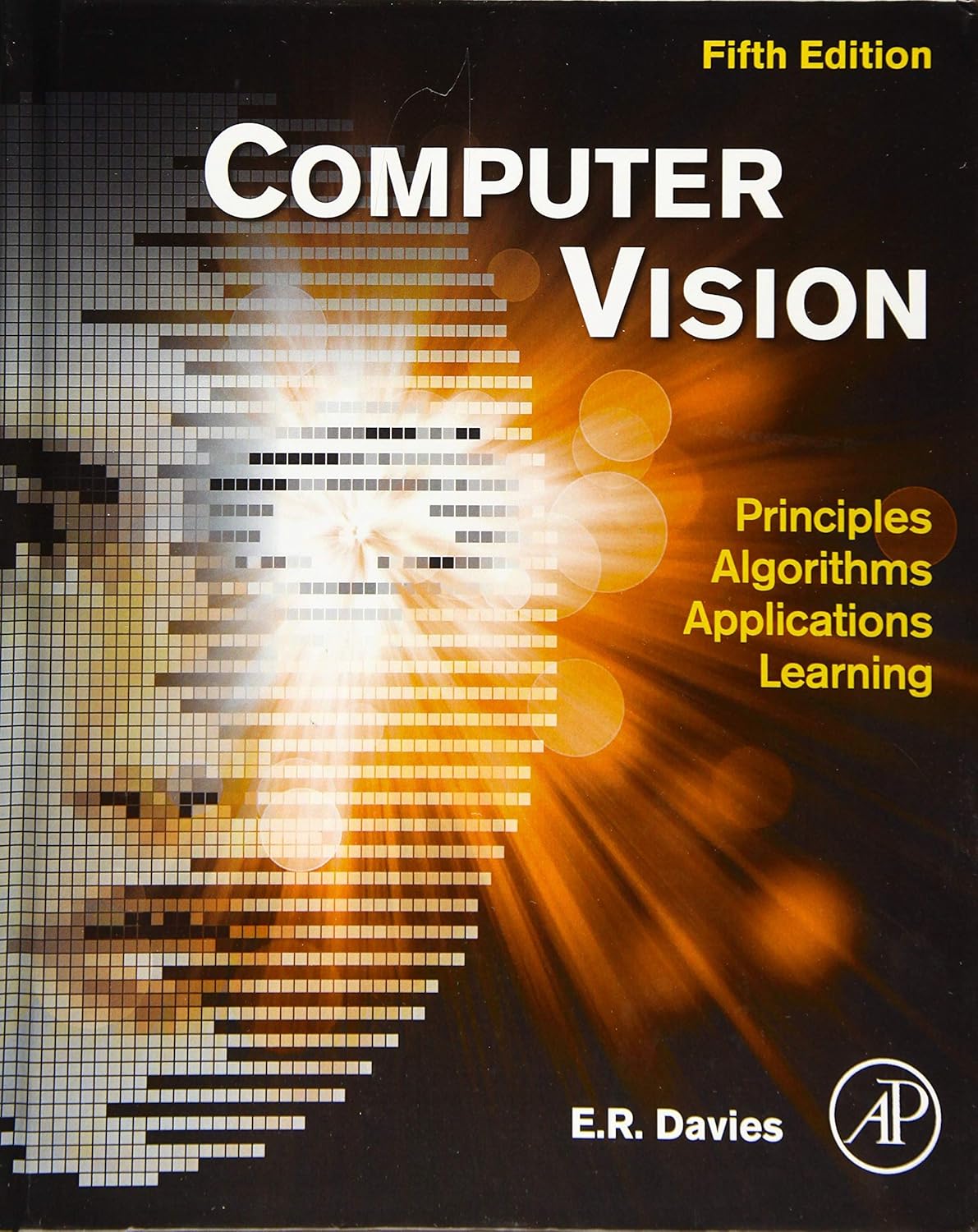
Computer Vision: Principles, Algorithms, Applications, Learning (previously entitled Computer and Machine Vision) clearly and systematically presents the basic methodology of computer vision, covering the essential elements of the theory while emphasizing algorithmic and practical design constraints. This fully revised fifth edition has brought in more of the concepts and applications of computer vision, making it a very comprehensive and up-to-date text suitable for undergraduate and graduate students, researchers and R&D engineers working in this vibrant subject.

See an interview with the author explaining his approach to teaching and learning computer vision - http://scitechconnect.elsevier.com/computer-vision/

  • Three new chapters on Machine Learning emphasise the way the subject has been developing; Two chapters cover Basic Classification Concepts and Probabilistic Models; and the The third covers the principles of Deep Learning Networks and shows their impact on computer vision, reflected in a new chapter Face Detection and Recognition.
  • A new chapter on Object Segmentation and Shape Models reflects the methodology of machine learning and gives practical demonstrations of its application.
  • In-depth discussions have been included on geometric transformations, the EM algorithm, boosting, semantic segmentation, face frontalisation, RNNs and other key topics.
  • Examples and applications―including the location of biscuits, foreign bodies, faces, eyes, road lanes, surveillance, vehicles and pedestrians―give the ‘ins and outs’ of developing real-world vision systems, showing the realities of practical implementation.
  • Necessary mathematics and essential theory are made approachable by careful explanations and well-illustrated examples.
  • The ‘recent developments’ sections included in each chapter aim to bring students and practitioners up to date with this fast-moving subject.
  • Tailored programming examples―code, methods, illustrations, tasks, hints and solutions (mainly involving MATLAB and C++)


Editorial Reviews

Review

Gain an easy-to-understand introduction to the principles of computer vision together with insight into applying vision methods

From the Back Cover

Computer Vision: Principles, Algorithms, Applications, Learning (previously entitled Computer and Machine Vision) clearly and systematically presents the basic methodology of computer vision, covering the essential elements of the theory while emphasizing algorithmic and practical design constraints. This fully revised fifth edition has brought in more of the concepts and applications of computer vision, making it a very comprehensive and up-to-date text suitable for undergraduate and graduate students, researchers and R&D engineers working in this vibrant subject.

Key features include:

  • Three new chapters on Machine Learning emphasise the way the subject has been developing:
  • Two chapters cover Basic Classification Concepts and Probabilistic Models.
  • The third covers the principles of Deep Learning Networks and shows their impact on computer vision, reflected in a new chapter Face Detection and Recognition.
  • A new chapter on Object Segmentation and Shape Models reflects the methodology of machine learning and gives practical demonstrations of its application.
  • In-depth discussions have been included on geometric transformations, the EM algorithm, boosting, semantic segmentation, face frontalisation, RNNs and other key topics.
  • Examples and applications―including the location of biscuits, foreign bodies, faces, eyes, road lanes, surveillance, vehicles and pedestrians―give the ‘ins and outs’ of developing real-world vision systems, showing the realities of practical implementation.
  • Necessary mathematics and essential theory are made approachable by careful explanations and well-illustrated examples.
  • The ‘recent developments’ sections included in each chapter aim to bring students and practitioners up to date with this fast-moving subject.
  • Tailored programming examples―code, methods, illustrations, tasks, hints and solutions (mainly involving MATLAB and C++)

Details:

Computer Vision: Principles, Algorithms, Applications, Learning

Product ID: U012809284K
|

Returns & Warranty policies

Imported From: United States

At BOLO, we work hard to ensure the products you receive are new, genuine, and sourced from reputable suppliers.

Every product in the BOLO catalogue is sourced through our Verified Global Supply Network of verified sellers, authorized distributors or directly from the manufacturer.

Each product undergoes thorough inspection and verification at our consolidation and fulfilment centers to ensure it meets our strict authenticity and quality standards before being shipped and delivered to you.

If you ever have concerns regarding the authenticity of a product purchased from us, please contact Bolo Support. We will review your inquiry promptly and, if necessary, provide documentation verifying authenticity or offer a suitable resolution.

Your trust is our top priority, and we are committed to maintaining transparency and integrity in every transaction.

While we strive to display accurate information, variations in packaging, labeling, instructions, or formulation may occasionally occur due to regional differences or supplier updates. For detailed or manufacturer-specific information, please contact the brand directly or reach out to BOLO Support for assistance.

Unless otherwise stated, all prices displayed on the product page include applicable taxes and import duties.

BOLO operates in accordance with the laws and regulations of Qatar. Any items found to be restricted or prohibited for sale within the Qatar will be cancelled prior to shipment. We take proactive measures to ensure that only products permitted for sale in Qatar are listed on our website.

All items are shipped by air, and any products classified as “Dangerous Goods (DG)” under IATA regulations will be removed from the order and cancelled.

All orders are processed manually, and we make every effort to process them promptly once confirmed. Products cancelled due to the above reasons will be permanently removed from listings across the website.

Similar suggestions by Bolo

Computer Vision: Principles, Algorithms, Applications, Learning

Product ID: U012809284K
Computer Vision: Principles, Algorithms, Applications, Learning-0
|

Returns & Warranty policies

Imported From: United States

At BOLO, we work hard to ensure the products you receive are new, genuine, and sourced from reputable suppliers.

Every product in the BOLO catalogue is sourced through our Verified Global Supply Network of verified sellers, authorized distributors or directly from the manufacturer.

Each product undergoes thorough inspection and verification at our consolidation and fulfilment centers to ensure it meets our strict authenticity and quality standards before being shipped and delivered to you.

If you ever have concerns regarding the authenticity of a product purchased from us, please contact Bolo Support. We will review your inquiry promptly and, if necessary, provide documentation verifying authenticity or offer a suitable resolution.

Your trust is our top priority, and we are committed to maintaining transparency and integrity in every transaction.

While we strive to display accurate information, variations in packaging, labeling, instructions, or formulation may occasionally occur due to regional differences or supplier updates. For detailed or manufacturer-specific information, please contact the brand directly or reach out to BOLO Support for assistance.

Unless otherwise stated, all prices displayed on the product page include applicable taxes and import duties.

BOLO operates in accordance with the laws and regulations of Qatar. Any items found to be restricted or prohibited for sale within the Qatar will be cancelled prior to shipment. We take proactive measures to ensure that only products permitted for sale in Qatar are listed on our website.

All items are shipped by air, and any products classified as “Dangerous Goods (DG)” under IATA regulations will be removed from the order and cancelled.

All orders are processed manually, and we make every effort to process them promptly once confirmed. Products cancelled due to the above reasons will be permanently removed from listings across the website.

Description:

Computer Vision: Principles, Algorithms, Applications, Learning (previously entitled Computer and Machine Vision) clearly and systematically presents the basic methodology of computer vision, covering the essential elements of the theory while emphasizing algorithmic and practical design constraints. This fully revised fifth edition has brought in more of the concepts and applications of computer vision, making it a very comprehensive and up-to-date text suitable for undergraduate and graduate students, researchers and R&D engineers working in this vibrant subject.

See an interview with the author explaining his approach to teaching and learning computer vision - http://scitechconnect.elsevier.com/computer-vision/

  • Three new chapters on Machine Learning emphasise the way the subject has been developing; Two chapters cover Basic Classification Concepts and Probabilistic Models; and the The third covers the principles of Deep Learning Networks and shows their impact on computer vision, reflected in a new chapter Face Detection and Recognition.
  • A new chapter on Object Segmentation and Shape Models reflects the methodology of machine learning and gives practical demonstrations of its application.
  • In-depth discussions have been included on geometric transformations, the EM algorithm, boosting, semantic segmentation, face frontalisation, RNNs and other key topics.
  • Examples and applications―including the location of biscuits, foreign bodies, faces, eyes, road lanes, surveillance, vehicles and pedestrians―give the ‘ins and outs’ of developing real-world vision systems, showing the realities of practical implementation.
  • Necessary mathematics and essential theory are made approachable by careful explanations and well-illustrated examples.
  • The ‘recent developments’ sections included in each chapter aim to bring students and practitioners up to date with this fast-moving subject.
  • Tailored programming examples―code, methods, illustrations, tasks, hints and solutions (mainly involving MATLAB and C++)


Editorial Reviews

Review

Gain an easy-to-understand introduction to the principles of computer vision together with insight into applying vision methods

From the Back Cover

Computer Vision: Principles, Algorithms, Applications, Learning (previously entitled Computer and Machine Vision) clearly and systematically presents the basic methodology of computer vision, covering the essential elements of the theory while emphasizing algorithmic and practical design constraints. This fully revised fifth edition has brought in more of the concepts and applications of computer vision, making it a very comprehensive and up-to-date text suitable for undergraduate and graduate students, researchers and R&D engineers working in this vibrant subject.

Key features include:

  • Three new chapters on Machine Learning emphasise the way the subject has been developing:
  • Two chapters cover Basic Classification Concepts and Probabilistic Models.
  • The third covers the principles of Deep Learning Networks and shows their impact on computer vision, reflected in a new chapter Face Detection and Recognition.
  • A new chapter on Object Segmentation and Shape Models reflects the methodology of machine learning and gives practical demonstrations of its application.
  • In-depth discussions have been included on geometric transformations, the EM algorithm, boosting, semantic segmentation, face frontalisation, RNNs and other key topics.
  • Examples and applications―including the location of biscuits, foreign bodies, faces, eyes, road lanes, surveillance, vehicles and pedestrians―give the ‘ins and outs’ of developing real-world vision systems, showing the realities of practical implementation.
  • Necessary mathematics and essential theory are made approachable by careful explanations and well-illustrated examples.
  • The ‘recent developments’ sections included in each chapter aim to bring students and practitioners up to date with this fast-moving subject.
  • Tailored programming examples―code, methods, illustrations, tasks, hints and solutions (mainly involving MATLAB and C++)

Details:

Similar suggestions by Bolo