Deliver toQatar
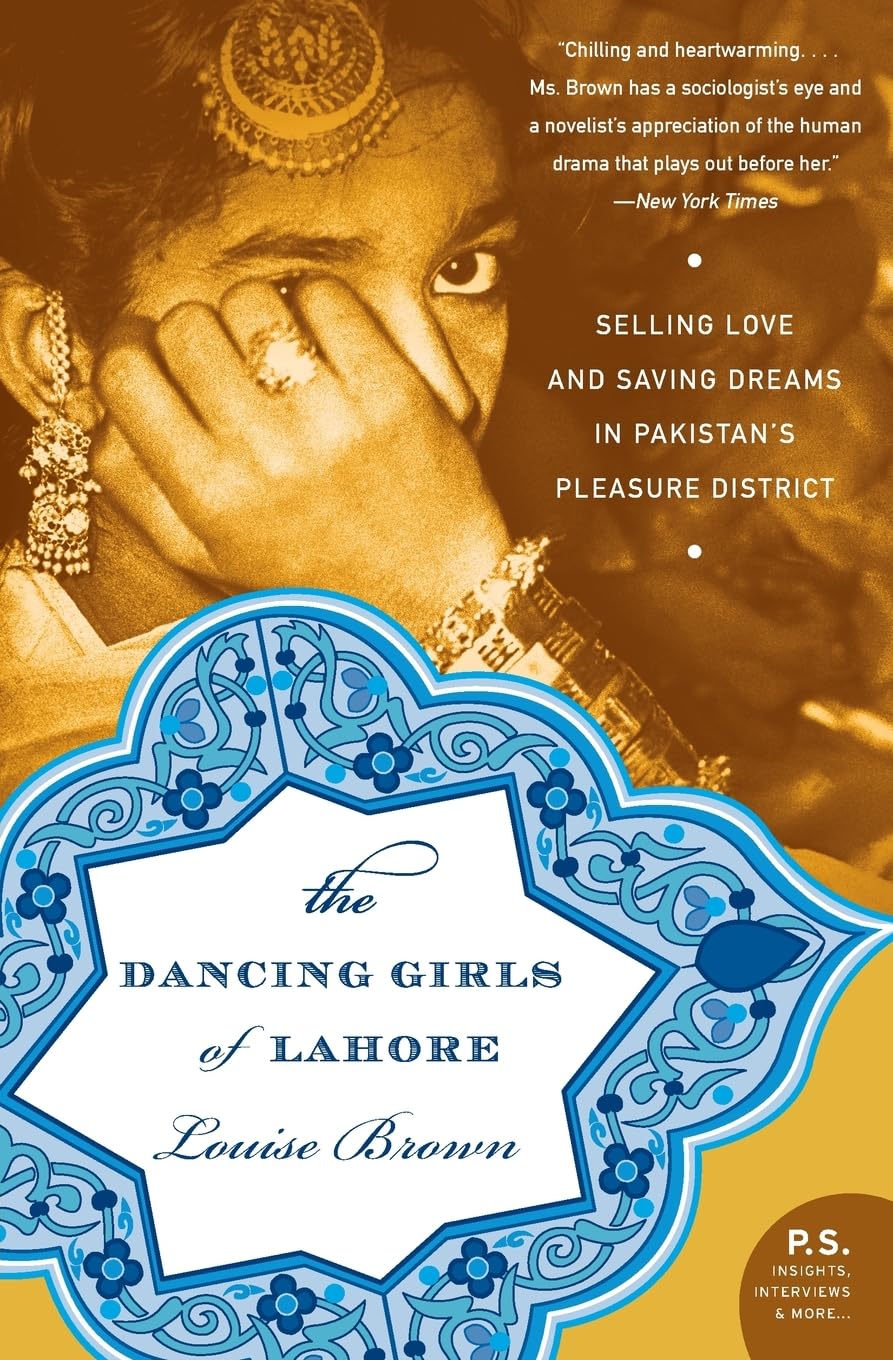
The Dancing Girls of Lahore: Selling Love and Saving Dreams in Pakistan's Pleasure District

Description:

An unforgettable and compassionate look at the lives of the residents of Lahore’s pleasure district

The Dancing Girls of Lahore inhabit the Diamond District in the shadow of a great mosque. The 21st century goes on outside the walls, this ancient quarter, but scarcely registers within. Though their trade can be described with accuracy as prostitution, the dancing girls have an illustrious history: beloved by sultans, their sophisticated art encompassed the best of Mughal culture. The modern day Bollywood aesthetic, with its love of gaudy spectacle, music, and dance, is their distant legacy. But the life of the pampered courtesan is not the one now being lived by Maha and her three girls. What they do is forbidden by Islam, though tolerated; but they are, unclean, and Maha’s daughters, like her, are born into the business and will not leave it.

Sociologist Louise Brown spent four years in the most intimate study of the family life of one Lahori courtesan. Beautifully understated, it turns a novelist’s eye on a true story that beggars the imagination. Maha, at fourteen a classically trained dancer of exquisite grace, had her virginity sold to the Sultan of Dubai; when her own daughter Nena comes of age and Maha cannot bring in the money she once did, she faces a terrible decision as the agents of the Sultan come calling once more.


Editorial Reviews

Review

“Chilling and heart-warming . .  . Brown has a novelist’s appreciation of her surroundings and the human drama that plays out before her.” — New York Times

“Brown’s sketches depict a startling diversity of existence within the closed world of Heera Mandi . . . a compelling, prurient look behind the monolithic curtain of orthodoxy.” — San Francisco Chronicle

“A wide-ranging look at class, gender relations and family life in a place where the ancient constantly bumps up against the modern . . . Fascinating.” — Los Angeles Times

“A fascinating ethnography with Bollywood flair, even at its darkest moments.” — Washington Post

“Riveting and important. Even readers who don’t think they’re interested in Pakistani prostitution will find themselves engrossed.” — Kirkus Reviews (starred review)

From the Inside Flap

The dancing girls of Lahore inhabit the Diamond Market in the shadow of a great mosque. The twenty-first century goes on outside the walls of this ancient quarter but scarcely registers within. Though their trade can be described with accuracy as prostitution, the dancing girls have an illustrious history: Beloved by emperors and nawabs, their sophisticated art encompassed the best of Mughal culture. The modern-day Bollywood aesthetic, with its love of gaudy spectacle, music, and dance, is their distant legacy. But the life of the pampered courtesan is not the one now being lived by Maha and her three girls. What they do is forbidden by Islam, though tolerated; but they are gandi, unclean, and Maha's daughters, like her, are born into the business and will not leave it.

Sociologist Louise Brown spent four years in the most intimate study of the family life of a Lahori dancing girl. With beautiful understatement, she turns a novelist's eye on a true story that beggars the imagination. Maha, a classically trained dancer of exquisite grace, had her virginity sold to a powerful Arab sheikh at the age of twelve; when her own daughter Nena comes of age and Maha cannot bring in the money she once did, she faces a terrible decision as the agents of the sheikh come calling once more.

--Los Angeles Times

Details:

The Dancing Girls of Lahore: Selling Love and Saving Dreams in Pakistan's Pleasure District

Product ID: U0060740434
|

Returns & Warranty policies

Imported From: United States

At BOLO, we work hard to ensure the products you receive are new, genuine, and sourced from reputable suppliers.

Every product in the BOLO catalogue is sourced through our Verified Global Supply Network of verified sellers, authorized distributors or directly from the manufacturer.

Each product undergoes thorough inspection and verification at our consolidation and fulfilment centers to ensure it meets our strict authenticity and quality standards before being shipped and delivered to you.

If you ever have concerns regarding the authenticity of a product purchased from us, please contact Bolo Support. We will review your inquiry promptly and, if necessary, provide documentation verifying authenticity or offer a suitable resolution.

Your trust is our top priority, and we are committed to maintaining transparency and integrity in every transaction.

While we strive to display accurate information, variations in packaging, labeling, instructions, or formulation may occasionally occur due to regional differences or supplier updates. For detailed or manufacturer-specific information, please contact the brand directly or reach out to BOLO Support for assistance.

Unless otherwise stated, all prices displayed on the product page include applicable taxes and import duties.

BOLO operates in accordance with the laws and regulations of Qatar. Any items found to be restricted or prohibited for sale within the Qatar will be cancelled prior to shipment. We take proactive measures to ensure that only products permitted for sale in Qatar are listed on our website.

All items are shipped by air, and any products classified as “Dangerous Goods (DG)” under IATA regulations will be removed from the order and cancelled.

All orders are processed manually, and we make every effort to process them promptly once confirmed. Products cancelled due to the above reasons will be permanently removed from listings across the website.

The Dancing Girls of Lahore: Selling Love and Saving Dreams in Pakistan's Pleasure District

Product ID: U0060740434
The Dancing Girls of Lahore: Selling Love and Saving Dreams in Pakistan's Pleasure District-0
|

Returns & Warranty policies

Imported From: United States

At BOLO, we work hard to ensure the products you receive are new, genuine, and sourced from reputable suppliers.

Every product in the BOLO catalogue is sourced through our Verified Global Supply Network of verified sellers, authorized distributors or directly from the manufacturer.

Each product undergoes thorough inspection and verification at our consolidation and fulfilment centers to ensure it meets our strict authenticity and quality standards before being shipped and delivered to you.

If you ever have concerns regarding the authenticity of a product purchased from us, please contact Bolo Support. We will review your inquiry promptly and, if necessary, provide documentation verifying authenticity or offer a suitable resolution.

Your trust is our top priority, and we are committed to maintaining transparency and integrity in every transaction.

While we strive to display accurate information, variations in packaging, labeling, instructions, or formulation may occasionally occur due to regional differences or supplier updates. For detailed or manufacturer-specific information, please contact the brand directly or reach out to BOLO Support for assistance.

Unless otherwise stated, all prices displayed on the product page include applicable taxes and import duties.

BOLO operates in accordance with the laws and regulations of Qatar. Any items found to be restricted or prohibited for sale within the Qatar will be cancelled prior to shipment. We take proactive measures to ensure that only products permitted for sale in Qatar are listed on our website.

All items are shipped by air, and any products classified as “Dangerous Goods (DG)” under IATA regulations will be removed from the order and cancelled.

All orders are processed manually, and we make every effort to process them promptly once confirmed. Products cancelled due to the above reasons will be permanently removed from listings across the website.

Description:

An unforgettable and compassionate look at the lives of the residents of Lahore’s pleasure district

The Dancing Girls of Lahore inhabit the Diamond District in the shadow of a great mosque. The 21st century goes on outside the walls, this ancient quarter, but scarcely registers within. Though their trade can be described with accuracy as prostitution, the dancing girls have an illustrious history: beloved by sultans, their sophisticated art encompassed the best of Mughal culture. The modern day Bollywood aesthetic, with its love of gaudy spectacle, music, and dance, is their distant legacy. But the life of the pampered courtesan is not the one now being lived by Maha and her three girls. What they do is forbidden by Islam, though tolerated; but they are, unclean, and Maha’s daughters, like her, are born into the business and will not leave it.

Sociologist Louise Brown spent four years in the most intimate study of the family life of one Lahori courtesan. Beautifully understated, it turns a novelist’s eye on a true story that beggars the imagination. Maha, at fourteen a classically trained dancer of exquisite grace, had her virginity sold to the Sultan of Dubai; when her own daughter Nena comes of age and Maha cannot bring in the money she once did, she faces a terrible decision as the agents of the Sultan come calling once more.


Editorial Reviews

Review

“Chilling and heart-warming . .  . Brown has a novelist’s appreciation of her surroundings and the human drama that plays out before her.” — New York Times

“Brown’s sketches depict a startling diversity of existence within the closed world of Heera Mandi . . . a compelling, prurient look behind the monolithic curtain of orthodoxy.” — San Francisco Chronicle

“A wide-ranging look at class, gender relations and family life in a place where the ancient constantly bumps up against the modern . . . Fascinating.” — Los Angeles Times

“A fascinating ethnography with Bollywood flair, even at its darkest moments.” — Washington Post

“Riveting and important. Even readers who don’t think they’re interested in Pakistani prostitution will find themselves engrossed.” — Kirkus Reviews (starred review)

From the Inside Flap

The dancing girls of Lahore inhabit the Diamond Market in the shadow of a great mosque. The twenty-first century goes on outside the walls of this ancient quarter but scarcely registers within. Though their trade can be described with accuracy as prostitution, the dancing girls have an illustrious history: Beloved by emperors and nawabs, their sophisticated art encompassed the best of Mughal culture. The modern-day Bollywood aesthetic, with its love of gaudy spectacle, music, and dance, is their distant legacy. But the life of the pampered courtesan is not the one now being lived by Maha and her three girls. What they do is forbidden by Islam, though tolerated; but they are gandi, unclean, and Maha's daughters, like her, are born into the business and will not leave it.

Sociologist Louise Brown spent four years in the most intimate study of the family life of a Lahori dancing girl. With beautiful understatement, she turns a novelist's eye on a true story that beggars the imagination. Maha, a classically trained dancer of exquisite grace, had her virginity sold to a powerful Arab sheikh at the age of twelve; when her own daughter Nena comes of age and Maha cannot bring in the money she once did, she faces a terrible decision as the agents of the sheikh come calling once more.

--Los Angeles Times

Details: