Description:
From the Back Cover
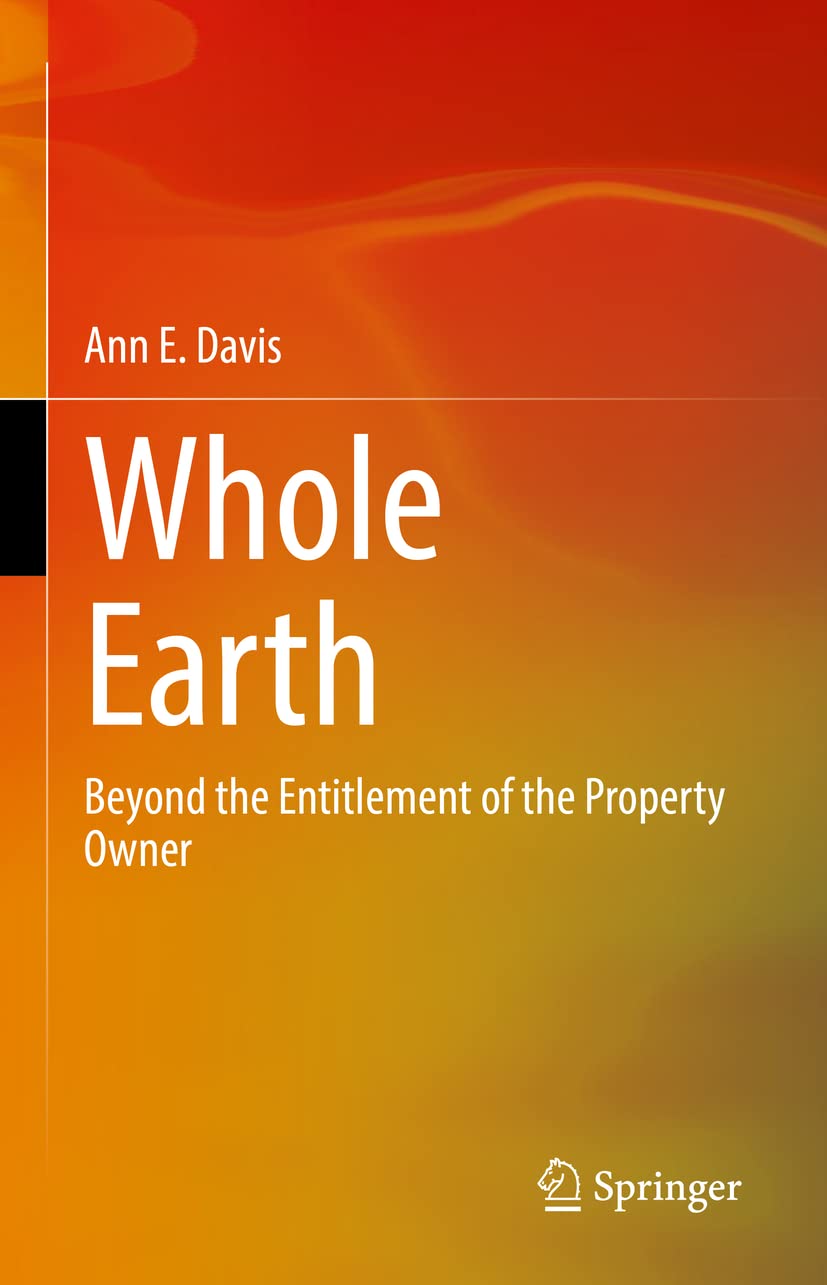
This book takes a radical approach to ecological economics, proposing a new paradigm based on earth systems science. This book questions the foundation of economics on individual private property, and proposes new forms of relationship to land and to the state. It questions the foundation of economics on the individual, and proposes new forms of regional ecological collectives, integrated at the global level. It critically examines the assumptions of economics and re-envisions it as more integrally related to society and ecology.
The volume integrates insights from a variety of fields, including humanities, natural, and social science, placing human life in the setting of ecology. The chapters invoke a historical institutional methodology to examine the link between economic theories and economic institutions, understanding performativity and applying reflexivity, and the potential for the emergence of new visions and methods. The method draws upon literary studies, linguistic philosophy, as well as long term economic history. Providing an alternative view of the relationship of humans to the earth, this book is appropriate for students and researchers across a variety of disciplines including economics, history, ecology, and philosophy.
About the Author
Ann E. Davis is an Associate Professor of Economics at Marist College in Poughkeepsie, New York (US). She was Director of the National Endowment for the Humanities Summer Institute on the Meanings of Property in 2014. She is author of The Evolution of the Property Relation: Understanding Paradigms, Debates, and Prospects (Palgrave MacMillan, 2015), and Money as a Social Institution: The Institutional Development of Capitalism (Routledge, 2017). In 2020, she published The End of Individualism and the Economy: Emerging Paradigms of Connection and Community, published by Routledge. She has published articles in the Review of Radical Political Economics, Cambridge Journal of Economics, Journal of Economic Issues, Critical Historical Studies, and Science and Society, as well as book chapters.
Details:
Visit the Ann E. Davis (Author) Store
Whole Earth: Beyond the Entitlement of the Property Owner
'%3e%3crect%20x='0.599609'%20width='22.4'%20height='16'%20fill='%230A17A7'/%3e%3cpath%20fill-rule='evenodd'%20clip-rule='evenodd'%20d='M-0.426196%20-1.53223L9.1335%204.91587V-1.06506H14.4668V4.91648L24.0263%20-1.53147L25.2193%200.237148L17.6615%205.33494H23.0002V10.6683H17.6618L25.2187%2015.7655L24.0258%2017.5341L14.4668%2011.0865V17.0683H9.1335V11.0871L-0.425634%2017.5348L-1.61858%2015.7662L5.93947%2010.6683H0.600172V5.33494H5.93977L-1.61914%200.236387L-0.426196%20-1.53223Z'%20fill='white'/%3e%3cpath%20d='M15.5332%205.06615L25.6655%20-1.59961'%20stroke='%23DB1F35'%20stroke-width='0.533333'%20stroke-linecap='round'/%3e%3cpath%20d='M16.6094%2010.9578L25.6924%2017.0801'%20stroke='%23DB1F35'%20stroke-width='0.533333'%20stroke-linecap='round'/%3e%3cpath%20d='M7.00176%205.04727L-2.47266%20-1.33789'%20stroke='%23DB1F35'%20stroke-width='0.533333'%20stroke-linecap='round'/%3e%3cpath%20d='M8.02936%2010.8842L-2.47266%2017.8486'%20stroke='%23DB1F35'%20stroke-width='0.533333'%20stroke-linecap='round'/%3e%3cpath%20fill-rule='evenodd'%20clip-rule='evenodd'%20d='M0.599609%209.6H10.1996V16H13.3996V9.6H22.9996V6.4H13.3996V0H10.1996V6.4H0.599609V9.6Z'%20fill='%23E6273E'/%3e%3c/g%3e%3c/svg%3e) Imported From: United Kingdom
Imported From: United Kingdom
At BOLO, we work hard to ensure the products you receive are new, genuine, and sourced from reputable suppliers.
Every product in the BOLO catalogue is sourced through our Verified Global Supply Network of verified sellers, authorized distributors or directly from the manufacturer.
Each product undergoes thorough inspection and verification at our consolidation and fulfilment centers to ensure it meets our strict authenticity and quality standards before being shipped and delivered to you.
If you ever have concerns regarding the authenticity of a product purchased from us, please contact Bolo Support. We will review your inquiry promptly and, if necessary, provide documentation verifying authenticity or offer a suitable resolution.
Your trust is our top priority, and we are committed to maintaining transparency and integrity in every transaction.
While we strive to display accurate information, variations in packaging, labeling, instructions, or formulation may occasionally occur due to regional differences or supplier updates. For detailed or manufacturer-specific information, please contact the brand directly or reach out to BOLO Support for assistance.
Unless otherwise stated, all prices displayed on the product page include applicable taxes and import duties.
BOLO operates in accordance with the laws and regulations of Qatar. Any items found to be restricted or prohibited for sale within the Qatar will be cancelled prior to shipment. We take proactive measures to ensure that only products permitted for sale in Qatar are listed on our website.
All items are shipped by air, and any products classified as “Dangerous Goods (DG)” under IATA regulations will be removed from the order and cancelled.
All orders are processed manually, and we make every effort to process them promptly once confirmed. Products cancelled due to the above reasons will be permanently removed from listings across the website.
Share with
Or share with link
https://www.bolo.qa/products/K3031019334
Visit the Ann E. Davis (Author) Store
Whole Earth: Beyond the Entitlement of the Property Owner
Imported From: United Kingdom
At BOLO, we work hard to ensure the products you receive are new, genuine, and sourced from reputable suppliers.
Every product in the BOLO catalogue is sourced through our Verified Global Supply Network of verified sellers, authorized distributors or directly from the manufacturer.
Each product undergoes thorough inspection and verification at our consolidation and fulfilment centers to ensure it meets our strict authenticity and quality standards before being shipped and delivered to you.
If you ever have concerns regarding the authenticity of a product purchased from us, please contact Bolo Support. We will review your inquiry promptly and, if necessary, provide documentation verifying authenticity or offer a suitable resolution.
Your trust is our top priority, and we are committed to maintaining transparency and integrity in every transaction.
While we strive to display accurate information, variations in packaging, labeling, instructions, or formulation may occasionally occur due to regional differences or supplier updates. For detailed or manufacturer-specific information, please contact the brand directly or reach out to BOLO Support for assistance.
Unless otherwise stated, all prices displayed on the product page include applicable taxes and import duties.
BOLO operates in accordance with the laws and regulations of Qatar. Any items found to be restricted or prohibited for sale within the Qatar will be cancelled prior to shipment. We take proactive measures to ensure that only products permitted for sale in Qatar are listed on our website.
All items are shipped by air, and any products classified as “Dangerous Goods (DG)” under IATA regulations will be removed from the order and cancelled.
All orders are processed manually, and we make every effort to process them promptly once confirmed. Products cancelled due to the above reasons will be permanently removed from listings across the website.
Description:
From the Back Cover
This book takes a radical approach to ecological economics, proposing a new paradigm based on earth systems science. This book questions the foundation of economics on individual private property, and proposes new forms of relationship to land and to the state. It questions the foundation of economics on the individual, and proposes new forms of regional ecological collectives, integrated at the global level. It critically examines the assumptions of economics and re-envisions it as more integrally related to society and ecology.
The volume integrates insights from a variety of fields, including humanities, natural, and social science, placing human life in the setting of ecology. The chapters invoke a historical institutional methodology to examine the link between economic theories and economic institutions, understanding performativity and applying reflexivity, and the potential for the emergence of new visions and methods. The method draws upon literary studies, linguistic philosophy, as well as long term economic history. Providing an alternative view of the relationship of humans to the earth, this book is appropriate for students and researchers across a variety of disciplines including economics, history, ecology, and philosophy.
About the Author
Ann E. Davis is an Associate Professor of Economics at Marist College in Poughkeepsie, New York (US). She was Director of the National Endowment for the Humanities Summer Institute on the Meanings of Property in 2014. She is author of The Evolution of the Property Relation: Understanding Paradigms, Debates, and Prospects (Palgrave MacMillan, 2015), and Money as a Social Institution: The Institutional Development of Capitalism (Routledge, 2017). In 2020, she published The End of Individualism and the Economy: Emerging Paradigms of Connection and Community, published by Routledge. She has published articles in the Review of Radical Political Economics, Cambridge Journal of Economics, Journal of Economic Issues, Critical Historical Studies, and Science and Society, as well as book chapters.
Details:
Share with
Or share with link
https://www.bolo.qa/products/K3031019334