Deliver toQatar
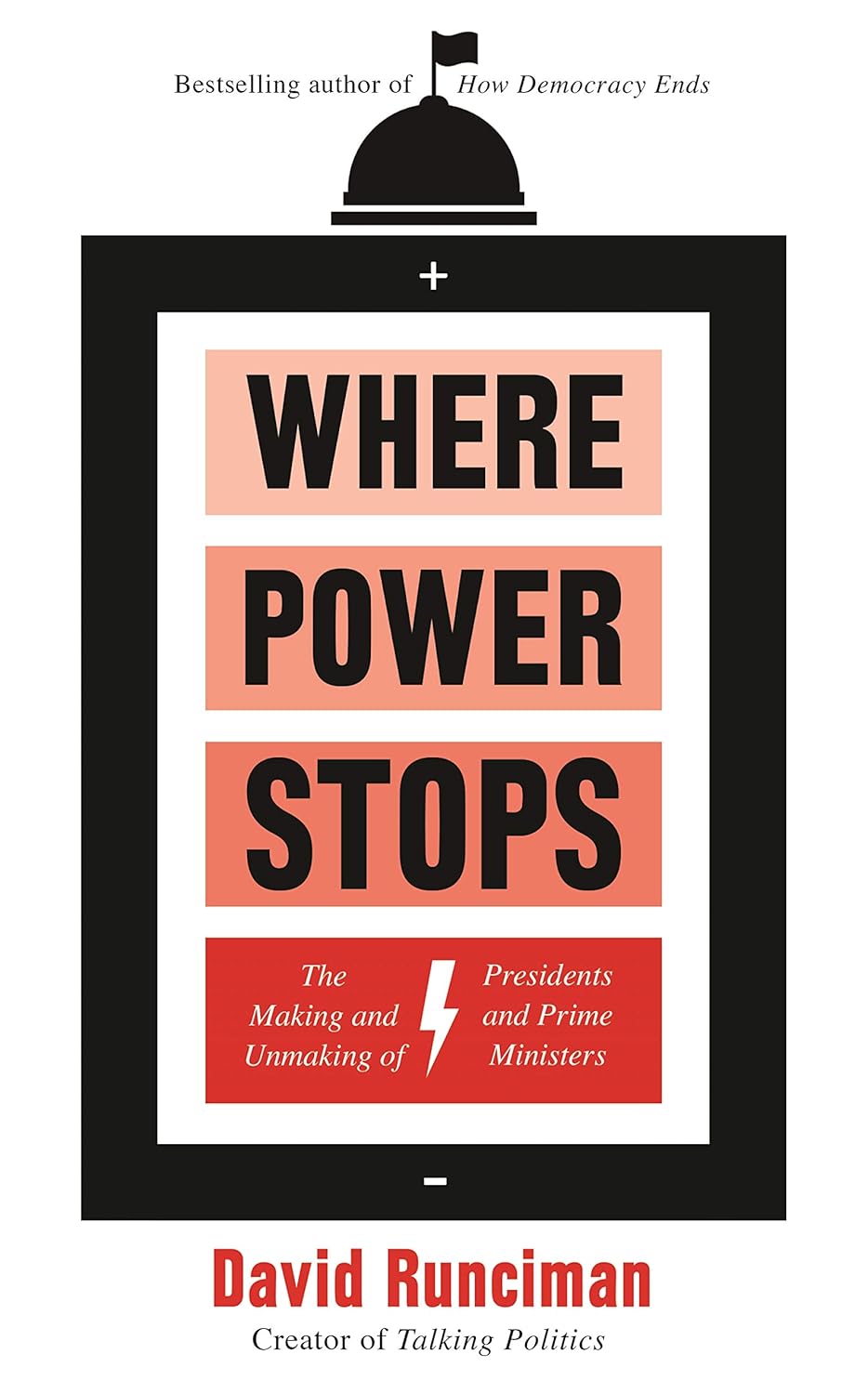
Where Power Stops: The Making and Unmaking of Presidents and Prime Ministers

Description:

Lyndon Baines Johnson, Margaret Thatcher, Bill Clinton, Tony Blair, Barack Obama, Gordon Brown, Theresa May, and Donald Trump: each had different motivations, methods, and paths, but they all sought the highest office. And yet when they reached their goal, they often found that the power they had imagined was illusory. Their sweeping visions of reform faltered. They faced bureaucratic obstructions, but often the biggest obstruction was their own character.

However, their personalities could help them as much as hurt them. Arguably the most successful of them, LBJ showed little indication that he supported what he is best known for - the Civil Rights Act - but his grit, resolve, and brute political skill saw him bend Congress to his will.

David Runciman tackles the limitations of high office and how the personal histories of those who achieved the very pinnacles of power helped to define their successes and failures in office. These portraits show what characters are most effective in these offices. Could this be a blueprint for good and effective leadership in an age lacking good leaders?


Review

Praise for How Democracy Ends:
'Presented in pellucid prose free of the jargon of academic political science,
How Democracy Ends is a strikingly readable and richly learned contribution to understanding the world today ... surely one of the most luminously intelligent books on politics to have been published for many years.'

-- John Gray ― New Statesman

Bracingly intelligent...a wonderful read -- Mark Mazower ―
Guardian

Full of intriguing new lines of thought -- Gideon Rachman ―
FT

Refreshingly, rather than a knicker-twisting diatribe about Trump and Brexit, Runciman offers a thoughtful analysis about what popular democracy means, and its alternatives. -- Katrina Gulliver ―
Spectator

Clear-headed, compact and timely ―
Irish Times

An excellent book: it is well-written, evenly paced, accessible, non-academic in tone but very much so in rigour and thoughtfulness. It is sceptical but not pessimistic, and warnful but not alarmist ... It is heartily recommended for anyone who seeks to understand our current malaise and interested in this question of how democracy got to where it is today, and where it may go - if anywhere - next. ―
LSE Review of Books

Refreshingly free of received and rehearsed wisdoms, Runciman doesn't tiptoe around sacred cows and invites us to take part in that most adult way of thinking: to examine contradictory ideas in tandem and ponder what the dissonance amounts to. . . . [H]e argues lucidly, persuasively, even exhilaratingly at times. The nightly news will never appear exactly the same again ―
Australian

Praise for The Confidence Trap: Runciman's book abounds with fresh insights, arresting paradoxes, and new ways of posing old problems -- Andrew Gamble ― Times Literary Supplement

This rich and refreshing book will be of intense interest to anyone puzzled by the near paralysis that seems to afflict democratic government in a number of countries -- John Gray ―
New York Review of Books

As a corrective to the doom-and-gloomsters, this book makes some telling points, and he is a clear and forceful writer -- Mark Mazower ―
Financial Times

Runciman is a good writer and brave pioneer. . . . The picture he sketches is agreeably bold ―
Sydney Morning Herald

[An] ingenious account . . . Runciman concludes that democracy will probably survive, having made a delightfully stimulating, if counterintuitive case, that the unnerving tendency of democracies to stumble into crises is matched by their knack for getting out of them ―
Publisher's Weekly

What we get here is good history. The events at the seven junctures are presented in a way that is learned, concise and informative -- Stein Ringen ―
International Affairs

Those who cannot remember history, George Santayana observed, are condemned to repeat it. Except he's wrong, according to David Runciman. In his admirable analysis, How Democracy Ends, he says the trouble is that we remember the least helpful bits of history, perpetually harking back to the 1930s to explain the aspects of modern politics we like least: Trump especially. Really we'd be better off comparing and contrasting ourselves with ancient Athens, the world's purest democracy. ―
Evening Standard

well-written -- Bryan Maye ―
Irish Times

Book Description

David Runciman grapples with how character defines and limits the holders of the highest offices in the UK and America

Details:

Where Power Stops: The Making and Unmaking of Presidents and Prime Ministers

Product ID: K1788163346
|

Returns & Warranty policies

Imported From: United Kingdom

At BOLO, we work hard to ensure the products you receive are new, genuine, and sourced from reputable suppliers.

Every product in the BOLO catalogue is sourced through our Verified Global Supply Network of verified sellers, authorized distributors or directly from the manufacturer.

Each product undergoes thorough inspection and verification at our consolidation and fulfilment centers to ensure it meets our strict authenticity and quality standards before being shipped and delivered to you.

If you ever have concerns regarding the authenticity of a product purchased from us, please contact Bolo Support. We will review your inquiry promptly and, if necessary, provide documentation verifying authenticity or offer a suitable resolution.

Your trust is our top priority, and we are committed to maintaining transparency and integrity in every transaction.

While we strive to display accurate information, variations in packaging, labeling, instructions, or formulation may occasionally occur due to regional differences or supplier updates. For detailed or manufacturer-specific information, please contact the brand directly or reach out to BOLO Support for assistance.

Unless otherwise stated, all prices displayed on the product page include applicable taxes and import duties.

BOLO operates in accordance with the laws and regulations of Qatar. Any items found to be restricted or prohibited for sale within the Qatar will be cancelled prior to shipment. We take proactive measures to ensure that only products permitted for sale in Qatar are listed on our website.

All items are shipped by air, and any products classified as “Dangerous Goods (DG)” under IATA regulations will be removed from the order and cancelled.

All orders are processed manually, and we make every effort to process them promptly once confirmed. Products cancelled due to the above reasons will be permanently removed from listings across the website.

Where Power Stops: The Making and Unmaking of Presidents and Prime Ministers

Product ID: K1788163346
Where Power Stops: The Making and Unmaking of Presidents and Prime Ministers-0
|

Returns & Warranty policies

Imported From: United Kingdom

At BOLO, we work hard to ensure the products you receive are new, genuine, and sourced from reputable suppliers.

Every product in the BOLO catalogue is sourced through our Verified Global Supply Network of verified sellers, authorized distributors or directly from the manufacturer.

Each product undergoes thorough inspection and verification at our consolidation and fulfilment centers to ensure it meets our strict authenticity and quality standards before being shipped and delivered to you.

If you ever have concerns regarding the authenticity of a product purchased from us, please contact Bolo Support. We will review your inquiry promptly and, if necessary, provide documentation verifying authenticity or offer a suitable resolution.

Your trust is our top priority, and we are committed to maintaining transparency and integrity in every transaction.

While we strive to display accurate information, variations in packaging, labeling, instructions, or formulation may occasionally occur due to regional differences or supplier updates. For detailed or manufacturer-specific information, please contact the brand directly or reach out to BOLO Support for assistance.

Unless otherwise stated, all prices displayed on the product page include applicable taxes and import duties.

BOLO operates in accordance with the laws and regulations of Qatar. Any items found to be restricted or prohibited for sale within the Qatar will be cancelled prior to shipment. We take proactive measures to ensure that only products permitted for sale in Qatar are listed on our website.

All items are shipped by air, and any products classified as “Dangerous Goods (DG)” under IATA regulations will be removed from the order and cancelled.

All orders are processed manually, and we make every effort to process them promptly once confirmed. Products cancelled due to the above reasons will be permanently removed from listings across the website.

Description:

Lyndon Baines Johnson, Margaret Thatcher, Bill Clinton, Tony Blair, Barack Obama, Gordon Brown, Theresa May, and Donald Trump: each had different motivations, methods, and paths, but they all sought the highest office. And yet when they reached their goal, they often found that the power they had imagined was illusory. Their sweeping visions of reform faltered. They faced bureaucratic obstructions, but often the biggest obstruction was their own character.

However, their personalities could help them as much as hurt them. Arguably the most successful of them, LBJ showed little indication that he supported what he is best known for - the Civil Rights Act - but his grit, resolve, and brute political skill saw him bend Congress to his will.

David Runciman tackles the limitations of high office and how the personal histories of those who achieved the very pinnacles of power helped to define their successes and failures in office. These portraits show what characters are most effective in these offices. Could this be a blueprint for good and effective leadership in an age lacking good leaders?


Review

Praise for How Democracy Ends:
'Presented in pellucid prose free of the jargon of academic political science,
How Democracy Ends is a strikingly readable and richly learned contribution to understanding the world today ... surely one of the most luminously intelligent books on politics to have been published for many years.'

-- John Gray ― New Statesman

Bracingly intelligent...a wonderful read -- Mark Mazower ―
Guardian

Full of intriguing new lines of thought -- Gideon Rachman ―
FT

Refreshingly, rather than a knicker-twisting diatribe about Trump and Brexit, Runciman offers a thoughtful analysis about what popular democracy means, and its alternatives. -- Katrina Gulliver ―
Spectator

Clear-headed, compact and timely ―
Irish Times

An excellent book: it is well-written, evenly paced, accessible, non-academic in tone but very much so in rigour and thoughtfulness. It is sceptical but not pessimistic, and warnful but not alarmist ... It is heartily recommended for anyone who seeks to understand our current malaise and interested in this question of how democracy got to where it is today, and where it may go - if anywhere - next. ―
LSE Review of Books

Refreshingly free of received and rehearsed wisdoms, Runciman doesn't tiptoe around sacred cows and invites us to take part in that most adult way of thinking: to examine contradictory ideas in tandem and ponder what the dissonance amounts to. . . . [H]e argues lucidly, persuasively, even exhilaratingly at times. The nightly news will never appear exactly the same again ―
Australian

Praise for The Confidence Trap: Runciman's book abounds with fresh insights, arresting paradoxes, and new ways of posing old problems -- Andrew Gamble ― Times Literary Supplement

This rich and refreshing book will be of intense interest to anyone puzzled by the near paralysis that seems to afflict democratic government in a number of countries -- John Gray ―
New York Review of Books

As a corrective to the doom-and-gloomsters, this book makes some telling points, and he is a clear and forceful writer -- Mark Mazower ―
Financial Times

Runciman is a good writer and brave pioneer. . . . The picture he sketches is agreeably bold ―
Sydney Morning Herald

[An] ingenious account . . . Runciman concludes that democracy will probably survive, having made a delightfully stimulating, if counterintuitive case, that the unnerving tendency of democracies to stumble into crises is matched by their knack for getting out of them ―
Publisher's Weekly

What we get here is good history. The events at the seven junctures are presented in a way that is learned, concise and informative -- Stein Ringen ―
International Affairs

Those who cannot remember history, George Santayana observed, are condemned to repeat it. Except he's wrong, according to David Runciman. In his admirable analysis, How Democracy Ends, he says the trouble is that we remember the least helpful bits of history, perpetually harking back to the 1930s to explain the aspects of modern politics we like least: Trump especially. Really we'd be better off comparing and contrasting ourselves with ancient Athens, the world's purest democracy. ―
Evening Standard

well-written -- Bryan Maye ―
Irish Times

Book Description

David Runciman grapples with how character defines and limits the holders of the highest offices in the UK and America

Details: