Description:
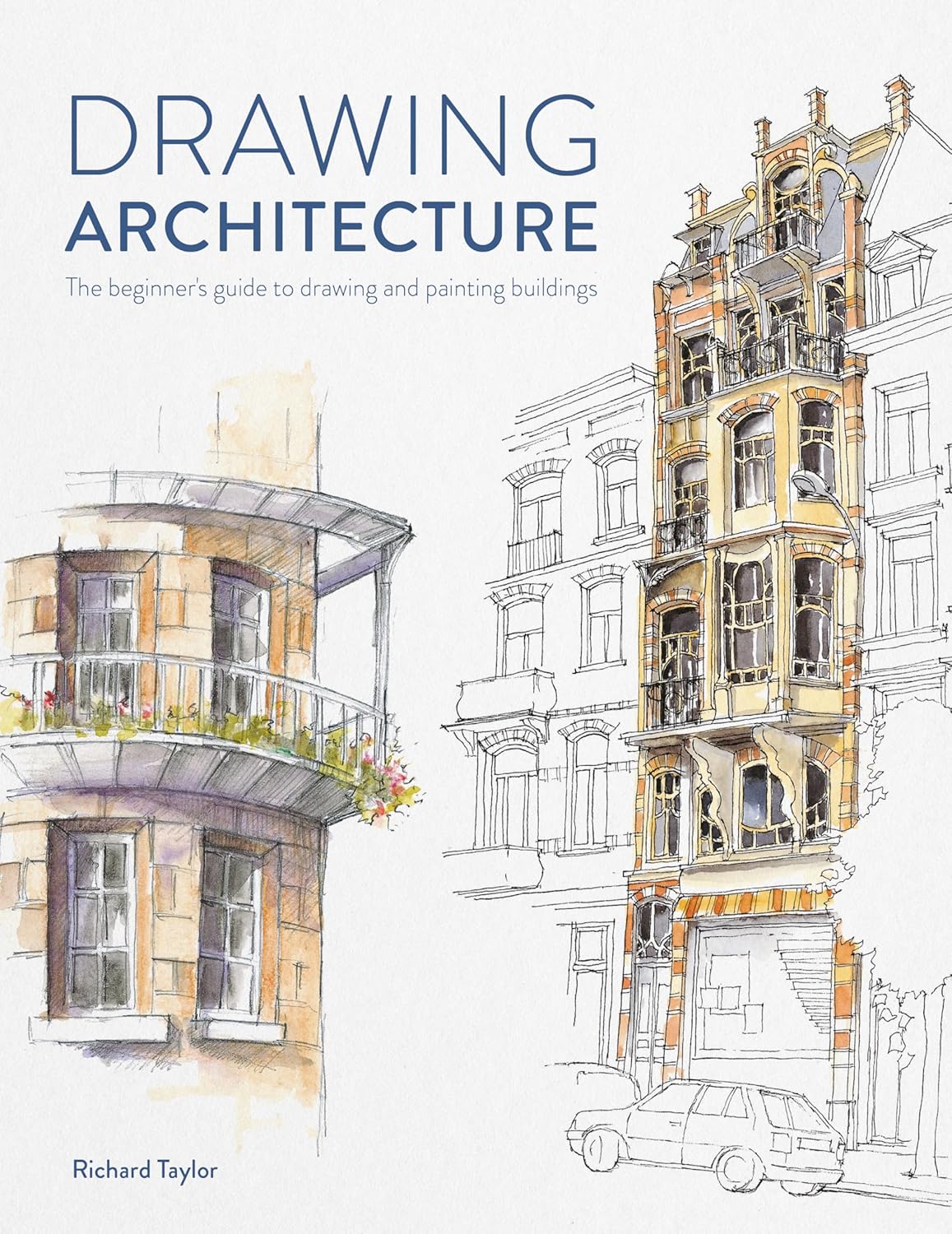
A comprehensive and practical guide full of advice and inspiration for anyone wishing to capture the beauty of the urban landscape.
The wonderful thing about drawing buildings is that, wherever you travel around the globe, you will never be short of subjects to inspire you. From the most elaborate of Renaissance cathedrals, through to the humble garden shed, you will always be able to practise your skills and learn a few techniques in the process.
This hands-on and inspirational book will encourage you to meet the exciting challenges of drawing and painting buildings using a variety of media and a wide range of techniques, including pencil, pen, graphite powder, watercolour, water-soluble pencils and Indian ink. As you work through this book, you will look at materials and their qualities then move on to explore how to put these materials to best use when drawing specific types of building. You will be led gently through levels of learning, with easy and more challenging exercises progressing your knowledge and developing your skills.
As the book is divided into discrete sections, you can dip in to a particular type of building that you wish to draw, and use the information and illustration provided, while extended teaching exercises take you through the way the author approaches composing and completing a drawing. Fully annotated paintings, working drawings and extended projects reveal how each effect was achieved.
Detailed artworks in a range of styles and media are thoroughly annotated to demonstrate key techniques and important details and there are invaluable exercises for understanding perspective, negative and positive space, tone, choosing details and constructing large-scale images.
The book includes thorough studies of a wide range of different architectural styles, from town houses to rural cottages and barns, from churches and classical architecture to continental cafes and street scenes. Taylor's exquisite drawings and paintings demonstrate the quality of the results that can be achieved by following his helpful guidance and advice.
Review
About the Author
Excerpt. © Reprinted by permission. All rights reserved.
The wonderful thing about drawing buildings is that, wherever you travel around the globe, you will never be short of subjects to inspire you. From the most elaborate of Renaissance cathedrals, through to the humble garden shed, you will always be able to practise your skills and learn a few techniques in the process.
As this book is primarily concerned with the methods and techniques employed in drawing buildings, I have not dwelt in any depth on architectural history or heritage, although this aspect cannot simply be dismissed. The buildings of any district bear witness to its past, and many modern buildings may help us to look towards the future, too. Furthermore, as you begin to develop the confidence to sketch on site, I am sure that you will also begin to absorb much of the history that has created the buildings that you are drawing.
Details:
Visit the David & Charles Store
Drawing Architecture: The beginner's guide to sketching architecture
QAR16731
Quantity:
Order today to get by 7-14 business days
Delivery fee of QAR 20. Free for orders above QAR 200.
 Imported From: United Kingdom
At BOLO, we work hard to ensure the products you receive are new, genuine, and sourced from reputable suppliers.
Every product in the BOLO catalogue is sourced through our Verified Global Supply Network of verified sellers, authorized distributors or directly from the manufacturer.
Each product undergoes thorough inspection and verification at our consolidation and fulfilment centers to ensure it meets our strict authenticity and quality standards before being shipped and delivered to you.
If you ever have concerns regarding the authenticity of a product purchased from us, please contact Bolo Support. We will review your inquiry promptly and, if necessary, provide documentation verifying authenticity or offer a suitable resolution.
Your trust is our top priority, and we are committed to maintaining transparency and integrity in every transaction.
While we strive to display accurate information, variations in packaging, labeling, instructions, or formulation may occasionally occur due to regional differences or supplier updates. For detailed or manufacturer-specific information, please contact the brand directly or reach out to BOLO Support for assistance.
Unless otherwise stated, all prices displayed on the product page include applicable taxes and import duties.
BOLO operates in accordance with the laws and regulations of Qatar. Any items found to be restricted or prohibited for sale within the Qatar will be cancelled prior to shipment. We take proactive measures to ensure that only products permitted for sale in Qatar are listed on our website.
All items are shipped by air, and any products classified as “Dangerous Goods (DG)” under IATA regulations will be removed from the order and cancelled.
All orders are processed manually, and we make every effort to process them promptly once confirmed. Products cancelled due to the above reasons will be permanently removed from listings across the website.

MATERIALS: THE TOOLS AND TECHNIQUES FOR DRAWING BUILDINGS

Pencils
Vertical soft shading is highly effective on walls. Diagonal soft shading works particularly well in windows to create reflections.

Watercolour pencils
One pencil colour can be laid on top of another and then washed over with clear water to achieve a brickwork effect.

Pen line and wash
A quick line sketch with a fibre-tip pen can be given substance by selective washing. Don’t forget to leave some areas of paper dry.
MECHANICS: THE ELEMENTS THAT HOLD A COMPOSITION TOGETHER

Perspective
You will always need to direct your attention to the way in which both sides of the building appear to recede into the distance.

Squaring Up
This technique involves placing a grid on top of your original sketch. If you don’t wish to draw directly on to your sketch, you can work on tracing paper.

Rule of Thirds
Positioning the horizon along one third of the composition and the roof apex along the vertical third creates a balanced picture.
THE BUILT ENVIROMENT: DRAWING AND PAINTING ARCHITECTURE

Rural buildings
A sketch of an old wooden barn can be made to explore its context, such as how it interacts with the background.

Urban buildings
While the grand scale of a church is initially a little intimidating, the pure symmetry makes it easy to construct.

Street Scenes
Including some human interest reinforces the purpose of the buildings and makes the drawing more interesting
Similar suggestions by Bolo
More from this brand
Similar items from “Drafting & Presentation”
Share with
Or share with link
https://www.bolo.qa/products/K1446309525
Visit the David & Charles Store
Drawing Architecture: The beginner's guide to sketching architecture
QAR16731
Quantity:
Order today to get by 7-14 business days
Delivery fee of QAR 20. Free for orders above QAR 200.
Imported From: United Kingdom
At BOLO, we work hard to ensure the products you receive are new, genuine, and sourced from reputable suppliers.
Every product in the BOLO catalogue is sourced through our Verified Global Supply Network of verified sellers, authorized distributors or directly from the manufacturer.
Each product undergoes thorough inspection and verification at our consolidation and fulfilment centers to ensure it meets our strict authenticity and quality standards before being shipped and delivered to you.
If you ever have concerns regarding the authenticity of a product purchased from us, please contact Bolo Support. We will review your inquiry promptly and, if necessary, provide documentation verifying authenticity or offer a suitable resolution.
Your trust is our top priority, and we are committed to maintaining transparency and integrity in every transaction.
While we strive to display accurate information, variations in packaging, labeling, instructions, or formulation may occasionally occur due to regional differences or supplier updates. For detailed or manufacturer-specific information, please contact the brand directly or reach out to BOLO Support for assistance.
Unless otherwise stated, all prices displayed on the product page include applicable taxes and import duties.
BOLO operates in accordance with the laws and regulations of Qatar. Any items found to be restricted or prohibited for sale within the Qatar will be cancelled prior to shipment. We take proactive measures to ensure that only products permitted for sale in Qatar are listed on our website.
All items are shipped by air, and any products classified as “Dangerous Goods (DG)” under IATA regulations will be removed from the order and cancelled.
All orders are processed manually, and we make every effort to process them promptly once confirmed. Products cancelled due to the above reasons will be permanently removed from listings across the website.
Description:
A comprehensive and practical guide full of advice and inspiration for anyone wishing to capture the beauty of the urban landscape.
The wonderful thing about drawing buildings is that, wherever you travel around the globe, you will never be short of subjects to inspire you. From the most elaborate of Renaissance cathedrals, through to the humble garden shed, you will always be able to practise your skills and learn a few techniques in the process.
This hands-on and inspirational book will encourage you to meet the exciting challenges of drawing and painting buildings using a variety of media and a wide range of techniques, including pencil, pen, graphite powder, watercolour, water-soluble pencils and Indian ink. As you work through this book, you will look at materials and their qualities then move on to explore how to put these materials to best use when drawing specific types of building. You will be led gently through levels of learning, with easy and more challenging exercises progressing your knowledge and developing your skills.
As the book is divided into discrete sections, you can dip in to a particular type of building that you wish to draw, and use the information and illustration provided, while extended teaching exercises take you through the way the author approaches composing and completing a drawing. Fully annotated paintings, working drawings and extended projects reveal how each effect was achieved.
Detailed artworks in a range of styles and media are thoroughly annotated to demonstrate key techniques and important details and there are invaluable exercises for understanding perspective, negative and positive space, tone, choosing details and constructing large-scale images.
The book includes thorough studies of a wide range of different architectural styles, from town houses to rural cottages and barns, from churches and classical architecture to continental cafes and street scenes. Taylor's exquisite drawings and paintings demonstrate the quality of the results that can be achieved by following his helpful guidance and advice.
Review
About the Author
Excerpt. © Reprinted by permission. All rights reserved.
The wonderful thing about drawing buildings is that, wherever you travel around the globe, you will never be short of subjects to inspire you. From the most elaborate of Renaissance cathedrals, through to the humble garden shed, you will always be able to practise your skills and learn a few techniques in the process.
As this book is primarily concerned with the methods and techniques employed in drawing buildings, I have not dwelt in any depth on architectural history or heritage, although this aspect cannot simply be dismissed. The buildings of any district bear witness to its past, and many modern buildings may help us to look towards the future, too. Furthermore, as you begin to develop the confidence to sketch on site, I am sure that you will also begin to absorb much of the history that has created the buildings that you are drawing.
Details:
MATERIALS: THE TOOLS AND TECHNIQUES FOR DRAWING BUILDINGS
Pencils
Vertical soft shading is highly effective on walls. Diagonal soft shading works particularly well in windows to create reflections.
Watercolour pencils
One pencil colour can be laid on top of another and then washed over with clear water to achieve a brickwork effect.
Pen line and wash
A quick line sketch with a fibre-tip pen can be given substance by selective washing. Don’t forget to leave some areas of paper dry.
MECHANICS: THE ELEMENTS THAT HOLD A COMPOSITION TOGETHER
Perspective
You will always need to direct your attention to the way in which both sides of the building appear to recede into the distance.
Squaring Up
This technique involves placing a grid on top of your original sketch. If you don’t wish to draw directly on to your sketch, you can work on tracing paper.
Rule of Thirds
Positioning the horizon along one third of the composition and the roof apex along the vertical third creates a balanced picture.
THE BUILT ENVIROMENT: DRAWING AND PAINTING ARCHITECTURE
Rural buildings
A sketch of an old wooden barn can be made to explore its context, such as how it interacts with the background.
Urban buildings
While the grand scale of a church is initially a little intimidating, the pure symmetry makes it easy to construct.
Street Scenes
Including some human interest reinforces the purpose of the buildings and makes the drawing more interesting
Similar suggestions by Bolo
More from this brand
Similar items from “Drafting & Presentation”
Share with
Or share with link
https://www.bolo.qa/products/K1446309525