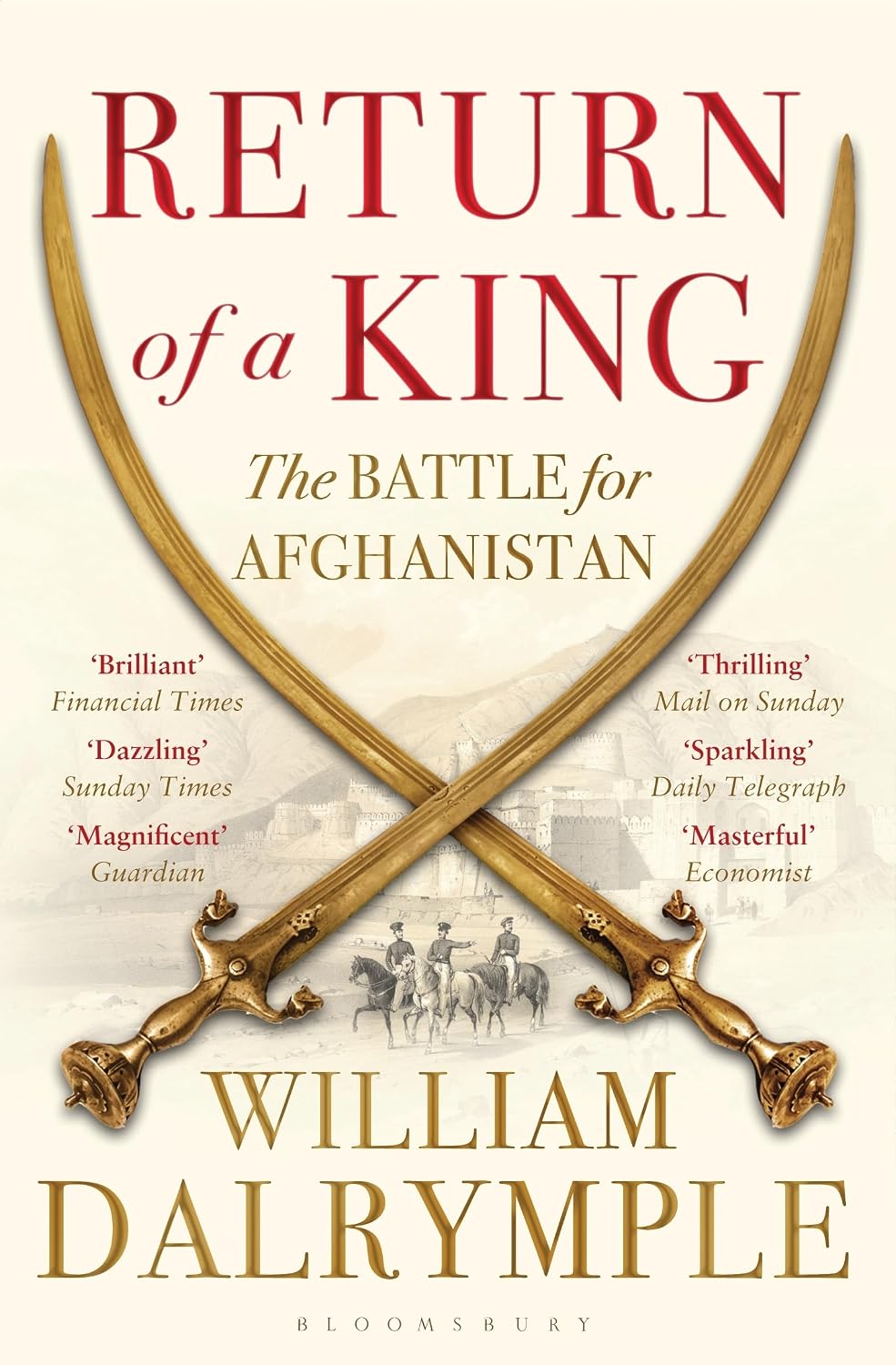
Description:
SHORTLISTED FOR THE SAMUEL JOHNSON PRIZE 2013
'As taut and richly embroidered as a great novel . . . a masterpiece' Sunday Telegraph
'Dazzling' Sunday Times | 'Magnificent' Guardian | 'Sparkling' Daily Telegraph
A towering history of the first Afghan War by bestselling historian William Dalrymple.
In the spring of 1839, Britain invaded Afghanistan for the first time. Nearly 20,000 British and East India Company troops poured through the high mountain passes and re-established on the throne Shah Shuja ul-Mulk.
On the way in, the British faced little resistance. But after two years of occupation, the Afghan people rose in answer to the call for jihad and the country exploded into violent rebellion. The First Anglo-Afghan War ended in Britain's greatest military humiliation of the nineteenth century: an entire army of the then most powerful nation in the world ambushed in retreat and utterly routed by poorly equipped tribesmen.
Using a range of forgotten Afghan and Indian sources, William Dalrymple's masterful retelling of Britain's greatest imperial disaster is a powerful parable of colonial ambition and cultural collision, folly and hubris. Return of a King is history at its most urgent and important.
Review
Enchantingly written . . . In Dalrymple's usual happy style of historical narrative, applied to a fascinating, neat and highly suggestive series of events, this long and involved book will be a great success, and bring the famous story to a large new audience -- Philip Hensher ― Spectator
Of the books swooped into being by his scholarship (to which he himself has applied the adjective "obsessive"), this one is the most magnificent . . . His account is so perceptive and so warmly humane that one is never tempted to break away . . . This book would be compulsive reading even if it were not a uniquely valuable history, which it is, because Dalrymple has uncovered sources never used before -- Diana Athill ― Guardian
Brilliant . . . Those who have read his White Mughals and The Last Mughal will know what to expect: a readable style, a deep humanity and, above all, an extraordinary skill in evoking the lost worlds of Mughals and Afghans . . . His pen-portraits are a masterpiece . . . Return of a King is much the fullest and most powerful description of the West's first encounter with Afghan society -- John Darwin ― New York Times
A major contribution to the historiography of south-west Asia and of the British empire . . . Return of a King will come to be seen as the definitive account of the first and most disastrous western attempt to invade Afghanistan. Dalrymple's afterword should be put on college syllabuses on both sides of the Atlantic -- Sherard Cowper-Coles ― New Statesman
Splendid and absorbing . . . William Dalrymple tells this tragic story with verve, skill, and - unexpectedly in the circumstances - some humor. Using unknown or underused sources from India, Pakistan and Afghanistan, he recounts the tale from both sides, shifting the scenes, using eyewitness accounts, quoting at length heroic epic poems . . . A fine book -- David Gilmour ― New York Review of Books
William Dalrymple is a master storyteller, who breathes such passion, vivacity and animation into the historical characters of the First Anglo-Afghan war of 1839-42 that at the end of this 567-page book you feel you have marched, fought, dined and plotted with them all: once I had finished I turned straight back to the beginning ― Independent
Brilliant . . . even 170 years later, the events described in Return of a King still have the power to shock - and so they should. It is to be hoped that any future British leader contemplating intervention in Afghanistan, or any other part of the Muslim world, will read Dalrymple's book ― Financial Times
Mr. Dalrymple's writing is sly, charming and clever. His histories read like novels . . . This latest book delights and shocks as he points the finger at both sides for their deceit treachery and cruelty . . . Magnificent ― Wall Street Journal
Definitive . . . Return of a King, like a great classical tragedy, grips the reader's attention from start to finish . . . not just a riveting account of one imperial disaster on the roof of the world; it teaches unforgettable lessons about the perils of neocolonial adventures everywhere -- Piers Brendan ― Literary Review
By turns epic, thrilling, suspenseful, and utterly appalling, at once deeply researched and beautifully paced, Return of a King should win every prize for which it's eligible ― Bookforum
Dazzling . . . Dalrymple is a master storyteller, whose special gift lies in the use of indigenous sources, so often neglected by imperial chroniclers . . . Almost every page of Dalrymple's splendid narrative echoes with latter-day reverberations -- Max Hastings ― Sunday Times
Outstanding . . . Dalrymple has emerged as a superb historian of the British Raj . . . He excels at character, scene setting, and shifting between multiple points of view . . . His use of sources is stunning, particularly the trove of Persian-language material - epic poems, court histories and other accounts - he found in Kabul. No other western historian has given such a complete account of the other side ― National
William Dalrymple's phenomenal achievement is to combine a steady overview of his broad canvas with a magpie's eye for detail and a film-maker's sense of when to shift the mood and focus. His writing is ebullient, but his conclusion is timely and grave. Any attempt to subjugate Afghanistan must, as one witness of that first invasion noted, be 'temporary and transient and terminate in catastrophe' ― Intelligent Life
A powerful account of Britain's deluded occupation . . . A superlative achievement ― Scotland on Sunday
Dalrymple is something of a secret national treasure; a travel writer and narrative historian of Britain's relations with India . . . an enthralling, definitive account ― The Lady
Masterful . . . Dalrymple makes an important contribution by including recently discovered Afghan accounts of the war ― Washington Post
This hefty and extraordinary book may be [Dalrymple's] masterwork . . . Dalrymple's assiduous scholarship and travel-writer's ease with language makes this not only an incredibly well-researched book, but something of a page-turner ― Big Issue
This is vintage Dalrymple: warp-speed historical narrative, meticulously researched . . . My only regret reading this wonderful history is that it was not published a decade earlier ― Evening Standard
Dalrymple is a writer who can make the most recondite historical issues come alive and with each successive book he becomes a more entertaining and enlightening companion . . . Return of a King is simply quite brilliant -- Alexander McCall Smith ― New Statesman, Books of the Year
Probably the best known British historian of India . . . this is the book he was born to write ― Economist
Sensationally good . . . Dalrymple writes the kind of history few historians can match . . . Drawing on Afghan, Russian, and Indian sources, [Dalrymple] tells a truly epic story of imperial ambition and hubris with profound lessons for our own times . . . I doubt that I'll read a better written or more important history book all year ― Scotsman
Book Description
From the Inside Flap
On the way in, the British faced little resistance. But after two years of occupation, the Afghan people rose in answer to the call for jihad and the country exploded into violent rebellion. The First Anglo-Afghan War ended in Britain's greatest military humiliation of the nineteenth century: an entire army of the then most powerful nation in the world ambushed in retreat and utterly routed by poorly equipped tribesmen.
Shortlisted for the Samuel Johnson Prize 2013, Return of a King is the definitive analysis of the First Afghan War, told through the lives of unforgettable characters on all sides and using for the first time contemporary Afghan accounts of the conflict. Prize-winning and bestselling historian William Dalrymple's masterful retelling of Britain's greatest imperial disaster is a powerful and important parable of colonial ambition and cultural collision, folly and hubris, for our times.
From the Back Cover
On the way in, the British faced little resistance. But after two years of occupation, the Afghan people rose in answer to the call for jihad and the country exploded into violent rebellion. The First Anglo-Afghan War ended in Britain's greatest military humiliation of the nineteenth century: an entire army of the then most powerful nation in the world ambushed in retreat and utterly routed by poorly equipped tribesmen.
Shortlisted for the Samuel Johnson Prize 2013, Return of a King is the definitive analysis of the First Afghan War, told through the lives of unforgettable characters on all sides and using for the first time contemporary Afghan accounts of the conflict. Prize-winning and bestselling historian William Dalrymple's masterful retelling of Britain's greatest imperial disaster is a powerful and important parable of colonial ambition and cultural collision, folly and hubris, for our times.
About the Author
Details:
Visit the Bloomsbury Paperbacks Store
Return of a King: The Battle for Afghanistan
QAR12757
Quantity:
Order today to get by 7-14 business days
Delivery fee of QAR 20. Free for orders above QAR 200.
'%3e%3crect%20x='0.599609'%20width='22.4'%20height='16'%20fill='%230A17A7'/%3e%3cpath%20fill-rule='evenodd'%20clip-rule='evenodd'%20d='M-0.426196%20-1.53223L9.1335%204.91587V-1.06506H14.4668V4.91648L24.0263%20-1.53147L25.2193%200.237148L17.6615%205.33494H23.0002V10.6683H17.6618L25.2187%2015.7655L24.0258%2017.5341L14.4668%2011.0865V17.0683H9.1335V11.0871L-0.425634%2017.5348L-1.61858%2015.7662L5.93947%2010.6683H0.600172V5.33494H5.93977L-1.61914%200.236387L-0.426196%20-1.53223Z'%20fill='white'/%3e%3cpath%20d='M15.5332%205.06615L25.6655%20-1.59961'%20stroke='%23DB1F35'%20stroke-width='0.533333'%20stroke-linecap='round'/%3e%3cpath%20d='M16.6094%2010.9578L25.6924%2017.0801'%20stroke='%23DB1F35'%20stroke-width='0.533333'%20stroke-linecap='round'/%3e%3cpath%20d='M7.00176%205.04727L-2.47266%20-1.33789'%20stroke='%23DB1F35'%20stroke-width='0.533333'%20stroke-linecap='round'/%3e%3cpath%20d='M8.02936%2010.8842L-2.47266%2017.8486'%20stroke='%23DB1F35'%20stroke-width='0.533333'%20stroke-linecap='round'/%3e%3cpath%20fill-rule='evenodd'%20clip-rule='evenodd'%20d='M0.599609%209.6H10.1996V16H13.3996V9.6H22.9996V6.4H13.3996V0H10.1996V6.4H0.599609V9.6Z'%20fill='%23E6273E'/%3e%3c/g%3e%3c/svg%3e) Imported From: United Kingdom
Imported From: United Kingdom
At BOLO, we work hard to ensure the products you receive are new, genuine, and sourced from reputable suppliers.
Every product in the BOLO catalogue is sourced through our Verified Global Supply Network of verified sellers, authorized distributors or directly from the manufacturer.
Each product undergoes thorough inspection and verification at our consolidation and fulfilment centers to ensure it meets our strict authenticity and quality standards before being shipped and delivered to you.
If you ever have concerns regarding the authenticity of a product purchased from us, please contact Bolo Support. We will review your inquiry promptly and, if necessary, provide documentation verifying authenticity or offer a suitable resolution.
Your trust is our top priority, and we are committed to maintaining transparency and integrity in every transaction.
While we strive to display accurate information, variations in packaging, labeling, instructions, or formulation may occasionally occur due to regional differences or supplier updates. For detailed or manufacturer-specific information, please contact the brand directly or reach out to BOLO Support for assistance.
Unless otherwise stated, all prices displayed on the product page include applicable taxes and import duties.
BOLO operates in accordance with the laws and regulations of Qatar. Any items found to be restricted or prohibited for sale within the Qatar will be cancelled prior to shipment. We take proactive measures to ensure that only products permitted for sale in Qatar are listed on our website.
All items are shipped by air, and any products classified as “Dangerous Goods (DG)” under IATA regulations will be removed from the order and cancelled.
All orders are processed manually, and we make every effort to process them promptly once confirmed. Products cancelled due to the above reasons will be permanently removed from listings across the website.
Similar suggestions by Bolo
More from this brand
Similar items from “Afghanistan”
Share with
Or share with link
https://www.bolo.qa/products/K1408831597
Visit the Bloomsbury Paperbacks Store
Return of a King: The Battle for Afghanistan
QAR12757
Quantity:
Order today to get by 7-14 business days
Delivery fee of QAR 20. Free for orders above QAR 200.
Imported From: United Kingdom
At BOLO, we work hard to ensure the products you receive are new, genuine, and sourced from reputable suppliers.
Every product in the BOLO catalogue is sourced through our Verified Global Supply Network of verified sellers, authorized distributors or directly from the manufacturer.
Each product undergoes thorough inspection and verification at our consolidation and fulfilment centers to ensure it meets our strict authenticity and quality standards before being shipped and delivered to you.
If you ever have concerns regarding the authenticity of a product purchased from us, please contact Bolo Support. We will review your inquiry promptly and, if necessary, provide documentation verifying authenticity or offer a suitable resolution.
Your trust is our top priority, and we are committed to maintaining transparency and integrity in every transaction.
While we strive to display accurate information, variations in packaging, labeling, instructions, or formulation may occasionally occur due to regional differences or supplier updates. For detailed or manufacturer-specific information, please contact the brand directly or reach out to BOLO Support for assistance.
Unless otherwise stated, all prices displayed on the product page include applicable taxes and import duties.
BOLO operates in accordance with the laws and regulations of Qatar. Any items found to be restricted or prohibited for sale within the Qatar will be cancelled prior to shipment. We take proactive measures to ensure that only products permitted for sale in Qatar are listed on our website.
All items are shipped by air, and any products classified as “Dangerous Goods (DG)” under IATA regulations will be removed from the order and cancelled.
All orders are processed manually, and we make every effort to process them promptly once confirmed. Products cancelled due to the above reasons will be permanently removed from listings across the website.
Description:
SHORTLISTED FOR THE SAMUEL JOHNSON PRIZE 2013
'As taut and richly embroidered as a great novel . . . a masterpiece' Sunday Telegraph
'Dazzling' Sunday Times | 'Magnificent' Guardian | 'Sparkling' Daily Telegraph
A towering history of the first Afghan War by bestselling historian William Dalrymple.
In the spring of 1839, Britain invaded Afghanistan for the first time. Nearly 20,000 British and East India Company troops poured through the high mountain passes and re-established on the throne Shah Shuja ul-Mulk.
On the way in, the British faced little resistance. But after two years of occupation, the Afghan people rose in answer to the call for jihad and the country exploded into violent rebellion. The First Anglo-Afghan War ended in Britain's greatest military humiliation of the nineteenth century: an entire army of the then most powerful nation in the world ambushed in retreat and utterly routed by poorly equipped tribesmen.
Using a range of forgotten Afghan and Indian sources, William Dalrymple's masterful retelling of Britain's greatest imperial disaster is a powerful parable of colonial ambition and cultural collision, folly and hubris. Return of a King is history at its most urgent and important.
Review
Enchantingly written . . . In Dalrymple's usual happy style of historical narrative, applied to a fascinating, neat and highly suggestive series of events, this long and involved book will be a great success, and bring the famous story to a large new audience -- Philip Hensher ― Spectator
Of the books swooped into being by his scholarship (to which he himself has applied the adjective "obsessive"), this one is the most magnificent . . . His account is so perceptive and so warmly humane that one is never tempted to break away . . . This book would be compulsive reading even if it were not a uniquely valuable history, which it is, because Dalrymple has uncovered sources never used before -- Diana Athill ― Guardian
Brilliant . . . Those who have read his White Mughals and The Last Mughal will know what to expect: a readable style, a deep humanity and, above all, an extraordinary skill in evoking the lost worlds of Mughals and Afghans . . . His pen-portraits are a masterpiece . . . Return of a King is much the fullest and most powerful description of the West's first encounter with Afghan society -- John Darwin ― New York Times
A major contribution to the historiography of south-west Asia and of the British empire . . . Return of a King will come to be seen as the definitive account of the first and most disastrous western attempt to invade Afghanistan. Dalrymple's afterword should be put on college syllabuses on both sides of the Atlantic -- Sherard Cowper-Coles ― New Statesman
Splendid and absorbing . . . William Dalrymple tells this tragic story with verve, skill, and - unexpectedly in the circumstances - some humor. Using unknown or underused sources from India, Pakistan and Afghanistan, he recounts the tale from both sides, shifting the scenes, using eyewitness accounts, quoting at length heroic epic poems . . . A fine book -- David Gilmour ― New York Review of Books
William Dalrymple is a master storyteller, who breathes such passion, vivacity and animation into the historical characters of the First Anglo-Afghan war of 1839-42 that at the end of this 567-page book you feel you have marched, fought, dined and plotted with them all: once I had finished I turned straight back to the beginning ― Independent
Brilliant . . . even 170 years later, the events described in Return of a King still have the power to shock - and so they should. It is to be hoped that any future British leader contemplating intervention in Afghanistan, or any other part of the Muslim world, will read Dalrymple's book ― Financial Times
Mr. Dalrymple's writing is sly, charming and clever. His histories read like novels . . . This latest book delights and shocks as he points the finger at both sides for their deceit treachery and cruelty . . . Magnificent ― Wall Street Journal
Definitive . . . Return of a King, like a great classical tragedy, grips the reader's attention from start to finish . . . not just a riveting account of one imperial disaster on the roof of the world; it teaches unforgettable lessons about the perils of neocolonial adventures everywhere -- Piers Brendan ― Literary Review
By turns epic, thrilling, suspenseful, and utterly appalling, at once deeply researched and beautifully paced, Return of a King should win every prize for which it's eligible ― Bookforum
Dazzling . . . Dalrymple is a master storyteller, whose special gift lies in the use of indigenous sources, so often neglected by imperial chroniclers . . . Almost every page of Dalrymple's splendid narrative echoes with latter-day reverberations -- Max Hastings ― Sunday Times
Outstanding . . . Dalrymple has emerged as a superb historian of the British Raj . . . He excels at character, scene setting, and shifting between multiple points of view . . . His use of sources is stunning, particularly the trove of Persian-language material - epic poems, court histories and other accounts - he found in Kabul. No other western historian has given such a complete account of the other side ― National
William Dalrymple's phenomenal achievement is to combine a steady overview of his broad canvas with a magpie's eye for detail and a film-maker's sense of when to shift the mood and focus. His writing is ebullient, but his conclusion is timely and grave. Any attempt to subjugate Afghanistan must, as one witness of that first invasion noted, be 'temporary and transient and terminate in catastrophe' ― Intelligent Life
A powerful account of Britain's deluded occupation . . . A superlative achievement ― Scotland on Sunday
Dalrymple is something of a secret national treasure; a travel writer and narrative historian of Britain's relations with India . . . an enthralling, definitive account ― The Lady
Masterful . . . Dalrymple makes an important contribution by including recently discovered Afghan accounts of the war ― Washington Post
This hefty and extraordinary book may be [Dalrymple's] masterwork . . . Dalrymple's assiduous scholarship and travel-writer's ease with language makes this not only an incredibly well-researched book, but something of a page-turner ― Big Issue
This is vintage Dalrymple: warp-speed historical narrative, meticulously researched . . . My only regret reading this wonderful history is that it was not published a decade earlier ― Evening Standard
Dalrymple is a writer who can make the most recondite historical issues come alive and with each successive book he becomes a more entertaining and enlightening companion . . . Return of a King is simply quite brilliant -- Alexander McCall Smith ― New Statesman, Books of the Year
Probably the best known British historian of India . . . this is the book he was born to write ― Economist
Sensationally good . . . Dalrymple writes the kind of history few historians can match . . . Drawing on Afghan, Russian, and Indian sources, [Dalrymple] tells a truly epic story of imperial ambition and hubris with profound lessons for our own times . . . I doubt that I'll read a better written or more important history book all year ― Scotsman
Book Description
From the Inside Flap
On the way in, the British faced little resistance. But after two years of occupation, the Afghan people rose in answer to the call for jihad and the country exploded into violent rebellion. The First Anglo-Afghan War ended in Britain's greatest military humiliation of the nineteenth century: an entire army of the then most powerful nation in the world ambushed in retreat and utterly routed by poorly equipped tribesmen.
Shortlisted for the Samuel Johnson Prize 2013, Return of a King is the definitive analysis of the First Afghan War, told through the lives of unforgettable characters on all sides and using for the first time contemporary Afghan accounts of the conflict. Prize-winning and bestselling historian William Dalrymple's masterful retelling of Britain's greatest imperial disaster is a powerful and important parable of colonial ambition and cultural collision, folly and hubris, for our times.
From the Back Cover
On the way in, the British faced little resistance. But after two years of occupation, the Afghan people rose in answer to the call for jihad and the country exploded into violent rebellion. The First Anglo-Afghan War ended in Britain's greatest military humiliation of the nineteenth century: an entire army of the then most powerful nation in the world ambushed in retreat and utterly routed by poorly equipped tribesmen.
Shortlisted for the Samuel Johnson Prize 2013, Return of a King is the definitive analysis of the First Afghan War, told through the lives of unforgettable characters on all sides and using for the first time contemporary Afghan accounts of the conflict. Prize-winning and bestselling historian William Dalrymple's masterful retelling of Britain's greatest imperial disaster is a powerful and important parable of colonial ambition and cultural collision, folly and hubris, for our times.
About the Author
Details:
Similar suggestions by Bolo
More from this brand
Similar items from “Afghanistan”
Share with
Or share with link
https://www.bolo.qa/products/K1408831597