Description:
'A book that you don't just read, you live' Simon Schama
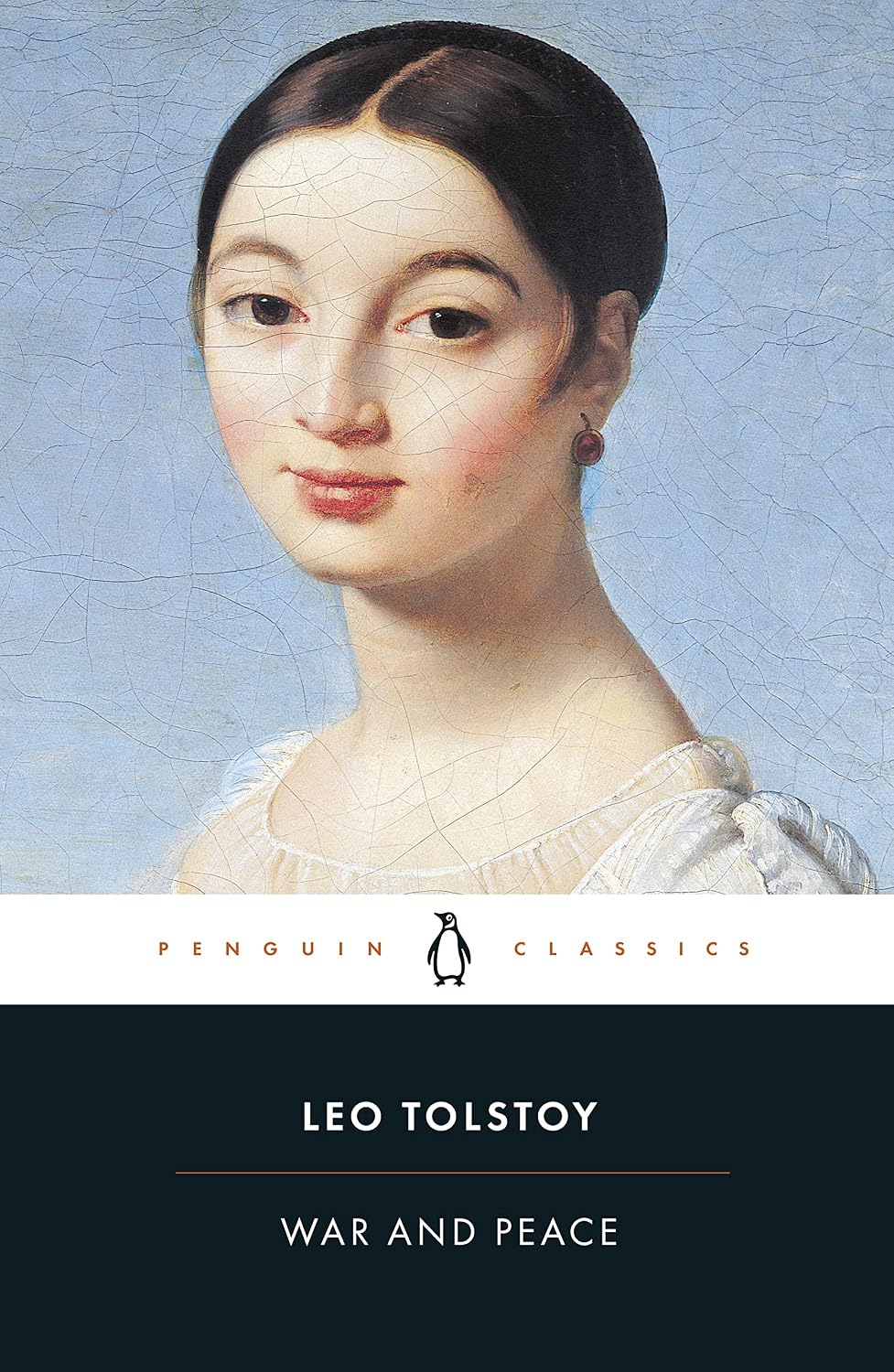
Tolstoy's magnificent epic novel of love, conflict, fate and human life in all its imperfection and grandeur
War and Peace begins at a glittering society party in St Petersburg in 1805, where conversations are dominated by the prospect of war. Terror swiftly engulfs the country as Napoleon's army marches on Russia, and the lives of three young people are changed forever. The stories of quixotic Pierre, cynical Andrey and impetuous Natasha interweave with a huge cast, from aristocrats and peasants to soldiers and Napoleon himself.
Translated with an Introduction and Notes by Anthony Briggs with an Afterword by Orlando Figes
Review
From the Back Cover
About the Author
Leo Tolstoy (1828-1910) was born in Tula province and was educated privately and at Kazan University. In 1851 he went to the Caucasus, joined an artillery regiment & began his literary career. After marrying in 1862, he began writing War and Peace, which was finished in 1869. His second great work, Anna Karenina, was finished in 1876. Professor Tony Briggs is former Professor of Russian at the University of Birmingham, and is the author of six books on Russian literature.
Professor Tony Briggs is former Professor of Russian at the University of Birmingham, has translated widely from the Russian, especially Pushkin, and is the author of several critical books on Russian literature. Orlando Figes is Professor of History at Birkbeck and the author of A People's Tragedy: The Russian Revolution, 1891-1924, which was awarded the Wolfson Prize for History and, most recently, Natasha's Dance: A Cultural History of Russia.
Excerpt. © Reprinted by permission. All rights reserved.
During the interval there was a cool draught in Hélène’s box as the door opened and in walked Anatole, stopping and trying not to brush against anyone.
‘Allow me to introduce my brother,’ said Hélène, her eyes shifting uneasily from Natasha to Anatole. Natasha turned her pretty little head towards the handsome adjutant and smiled at him over her bare shoulder. Anatole, who was just as handsome close to as he had been from a distance, sat down beside her and said this was a delight he had long been waiting for, ever since the Naryshkins’ ball, where he had had the unforgettable pleasure of seeing her. Kuragin was much more astute and straightforward with women than he ever was in male company. He talked with an easy directness, and Natasha was agreeably surprised to discover that this man, the butt of so much gossip, had nothing formidable about him – quite the reverse, his face wore the most innocent, cheery and open-hearted of smiles.
Kuragin asked what she thought of the opera, and told her that at the last performance Semyonova had fallen down on stage.
‘Oh, by the way, Countess,’ he said, suddenly treating her like a close friend of long standing, ‘we’re getting up a fancy-dress ball. You must come – it’s going to be great fun. They’re all getting together at the Arkharovs’. Please come. You will, won’t you?’ As he spoke he never took his smiling eyes off Natasha, her face, her neck, her exposed arms. Natasha knew for certain he was besotted with her. She liked this, yet she could feel the temperature rising and she was beginning to feel somehow cornered and constrained in his presence. When she wasn’t looking at him she could sense him gazing at her shoulders, and she found herself trying to catch his eye to make him look at her face. But when she looked into his eyes she was shocked to realize that the usual barrier of modesty that existed between her and other men was no longer there between the two of them. It had taken five minutes for her to feel terribly close to this man, and she scarcely knew what was happening to her. Whenever she turned away she bristled at the thought that he might seize her from behind by her bare arm and start kissing her on the neck. They were going on about nothing in particular, yet she felt closer to him than she had ever been to any other man. Natasha kept glancing round at Hélène and her father for help – what did it all mean? – but Hélène was deep in conversation with a general and didn’t respond to her glance, and her father’s eyes conveyed nothing but their usual message, ‘Enjoying yourself? Jolly good. I’m so pleased.’
There was an awkward silence, during which Anatole, the personification of cool determination, never took his voracious eyes off her, and Natasha broke it by asking whether he liked living in Moscow. She coloured up the moment the question was out of her mouth. She couldn’t help feeling there was something improper about even talking to him. Anatole smiled an encouraging smile.
‘Oh, I didn’t like it much at first. Well, what is it that makes a town nice to live in? It’s the pretty women, isn’t it? Well, now I do like it, very much indeed,’ he said, with a meaningful stare. ‘You will come to the fancy-dress ball, Countess? Please come,’ he said. Putting his hand out to touch her bouquet he lowered his voice and added in French, ‘You’ll be the prettiest woman there. Do come, dear Countess, and give me this flower as your pledge.’
Natasha didn’t understand a word of this – any more than he did – but she felt that behind his incomprehensible words there was some dishonourable intention. Not knowing how to respond, she turned away as if she hadn’t heard him. But the moment she turned away she could feel him right behind her, very close.
‘Now what? Is he embarrassed? Is he angry? Should I put things right?’ she wondered. She couldn’t help turning round. She looked him straight in the eyes. One glance at him, standing so close, with all that self-assurance and the warmth of his sweet smile, and she was lost. She stared into his eyes, and her smile was the mirror-image of his. And again she sensed with horror there was no barrier between the two of them.
The curtain rose again. Anatole strolled out of the box, a picture of composure and contentment. Natasha went back to her father’s box, completely taken by the new world she found herself in. All that was happening before her eyes now seemed absolutely normal. By contrast, all previous thoughts of her fiancé, Princess Marya, her life in the country, never even crossed her mind. It was as if it all belonged to the distant past.
Details:
Visit the Penguin Classics Store
War And Peace: Leo Tolstoy (Penguin Classics)
QAR15673
Quantity:
Order today to get by 7-14 business days
Delivery fee of QAR 20. Free for orders above QAR 200.
 Imported From: United Kingdom
At BOLO, we work hard to ensure the products you receive are new, genuine, and sourced from reputable suppliers.
Every product in the BOLO catalogue is sourced through our Verified Global Supply Network of verified sellers, authorized distributors or directly from the manufacturer.
Each product undergoes thorough inspection and verification at our consolidation and fulfilment centers to ensure it meets our strict authenticity and quality standards before being shipped and delivered to you.
If you ever have concerns regarding the authenticity of a product purchased from us, please contact Bolo Support. We will review your inquiry promptly and, if necessary, provide documentation verifying authenticity or offer a suitable resolution.
Your trust is our top priority, and we are committed to maintaining transparency and integrity in every transaction.
While we strive to display accurate information, variations in packaging, labeling, instructions, or formulation may occasionally occur due to regional differences or supplier updates. For detailed or manufacturer-specific information, please contact the brand directly or reach out to BOLO Support for assistance.
Unless otherwise stated, all prices displayed on the product page include applicable taxes and import duties.
BOLO operates in accordance with the laws and regulations of Qatar. Any items found to be restricted or prohibited for sale within the Qatar will be cancelled prior to shipment. We take proactive measures to ensure that only products permitted for sale in Qatar are listed on our website.
All items are shipped by air, and any products classified as “Dangerous Goods (DG)” under IATA regulations will be removed from the order and cancelled.
All orders are processed manually, and we make every effort to process them promptly once confirmed. Products cancelled due to the above reasons will be permanently removed from listings across the website.
More from this brand
Similar items from “19th Century”
Share with
Or share with link
https://www.bolo.qa/products/K0140447938
Visit the Penguin Classics Store
War And Peace: Leo Tolstoy (Penguin Classics)
QAR15673
Quantity:
Order today to get by 7-14 business days
Delivery fee of QAR 20. Free for orders above QAR 200.
Imported From: United Kingdom
At BOLO, we work hard to ensure the products you receive are new, genuine, and sourced from reputable suppliers.
Every product in the BOLO catalogue is sourced through our Verified Global Supply Network of verified sellers, authorized distributors or directly from the manufacturer.
Each product undergoes thorough inspection and verification at our consolidation and fulfilment centers to ensure it meets our strict authenticity and quality standards before being shipped and delivered to you.
If you ever have concerns regarding the authenticity of a product purchased from us, please contact Bolo Support. We will review your inquiry promptly and, if necessary, provide documentation verifying authenticity or offer a suitable resolution.
Your trust is our top priority, and we are committed to maintaining transparency and integrity in every transaction.
While we strive to display accurate information, variations in packaging, labeling, instructions, or formulation may occasionally occur due to regional differences or supplier updates. For detailed or manufacturer-specific information, please contact the brand directly or reach out to BOLO Support for assistance.
Unless otherwise stated, all prices displayed on the product page include applicable taxes and import duties.
BOLO operates in accordance with the laws and regulations of Qatar. Any items found to be restricted or prohibited for sale within the Qatar will be cancelled prior to shipment. We take proactive measures to ensure that only products permitted for sale in Qatar are listed on our website.
All items are shipped by air, and any products classified as “Dangerous Goods (DG)” under IATA regulations will be removed from the order and cancelled.
All orders are processed manually, and we make every effort to process them promptly once confirmed. Products cancelled due to the above reasons will be permanently removed from listings across the website.
Description:
'A book that you don't just read, you live' Simon Schama
Tolstoy's magnificent epic novel of love, conflict, fate and human life in all its imperfection and grandeur
War and Peace begins at a glittering society party in St Petersburg in 1805, where conversations are dominated by the prospect of war. Terror swiftly engulfs the country as Napoleon's army marches on Russia, and the lives of three young people are changed forever. The stories of quixotic Pierre, cynical Andrey and impetuous Natasha interweave with a huge cast, from aristocrats and peasants to soldiers and Napoleon himself.
Translated with an Introduction and Notes by Anthony Briggs with an Afterword by Orlando Figes
Review
From the Back Cover
About the Author
Leo Tolstoy (1828-1910) was born in Tula province and was educated privately and at Kazan University. In 1851 he went to the Caucasus, joined an artillery regiment & began his literary career. After marrying in 1862, he began writing War and Peace, which was finished in 1869. His second great work, Anna Karenina, was finished in 1876. Professor Tony Briggs is former Professor of Russian at the University of Birmingham, and is the author of six books on Russian literature.
Professor Tony Briggs is former Professor of Russian at the University of Birmingham, has translated widely from the Russian, especially Pushkin, and is the author of several critical books on Russian literature. Orlando Figes is Professor of History at Birkbeck and the author of A People's Tragedy: The Russian Revolution, 1891-1924, which was awarded the Wolfson Prize for History and, most recently, Natasha's Dance: A Cultural History of Russia.
Excerpt. © Reprinted by permission. All rights reserved.
During the interval there was a cool draught in Hélène’s box as the door opened and in walked Anatole, stopping and trying not to brush against anyone.
‘Allow me to introduce my brother,’ said Hélène, her eyes shifting uneasily from Natasha to Anatole. Natasha turned her pretty little head towards the handsome adjutant and smiled at him over her bare shoulder. Anatole, who was just as handsome close to as he had been from a distance, sat down beside her and said this was a delight he had long been waiting for, ever since the Naryshkins’ ball, where he had had the unforgettable pleasure of seeing her. Kuragin was much more astute and straightforward with women than he ever was in male company. He talked with an easy directness, and Natasha was agreeably surprised to discover that this man, the butt of so much gossip, had nothing formidable about him – quite the reverse, his face wore the most innocent, cheery and open-hearted of smiles.
Kuragin asked what she thought of the opera, and told her that at the last performance Semyonova had fallen down on stage.
‘Oh, by the way, Countess,’ he said, suddenly treating her like a close friend of long standing, ‘we’re getting up a fancy-dress ball. You must come – it’s going to be great fun. They’re all getting together at the Arkharovs’. Please come. You will, won’t you?’ As he spoke he never took his smiling eyes off Natasha, her face, her neck, her exposed arms. Natasha knew for certain he was besotted with her. She liked this, yet she could feel the temperature rising and she was beginning to feel somehow cornered and constrained in his presence. When she wasn’t looking at him she could sense him gazing at her shoulders, and she found herself trying to catch his eye to make him look at her face. But when she looked into his eyes she was shocked to realize that the usual barrier of modesty that existed between her and other men was no longer there between the two of them. It had taken five minutes for her to feel terribly close to this man, and she scarcely knew what was happening to her. Whenever she turned away she bristled at the thought that he might seize her from behind by her bare arm and start kissing her on the neck. They were going on about nothing in particular, yet she felt closer to him than she had ever been to any other man. Natasha kept glancing round at Hélène and her father for help – what did it all mean? – but Hélène was deep in conversation with a general and didn’t respond to her glance, and her father’s eyes conveyed nothing but their usual message, ‘Enjoying yourself? Jolly good. I’m so pleased.’
There was an awkward silence, during which Anatole, the personification of cool determination, never took his voracious eyes off her, and Natasha broke it by asking whether he liked living in Moscow. She coloured up the moment the question was out of her mouth. She couldn’t help feeling there was something improper about even talking to him. Anatole smiled an encouraging smile.
‘Oh, I didn’t like it much at first. Well, what is it that makes a town nice to live in? It’s the pretty women, isn’t it? Well, now I do like it, very much indeed,’ he said, with a meaningful stare. ‘You will come to the fancy-dress ball, Countess? Please come,’ he said. Putting his hand out to touch her bouquet he lowered his voice and added in French, ‘You’ll be the prettiest woman there. Do come, dear Countess, and give me this flower as your pledge.’
Natasha didn’t understand a word of this – any more than he did – but she felt that behind his incomprehensible words there was some dishonourable intention. Not knowing how to respond, she turned away as if she hadn’t heard him. But the moment she turned away she could feel him right behind her, very close.
‘Now what? Is he embarrassed? Is he angry? Should I put things right?’ she wondered. She couldn’t help turning round. She looked him straight in the eyes. One glance at him, standing so close, with all that self-assurance and the warmth of his sweet smile, and she was lost. She stared into his eyes, and her smile was the mirror-image of his. And again she sensed with horror there was no barrier between the two of them.
The curtain rose again. Anatole strolled out of the box, a picture of composure and contentment. Natasha went back to her father’s box, completely taken by the new world she found herself in. All that was happening before her eyes now seemed absolutely normal. By contrast, all previous thoughts of her fiancé, Princess Marya, her life in the country, never even crossed her mind. It was as if it all belonged to the distant past.
Details:
More from this brand
Similar items from “19th Century”
Share with
Or share with link
https://www.bolo.qa/products/K0140447938